
When soft power gives way to hard power: Trump, FIFA and the politicization of the 2026 World Cup
-
 Chirinne Zebib
- 11 Jul 2026 16:00
- 4 Shares
 7 Min Read
The host state no longer tries to seduce the world through football. It increasingly imposes its own domestic political logic on the tournament itself.
-
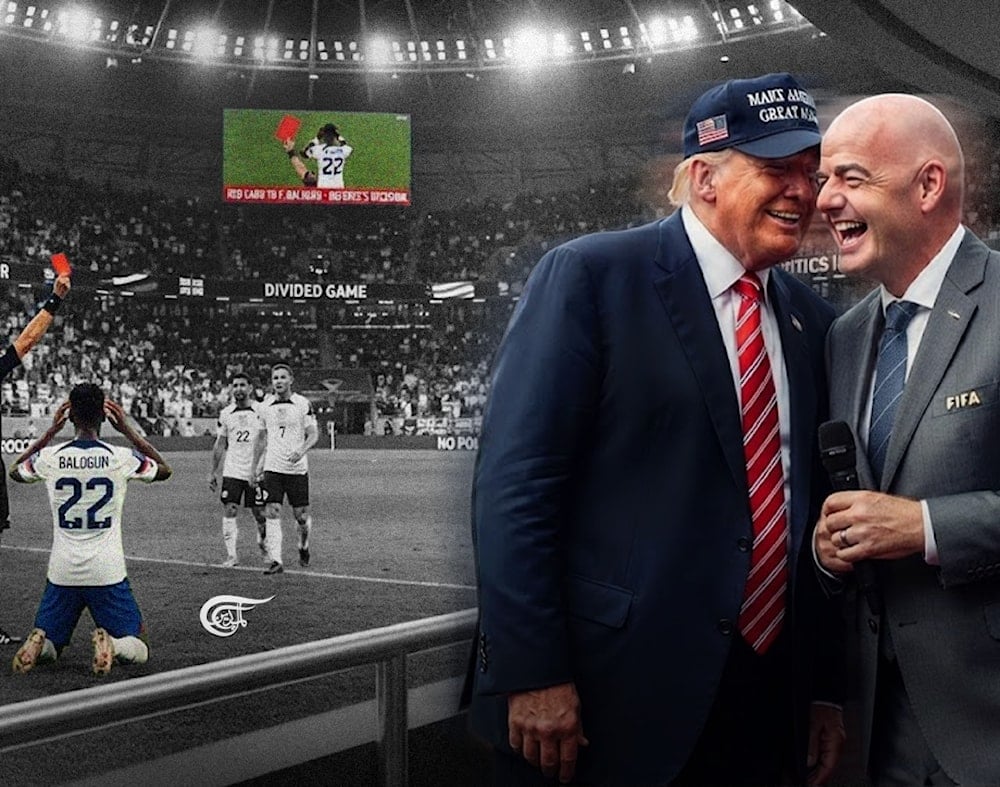
Trump is no longer just shaping how the tournament is run; he is now deciding who can play on the pitch (Illustrated for Al Mayadeen English)
Since the start of the 2026 World Cup, FIFA has appeared increasingly compromised by its proximity to a US president who has rewritten the rules of the game and seems to hold every card. Visa restrictions have hit supporters, especially from the African Continent and the Middle East, as well as team staff, including members of the Iranian delegation. The Somali referee Omar Abdulkadir Artan was denied entry despite holding a valid visa. Players have faced repeated intimidation and searches at airports. Trump's America has made no effort to charm the world; “Make America Great Again” was never about winning over other nations’ opinion of it. This marks a turn away from the traditional use of mega sporting events as tools of soft power, toward a more explicit display of hard power. The host state no longer tries to seduce the world through football. It increasingly imposes its own domestic political logic on the tournament itself.
The culmination of Trumpism in this tournament came when the US president personally contacted FIFA president Gianni Infantino over a red card and suspension given to an American player. The interference sparked immediate controversy, not least because Trump, by his own admission, is no expert on football, declared he saw no reason for the red card. It was overturned. With that single move, another line blurred between politics and sport. Trump was no longer just shaping how the tournament was run; he was now deciding who could play on the pitch. From the beginning of this World Cup, it was never really about celebrating footballing talent and competition, especially given the tense geopolitical context. For Trump, a man with a habit of instrumentalizing everything, this tournament has become a central political matter. In fact, a retrospective look shows the World Cup has always been political: a weapon, a tool of propaganda, wielded in the service of nations.
How nations learned to play the world
The FIFA World Cup has long been associated with sportswashing, the use of sport by a country to polish its international image and gain domestic support for the regime in power. In short, nations have used the tournament to boost their prestige and win soft power. This dynamic is best understood through Joseph Nye's concept of soft power: a state's ability to attract and persuade rather than coerce.
The 1934 World Cup in Italy marked a turning point in the politicization of sport. Mussolini used the tournament to reinforce his personal cult, with footage of him playing football circulated to the public, while fascist ideology saturated the stadiums themselves: regime flags, fascist salutes from the crowd, and referees who, by multiple historical accounts, Mussolini personally selected for Italy's matches. For the first time, the tournament was broadcast on the radio, and Italy's victory as host handed the regime a triumphant image to project to the world. It was, in every sense, a victory of propaganda. When hosted in Argentina in 1978, the international tournament became a tool of reputational management. The military junta tried to use the World Cup to counter growing international criticism of its repression and forced disappearances. The regime constructed an alternative image, one of national unity, celebration, and normality, to mask what was happening beneath the surface. In another context, the 1998 World Cup match between Iran and the USA in France was more than a simple game between two enemy nations; it rapidly transformed into a symbolic political moment. Before kickoff, the Iranian players presented white roses to their American counterparts as a gesture of peace, and the Americans responded with team pennants. The two squads posed together for a photograph; a rare image given two decades of hostility between the countries. Iran won the match, but what mattered more was the gesture itself: it opened a diplomatic dialogue between the two countries, however fragile, one that would ultimately fail in the years that followed.
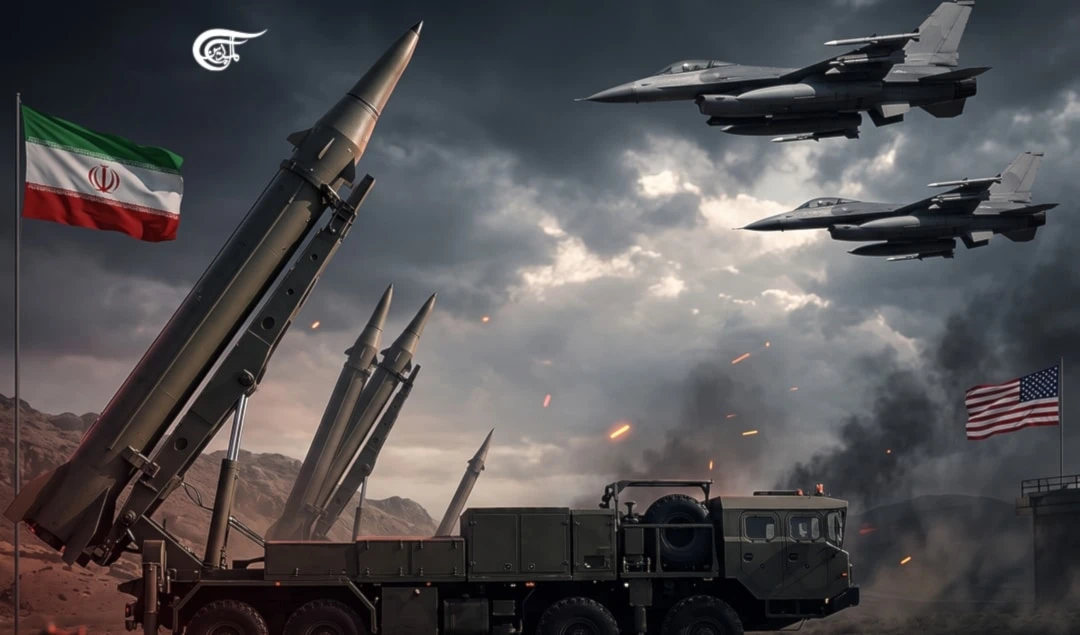
Qatar 2022 stands as the pinnacle of classic soft power strategy applied to hosting a World Cup. The country sought to extend its influence far beyond its borders through football and to show the world it was more than just an oil power. It largely succeeded in doing so: controversies over labor rights and environmental cost faded from view, and Qatar became, for a moment, a global center of attention, projected as stable, secure, modern, technologically advanced, and hospitable. But in 2026, when US and Israeli strikes on Iran triggered Iranian retaliation across the Gulf, hitting US military installations in Qatar itself, the country's underlying vulnerability was suddenly exposed. It was a reminder that soft power can evaporate the instant hard power asserts itself.
Across all the cases mentioned, the regimes differed radically in ideology, historical context, and political system. Yet in every case, they cared about how the world was watching and worked to manage that gaze, to be seen a certain way. Trump's America introduces a different logic altogether: a host nation that is less interested in adapting itself to how the world sees it and more interested in forcing the world to confront its own political reality instead.
When the World Cup becomes a border
This year, the host no longer seeks to seduce the world. It seeks instead to affirm its authority: to classify, to admit or exclude, to search and discipline whoever crosses into its territory. The controversies surrounding this World Cup point to a politics less concerned with winning affection than with displaying authority.
These incidents, the visa refusals, the barred referee, the treatment of Iran's delegation, and the restrictions on pro-Palestine expression are not isolated missteps. They form a pattern. Meanwhile, the relationship between Trump and FIFA has raised growing questions about how far political power can reach into an institution that insists on football's autonomy. The red card episode, alongside all of this, stands as a near-perfect illustration of America First applied to sport. Trump's politics has never depended primarily on being admired abroad. Its central performance is directed inward: strong borders, national preference, suspicion toward designated outsiders, resistance to external constraints, and the repeated promise that American interests will come first.
Read through the anti-colonial philosopher Frantz Fanon, and this World Cup stops being simply a story about image and admiration. It becomes a story about classification, mobility, and unequal access. The tournament calls itself universal, yet some passports move with little friction while others trigger scrutiny. Some supporters are welcomed while others are turned away. Some bodies are seen as athletes, while others are treated as potential risks before they are ever heard as individuals.
Fanon draws attention to the machinery beneath the spectacle: the organization of space, the hierarchy of mobility, and the power to sort and classify bodies. Seen through this lens, the 2026 World Cup appears suspended between two logics of power: the desire to attract the world and the capacity to decide which parts of that world may enter, move freely, and fully belong.
Domination, after all, does not always announce itself as domination. Sometimes it looks like a visa form. Sometimes it looks like eleven hours in a holding room at Miami airport. Sometimes it looks like a ticket price so high that Mexico's own president, Claudia Sheinbaum, chose to give away her ticket to the World Cup opening match rather than attend herself, a gesture widely read as solidarity with citizens priced out of the spectacle.
What emerges is no longer simply a contest for admiration. It is a politics of borders: of classification, surveillance, and unequal access, dressed in the language of a global celebration.


