
Adelaide festival faces backlash for dropping Pro-Palestine author
 6 Min Read
Almost 50 writers boycott Australia's Adelaide festival after author Randa Abdel-Fattah is dropped over her pro-Palestine views, sparking backlash over censorship.
-
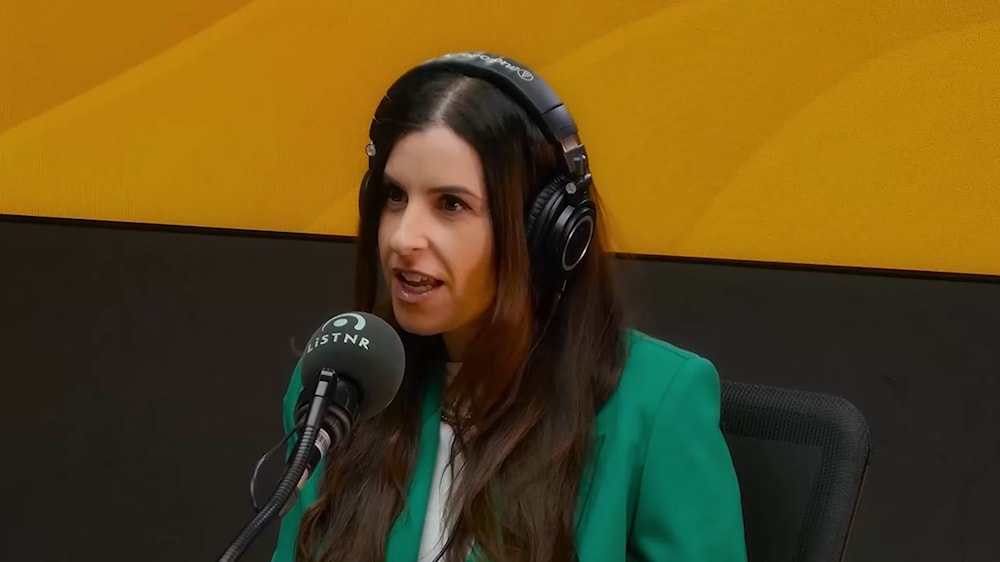
Screenshot of Randa Abdel-Fattah during a Briefing Podcast program on August 29, 2025. (The Briefing Podcast/YouTube)
Nearly 50 writers and public figures have withdrawn from Australia’s Adelaide Writers’ Week 2026 after the festival board removed Palestinian Australian academic and author Randa Abdel-Fattah from the program, citing “cultural sensitivity” following the Bondi attack.
The decision has sparked widespread condemnation and a growing boycott of the event, which led festival organizers to unpublish its author and events list from the website on Friday.
“In respect of the wishes of the writers who have recently indicated their withdrawal from the writers’ week 2026 program, we have temporarily unpublished the list of participants and events while we work through changes to the website,” the festival announced.
Read more: New South Wales tightens gun, protest laws after Bondi attack
Mass withdrawals
By Friday afternoon, 45 participants had publicly withdrawn, with more believed to be coordinating statements with fellow authors.
Among those boycotting are prominent literary figures, including Helen Garner, Chloe Hooper, Sarah Krasnostein, Michelle de Kretser, Drusilla Modjeska, Melissa Lucashenko, and Stella Prize-winning poet Evelyn Araluen.
Trent Dalton, who was scheduled to deliver a keynote speech at Adelaide Town Hall, also withdrew. His interviewer, ABC journalist Julia Baird, had not confirmed her participation as of Friday, while several other ABC journalists, including David Marr and Jonathan Green, announced their withdrawal.
The boycott also includes commentators Jane Caro and Peter FitzSimons, Cheek Media co-founder Hannah Ferguson, journalist and academic Peter Greste, Prof. Chelsea Watego, and Guardian reporter Amy Remeikis.
Authors Bri Lee and Madeleine Gray stated they would not attend unless Abdel-Fattah was reinstated.
Board cites 'cultural sensitivity'
Abdel-Fattah, an academic at Macquarie University and a returning guest of the festival, had previously hosted sessions in the 2023 edition. Her removal was justified by the board in a statement released Thursday.
“It would not be culturally sensitive to continue to program her at this unprecedented time so soon after Bondi,” the board said, while stressing it did not imply Abdel-Fattah or her work were in any way connected to the Bondi attack. The decision, it said, was based on “her past statements.”
Abdel-Fattah has faced attacks from Australian political figures, pro-"Israel" groups, and several media outlets over her public commentary on "Israel", including a statement in which she asserted that Zionists had “no claim or right to cultural safety.”
Mixed reactions
Former New South Wales premier and federal foreign affairs minister Bob Carr, while known for his criticism of "Israel’s" war on Gaza, said he supported the board’s decision. He told The Guardian Australia that the festival had a strong record of platforming Palestinian voices.
“The Adelaide writers’ festival has supported hearing Palestinian voices; its record on this is unimpeachable,” Carr said. “The board should be supported, and people sympathetic to the Palestinian cause should continue to participate in [the festival].”
However, many writers have condemned the board’s decision as a form of political censorship and discrimination.
Author Hannah Kent described the move as a “gross act of discrimination and censorship,” while Guardian journalist Amy Remeikis said the board made a “deliberate choice to silence a prominent Palestinian-Australian academic without offering any clear or convincing rationale.”
Wright, co-curator of the 2025 Bendigo Writers’ Festival, which had also faced a mass boycott over similar issues, called the decision “appalling,” criticizing the “wrong-headedness and short-sightedness” of the Adelaide board.
The Australia Institute withdrew its sponsorship for the 2026 festival, saying the event had previously “promoted bravery, freedom of expression and the exchange of ideas.”
Abdel-Fattah speaks out
Speaking to ABC Radio, Abdel-Fattah condemned the “egregious and unabashed anti-Palestinian” bias. She said the board’s decision was an “obscene attempt to associate me with an atrocity … that it goes without saying that I had nothing to do with.”
“I cannot believe in 2026, that I, a Palestinian who has witnessed my people’s livestream genocide for two years, am now having to say publicly ‘I have nothing to do with the Bondi atrocities’,” she said.
She called on the board to issue an apology, retract its statement, and reinstate her invitation to the festival.
“What makes this particularly egregious is the board would have known that this was going to happen,” she added, referring to the wave of withdrawals in response to the decision.
Despite the controversy, Abdel-Fattah expressed appreciation for the solidarity shown by fellow writers, calling it “heartening to see the wave and momentum that is built in solidarity.”
Read more: Activists to protest Australian arms company supplying 'Israel'
Broader pattern of exclusion
This is not the first time Abdel-Fattah has faced exclusion from literary events. In 2023, she was among more than 50 participants who withdrew from the Bendigo Writers’ Festival after organizers introduced a last-minute code of conduct urging guests to “avoid language or topics that could be considered inflammatory, divisive, or disrespectful.”
“In the end, the Adelaide writers’ festival will be left with panellists who demonise a Palestinian out of one side of their mouths while waxing lyrical about freedom of speech from the other,” she said.
In 2023, then-director Louise Adler had refused to drop two Palestinian writers from the program, despite pressure over their views on Ukraine and "Israel".
Poet Evelyn Araluen, one of the earliest to withdraw in protest, said: “Erasing Palestinians from public life in Australia won’t prevent antisemitism. Removing Palestinians from writers’ festivals won’t prevent antisemitism. I refuse to participate in this spectacle of censorship.”
The festival board was contacted by The Guardian, but has yet to issue a further response.


