
Celebrities back Sally Rooney as UK pulls her books from shelves
 3 Min Read
Paul Mescal, Daisy Edgar-Jones, and Tilda Swinton back Sally Rooney in an open letter after Faber stopped supplying her books in the UK over pro-Palestine support.
-
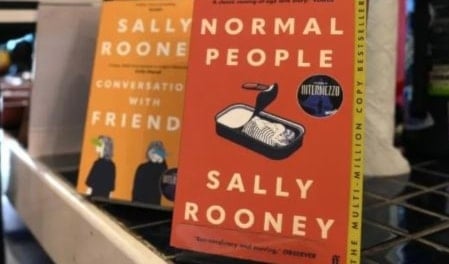
Sally Rooney's books are displayed for sale at a bookshop in London, Thursday, October 15, 2026 (AP)
Dozens of prominent writers, actors, and musicians have signed an open letter defending Irish novelist Sally Rooney, whose books are no longer being supplied to British retailers by her publisher, RTÉ reported.
Among the signers are Paul Mescal and Daisy Edgar-Jones, who starred in the TV version of her novel "Normal People," along with that series' director, Lenny Abrahamson, and Alison Oliver of "Conversations with Friends." The letter ran Wednesday in the New Statesman. It states, "Sally Rooney is a writer, not a terrorist. Her books must be available to the public."
The signatories condemn the British law behind the move as an assault on free expression and urge the government to change it, rejecting "direct or indirect" censorship.
Other Irish names on the letter include actors Jessie Buckley and Sharon Horgan, the musicians CMAT and Kneecap, and authors Marian Keyes, Colm Tóibín, Anne Enright, Colum McCann, and Anna Burns. Internationally, backers include Tilda Swinton, Susan Sarandon, Zadie Smith, Arundhati Roy, and Nobel literature winners Anne Carson, Annie Ernaux, and J.M. Coetzee.
How the dispute began
Rooney's publisher, Faber, announced last week that it would stop supplying her titles in the UK. The reason is her backing of Palestine Action, a protest group that Britain outlawed on July 5, 2025. Belonging to or supporting the group is a crime carrying a sentence of up to 14 years.
Rooney has said she plans to give the earnings from her books and from BBC adaptations of her novels to the group, which says it aims to end "global participation in Israel's genocidal and apartheid regime."
Faber said the law bars it from passing UK sales revenue on to her, calling the idea of selling an author's work without paying that author "unconscionable". The company added that Rooney fully agreed with the decision. The 35-year-old author told the BBC that continuing to publish her work in Britain could amount to a "serious criminal offence."
The books have not been officially banned. Bookstores may keep selling copies they already hold but can't reorder from Faber. Her work remains on sale in Ireland and other overseas markets.
Pressure on the prime minister
The issue came up at Prime Minister's Questions. Claire Hanna, leader of Northern Ireland's Social Democratic and Labour Party, asked Prime Minister Andy Burnham to "commit to reviewing the proscription of Palestine Action."
She said the ban has had "extraordinary consequences for freedom of expression" and noted that some of her own constituents face terrorism charges over peaceful protest.
Hanna also pointed out that Burnham has conceded that his predecessor's handling of Gaza fell short and that his foreign secretary recently took a strong step on sanctions and said campaigners for change had been right.
Burnham stood by the ban, saying it came out of "a rigorous and evidence-based process" that Parliament endorsed. He declined to say more, citing an ongoing court case.
The issue has therefore extended beyond Rooney's publishing contracts to a broader debate over the impact of the Palestine Action ban on artistic freedom, political expression, and the ability of individuals to support causes without jeopardizing their careers.


