
When does Ramadan start? Arab states announce first day of Holy month
 2 Min Read
Several Arab and Islamic states have announced the start date of the Holy month of Ramadan, with some marking its beginning on Wednesday and others on Thursday.
-
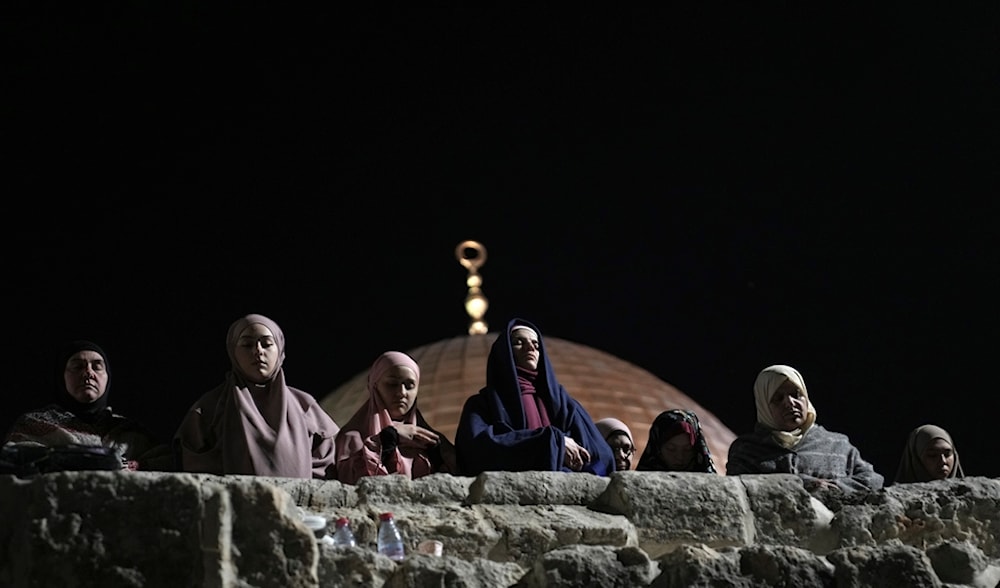
Muslim women pray on Laylat al-Qadr that marks the last 10 days of the holy month of Ramadan, at the Al-Aqsa Mosque compound in al-Quds, Friday, April 5, 2024 (AP)
Several Arab and Islamic states have announced that Wednesday will usher in the holy month of Ramadan, as millions prepare to welcome a season of reflection, fasting, and community. Others have declared that Thursday will mark the beginning of the blessed month, following the traditional sighting of the crescent.
Palestine, Saudi Arabia, Kuwait, Yemen, Egypt, Qatar, and Bahrain confirmed that Ramadan will commence on Wednesday. Meanwhile, Syria and Jordan announced that the crescent moon could not be sighted, making Thursday the first official day of Ramadan for their populations.
As Ramadan begins, it arrives not only as a month of fasting and prayer, but as a rare moment of collective solace for communities that have endured years of hardship and violence. In countries such as Palestine, Syria, Yemen, and Lebanon, where families continue to grapple with loss, forced displacement, and aggression, the holy month carries a deeper resonance.
'Israel' deprives Palestinians of Ramadan at Al-Aqsa
In occupied al-Quds, as Palestinians prepare to embrace Ramadan, Israeli occupation police announced Monday a large-scale deployment around the Al Aqsa Mosque compound. The compound, Islam’s third-holiest site, is located in occupied al-Quds, which "Israel" captured in 1967 and later annexed.
The move comes as part of what authorities described as security preparations for Ramadan, during which hundreds of thousands of Palestinians traditionally gather at Al Aqsa Mosque for prayers, which are aimed at further curbing the freedom of Palestinians under the guise of "security".
Arad Braverman, a senior police officer, said forces would be deployed "day and night" across the compound. He added that thousands of police officers would be on duty during Friday prayers, which typically draw the largest crowds of worshippers.
Braverman said police had recommended issuing 10,000 permits for Palestinians from the occupied West Bank, who require special permission to enter al-Quds. He did not specify whether age restrictions would apply, noting that the final number of permits would be determined by the government.


