
African nations paying more to China than receiving in new loans
 2 Min Read
The shift highlights growing debt payments and a rise in development finance from multilateral institutions.
-
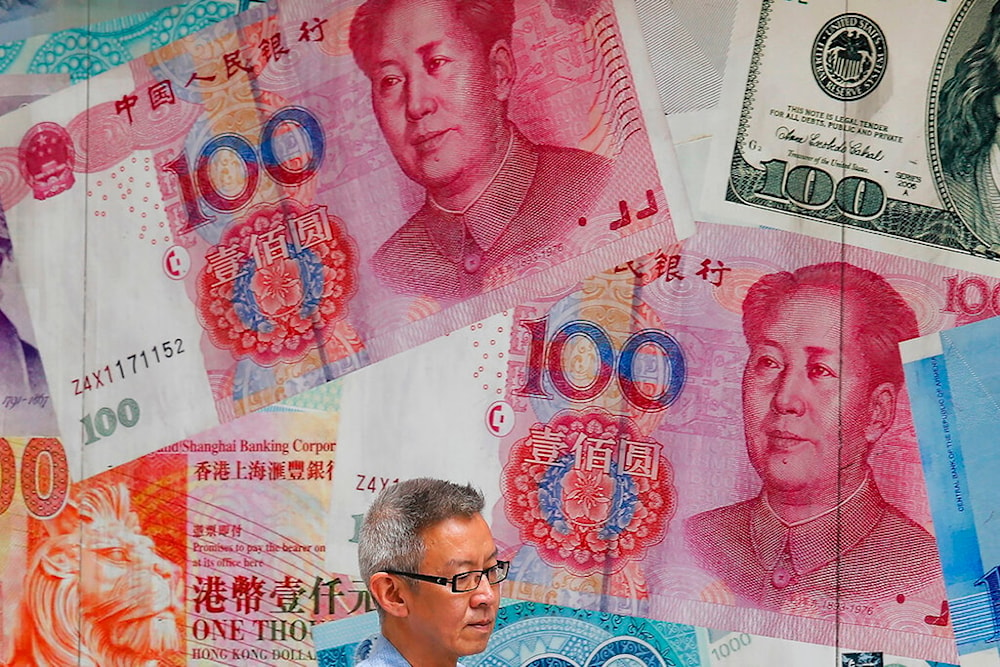
A man walks by a money exchange shop decorated with Chinese yuan banknotes and other countries' currency banknotes at Central, a business district in Hong Kong, on August 6, 2019 (AP)
China's role as a top financier to developing countries has shifted significantly over the past decade, with fewer new loans being issued and rising debt repayments, according to a new analysis released by ONE Data.
The report by the ONE Data initiative reveals that many low- and middle-income countries, especially in Africa, are now sending more money to China in debt payments than they are receiving in new financing from the world's second-largest economy.
The change in financing patterns comes as net funding from multilateral institutions rises. These entities have become the primary source of development finance once debt service is factored in, according to the findings.
Between 2020 and 2024, multilateral lenders increased net financing by 124%, now accounting for 56% of net flows. This equals $379 billion in development finance, the analysis reported.
Read more: Chinese holdings of US Treasuries fall to lowest point since 2019
Rise in debt payments and decline in new loans
"The fact that there's less lending coming in, but that previous lending from China still needs to be serviced, that's the source of the outflows," said David McNair, executive director at ONE Data.
During the most recent period for which data are available, Africa experienced the most dramatic shift. An inflow of $30 billion from China in 2015–2019 turned into an outflow of $22 billion in 2020–2024.
Impact of aid cuts and external financing
The analysis did not include the effects of aid reductions that began in 2025. The closure of the US Agency for International Development and reduced allocations from other developed nations have already negatively impacted economies in Africa and beyond.
According to McNair, once data from 2025 is available, a significant drop in Official Development Assistance (ODA) is expected.
McNair called the trend "a net negative" for African countries, noting that governments are struggling to finance public services and investment. However, he added that reduced dependence on external financing could encourage greater domestic accountability.
The report also noted a general decline in bilateral finance flows and private external debt, both of which are expected to worsen as global aid decreases further in the years ahead.


