
Canada abandons US trade talks as Trump’s 50% tariffs take effect
 7 Min Read
Canada walked away from trade negotiations with Washington after rejecting expanding US demands, triggering 50% tariffs and raising doubts over the limits of Trump’s pressure-driven trade strategy.
-
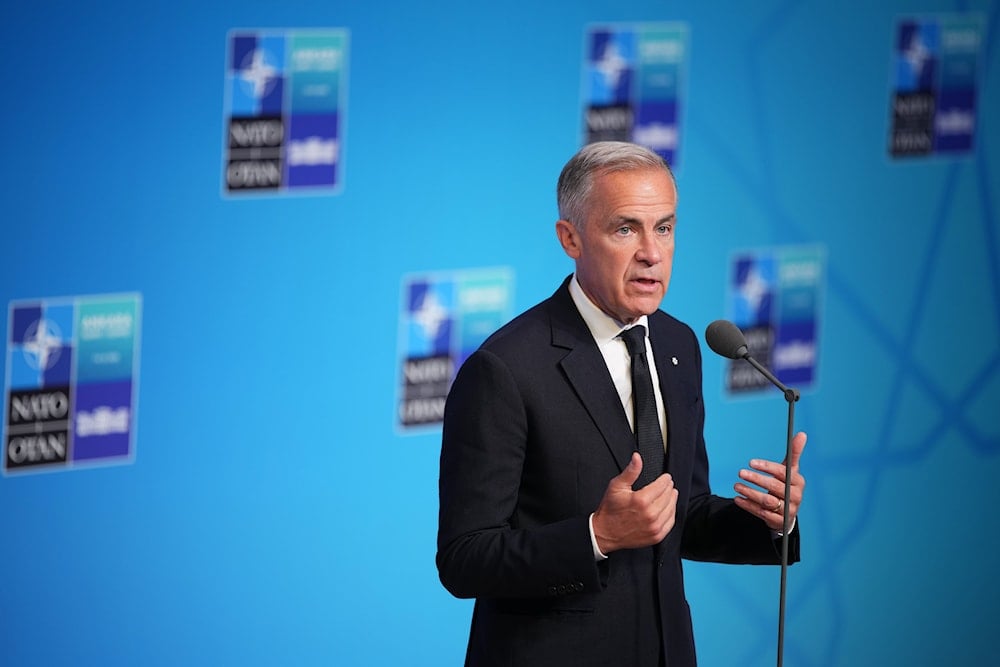
Canada's Prime Minister Mark Carney speaks as he arrives for the NATO summit in Ankara, Turkey, on July 8, 2026 (AP)
Canada has abandoned trade negotiations with the United States after rejecting a widening set of demands from the Trump administration, allowing sweeping 50% tariffs on Canadian goods to take effect and raising fresh questions over Washington’s reliance on economic pressure to extract concessions from trading partners.
According to The Washington Post (WP), Canadian Prime Minister Mark Carney chose to end the negotiations rather than accept conditions Ottawa viewed as increasingly restrictive, including proposals affecting Canadian vehicle production and the country’s ability to pursue trade agreements with other states.
The breakdown came only days after US President Donald Trump announced on Truth Social that the two sides had reached "a DEAL" and required several additional days to finalize the agreement.
Instead, talks collapsed, and the new US tariffs entered into force early on Saturday on a range of Canadian products, including hockey equipment and alcoholic beverages.
Carney announced that Ottawa would respond with its own trade measures beginning September 8, setting the stage for a potentially escalating cycle of tariffs between two economies whose annual bilateral trade exceeds $700 billion.
Washington presses Canada for deeper concessions
The negotiations were intended to prevent the latest round of US tariffs, which Trump threatened in July unless Canada removed retaliatory measures introduced in response to earlier American tariffs.
But disagreements widened as talks progressed.
Washington reportedly sought to keep certain Canadian-manufactured heavy trucks outside any tariff reductions, including Ford F-350 and F-450 models and the GM Silverado produced in Ontario.
Carney said such measures would have gradually made Canadian production less economically viable.
The US administration also sought limits on Canada's ability to sign trade agreements with third countries, according to the report, directly conflicting with Ottawa's efforts to diversify its economic relations and reduce dependence on the US market.
“A 160-year trading relationship has found its red line,” said Flavio Volpe, president of the Automotive Parts Manufacturers’ Association in Toronto. “Demanding that your closest trading partner mirror your trade policy with third countries is akin to asking them to surrender agency over foreign policy. This episode shows that doesn’t work, no matter the disproportionate market leverage of the USA.”
Trump's repeated statements suggesting that Canada should become the 51st US state have also contributed to growing opposition toward Washington among Canadians, making further concessions politically more difficult for Carney.
Speaking in Ottawa on Saturday, the Canadian prime minister pointed to what he described as the growing uncertainty surrounding agreements reached with Washington.
“We’ve recognized from the start that America has changed,” Carney said. “We recognize that sometimes, its signature is written in pencil.”
Divisions emerge inside Trump administration
The talks also exposed disagreements among senior US officials over how far Washington should go in offering tariff relief. US Trade Representative Jamieson Greer reportedly supported reducing an existing 50% tariff on aluminum derivatives to 25% in exchange for Canadian concessions.
However, White House trade adviser Peter Navarro and Commerce Secretary Howard Lutnick opposed the proposal, arguing that maintaining higher tariffs would encourage manufacturing inside the United States.
“Navarro and Lutnick were both yelling at Greer saying: ‘What are you doing? This is stupid. You know, we’re not giving these things away,’” an industry representative familiar with the discussions told the newspaper.
The dispute reflects a broader feature of Trump's trade policy, under which Washington has sought to use access to the massive US consumer market as leverage in negotiations.
Administration officials argue that decades of trade policy weakened US manufacturing and believe stronger tariff pressure can force foreign governments to open their markets, increase investment in the United States and shift production toward American factories.
Both Greer and Treasury Secretary Scott Bessent have previously criticized Canada and China for retaliating against tariffs imposed by Washington.
China, however, also resisted US pressure last year and temporarily restricted supplies of critical rare-earth minerals before Washington reduced its triple-digit tariffs on Chinese imports and reached a trade truce with Beijing.
Existing USMCA deal thrown into uncertainty
The dispute has also cast doubt over the durability of the United States-Mexico-Canada Agreement, negotiated during Trump's first term and signed in 2020.
Trump once described the agreement as “the largest, fairest, most balanced, and modern trade agreement ever achieved.” His administration has since threatened to withdraw from the accord and demanded extensive changes intended to expand manufacturing within the United States.
The failure of this week's negotiations means that talks over proposed USMCA revisions are now unlikely to proceed as planned, while Washington and Ottawa instead prepare for further retaliatory measures.
The tariff escalation could also increase pressure on businesses across the border because of the highly integrated nature of the two economies.
Trump has repeatedly argued that the United States does not depend on goods imported from Canada or Mexico.
"We don’t need anything that Canada has; we don’t need anything that Mexico has, but they need everything that we have. … We don’t need their cars, we don’t need their lumber, we don’t need their energy, we don’t need anything that they have", Trump said in June.
US industries, however, remain deeply reliant on Canadian supplies.
American farmers obtain nearly 80% of their potash fertilizer from Canada, while several northern states rely heavily on Canadian hydroelectricity. Midwestern oil refineries are also configured to process Canadian heavy sour crude.
US consumers could face higher costs
Businesses importing Canadian products will now have to absorb the significantly higher tariff costs or pass at least part of them on to consumers.
Small companies could be particularly vulnerable because tariffs must often be paid before businesses receive payment from customers.
“I expect a significant drop in a lot of these different import categories because importers simply can’t afford to bring them in. That may mean certain products not on the store shelves,” said Jason Miller, a professor of supply chain management at Michigan State University.
Companies unable to replace Canadian intermediate goods, including packaging materials and other industrial inputs, may have little choice but to continue importing them at higher prices.
The pressure on consumers comes as Trump has begun retreating from tariffs in other sectors.
On Friday, after repeatedly maintaining that tariffs do not contribute to higher consumer prices, Trump removed tariffs on beef imports and said the decision would help reduce grocery costs.
The Canada dispute now threatens to push prices in the opposite direction ahead of the November 3 midterm elections, when voter concerns over the cost of living are expected to play a major role.
Some analysts still believe Washington and Ottawa could eventually return to negotiations because of the scale of economic integration between them. "Then the parties come back to the table. North America is too integrated for it to unravel on the basis of a deal that was put together over 14 days", said trade lawyer Dan Ujczo.
For now, however, Canada's refusal to accept Washington's latest conditions represents one of the clearest challenges yet to Trump's strategy of using tariffs and access to the US market to pressure foreign governments into accepting broader economic concessions.
Read more: Canada announces retaliatory tariffs after US trade talks collapse


