
Canada announces retaliatory tariffs after US trade talks collapse
 4 Min Read
Canada will impose new tariffs on US steel and dairy products after trade talks collapsed, deepening tensions between Ottawa and Washington.
-
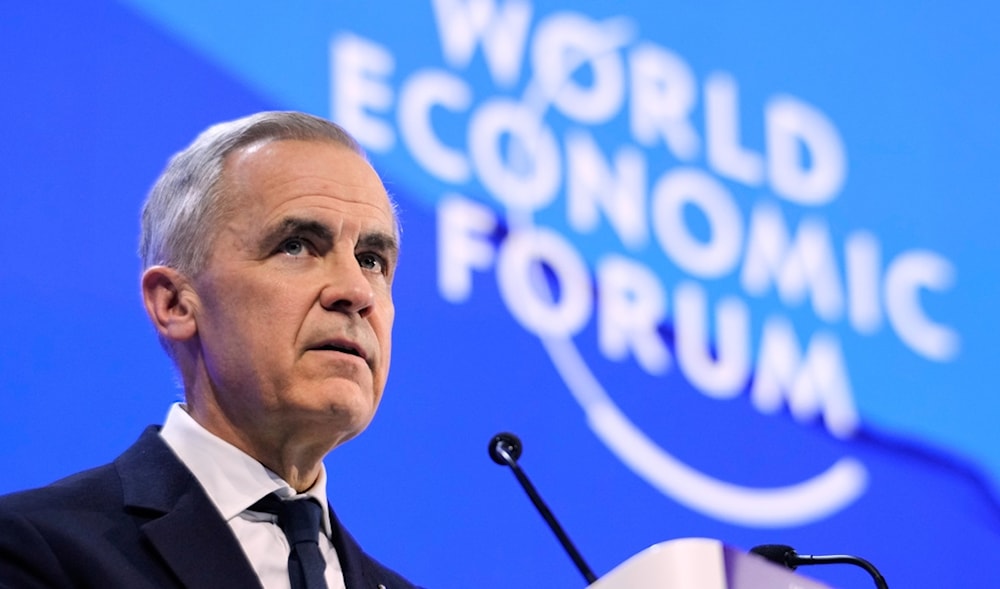
Canada's Prime Minister Mark Carney speaks during the Annual Meeting of the World Economic Forum in Davos, Switzerland, Jan. 20, 2026. (AP)
Canada will impose new tariffs on US goods after trade negotiations with Washington broke down, deepening tensions between the longtime allies.
Canadian Prime Minister Mark Carney announced the retaliatory measures on Saturday after walking away from a "bad deal" with the United States. The decision came after negotiations between the two countries collapsed in Washington on Friday.
The breakdown allowed new 50% US tariffs affecting about $20 billion worth of Canadian goods, equivalent to 5.5% of Canada's exports to the United States, to take effect. The affected products include hockey sticks and cement.
US President Donald Trump had said Washington "should be able to have a deal with Canada," citing his "good relationship" with Carney. However, the Canadian prime minister said Trump's conditions ultimately proved unacceptable.
"We believed earlier this week that we were moving towards a mutually beneficial agreement," Carney said in Ottawa.
"In recent days, the United States proposed new terms that were uneconomic, unfair, and undermined the net benefits for Canada, and called into question the reliability of any deal. In short, they asked too much and they offered too little," he said.
"We cannot accept what they've offered, and we will not give what they've asked," Carney said, accusing Trump of launching a trade war. "You're at war when you get attacked. We got attacked," he added.
Canada announces retaliatory tariffs
Canada's new tariffs will notably target US steel and dairy industries and are set to take effect on September 8. Carney said further details would be announced next week.
On Friday, US Trade Representative Jamieson Greer said Washington had offered "significant tariff reductions on steel, aluminum, autos and lumber" in exchange for concessions from Canada.
A senior US official, speaking on condition of anonymity, described the negotiations as candid rather than acrimonious but said there were no further meetings scheduled.
Trade tensions deepen between Washington and Ottawa
Canada has been seeking relief from Trump's tariffs on automobiles, steel and aluminum, which have battered the Canadian economy, contributed to job losses, and strained what had previously been an iron-clad trade relationship.
Canadian negotiators had remained in Washington throughout the week in an effort to reach an agreement addressing several points of contention.
The White House had accused Canada of "discriminatory treatment" toward US alcohol, automobile and dairy products when introducing its own duties.
The tariffs had initially been scheduled to take effect on Wednesday before Trump issued a last-minute three-day delay, citing major progress in the negotiations.
Ryan Majerus, a former US commerce official who is now a trade lawyer with King & Spalding, told AFP that "both sides will face significant pressure in the coming days to find an off-ramp."
USMCA negotiations add further pressure
Beyond the latest tariffs, the United States and Canada still need to reach an agreement on revisions to the North American free trade agreement, USMCA, after Trump declined to renew it in its current form.
Bilateral relations have also been strained by Trump's repeated threats to make Canada the 51st US state.
Trump was angered by Carney's widely publicized January speech at the World Economic Forum in Davos, Switzerland, in which the Canadian prime minister said the global order was experiencing a "rupture."
Carney has repeatedly said relations with the United States have been permanently altered and that Canada must reduce its reliance on Washington, which currently accounts for roughly 70% of Canadian exports.
"We've been under no illusions. We recognized from the start that America has changed," Carney told reporters on Saturday.


