
EU gas storage falls to lowest July level since 2021
 3 Min Read
EU gas storage facilities are 55.29% full, the lowest level for late July since 2021, raising concerns over winter supply security amid energy risks.
-
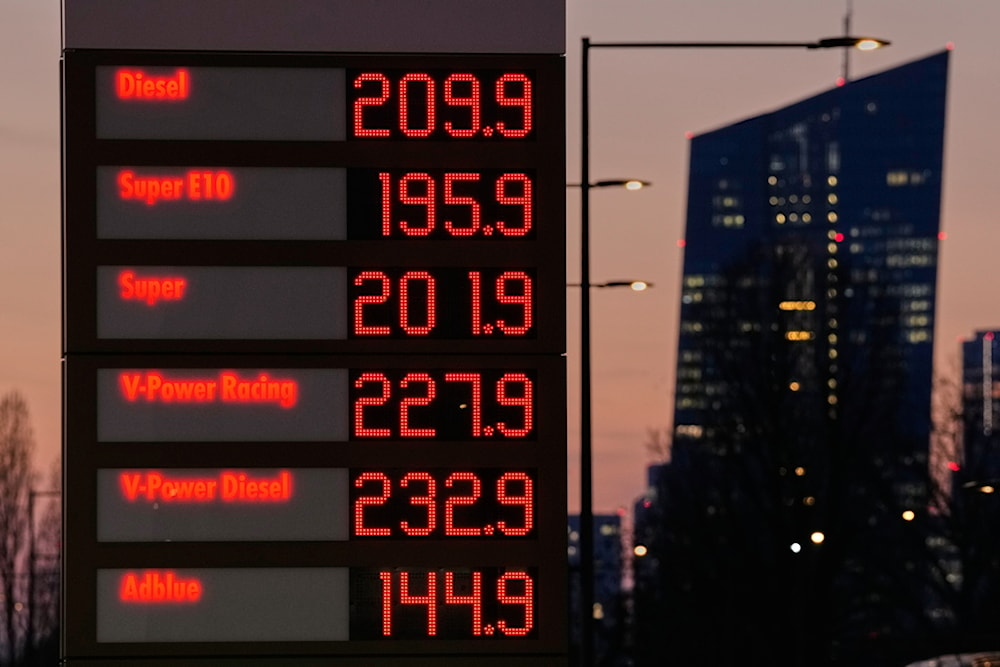
Gas prices are displayed at a gas station near the European Central Bank in Frankfurt, Germany, Thursday, March 5, 2026. (AP Photo/Michael Probst)
European Union gas storage facilities are currently filled to just over 55% of capacity, marking the lowest level for this period since 2021, according to data from Gas Infrastructure Europe (GIE).
As of the end of the gas day on July 25, EU countries had stored 55.5 billion cubic meters of gas, equivalent to 55.29% of total storage capacity.
During the previous gas day, EU members injected 260 million cubic meters into underground storage facilities, increasing overall reserves by 0.23%.
EU gas reserves lag behind previous years
The current storage level remains significantly below figures recorded during the same period in recent years.
GIE data showed that EU storage facilities were filled to:
- 54.75% in 2021
- 67.12% in 2022
- 84.02% in 2023
- 83.66% in 2024
- 76.24% in 2025
The current level is around 18 percentage points below the average recorded for the same period over the previous five years.
The decline comes as European countries continue efforts to rebuild energy reserves ahead of the winter heating season while facing uncertainty over supply routes and global energy markets.
Lower reserves raise winter supply concerns
Russian energy company Gazprom previously warned that European underground gas storage facilities could remain below 75% capacity by October 1 if injection continues at the current pace.
Lower storage levels could create additional pressure during the winter months, when demand for heating increases across Europe.
The European Commission has previously stated that underground gas storage facilities are essential for maintaining supply security, allowing countries to cover up to one-third of their winter gas consumption.
In 2022, the EU introduced gas storage rules requiring member states to fill underground facilities to 90% capacity by November 1 ahead of the winter season.
Energy pressures grow amid global supply uncertainty
The European Union has adjusted its storage requirements amid concerns over possible fuel supply disruptions linked to instability around the Strait of Hormuz caused by the US war on Iran.
European Commission spokesperson Anna-Kaisa Itkonen said in June that the bloc had lowered the required storage target ahead of winter from 90% to 80% due to energy market uncertainties.
The Strait of Hormuz is a major energy transit route, and disruptions there have raised concerns over global fuel supplies and market stability.
With storage levels currently below previous years, European governments face increased pressure to secure sufficient reserves before colder weather increases demand.


