
European gas storage at record low amid energy crisis
 3 Min Read
European gas storage facilities have recorded critically low injection volumes for three consecutive days, according to Gazprom, as the US-Israeli war on Iran disrupts energy supplies to the continent.
-
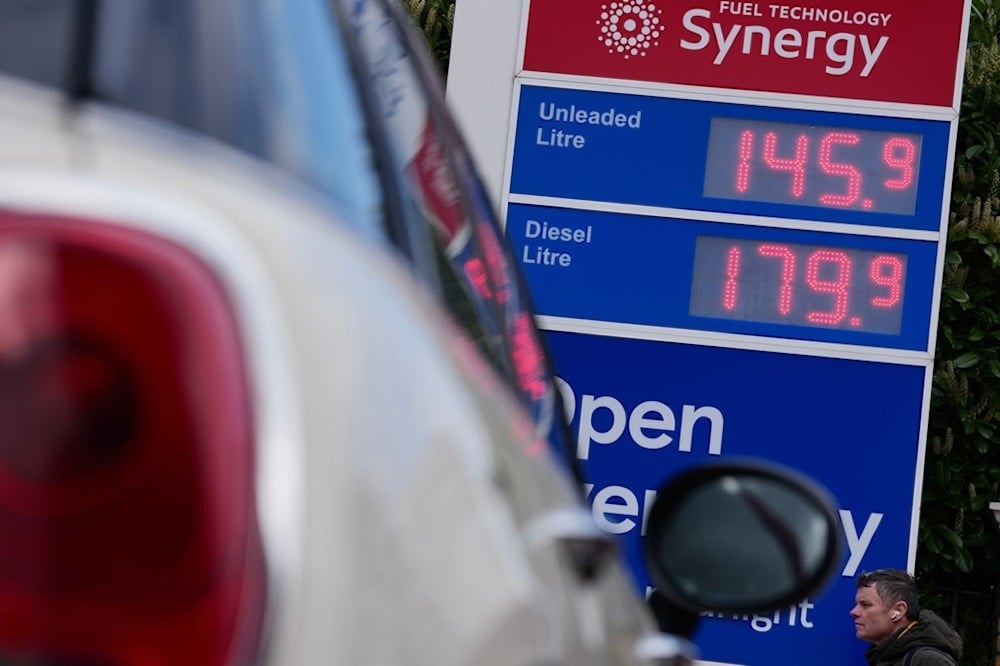
FILE - Prices are shown on a board at a gas station in London, England, Monday, March 30, 2026. (AP)
European underground gas storage facilities have recorded critically low injection volumes for three consecutive days, May 12-14, according to Russian energy giant Gazprom, as the continent faces a deepening energy crisis exacerbated by the US-Israeli war on Iran.
Citing data from Gas Infrastructure Europe, Gazprom stated that net gas injection volumes into European underground storage facilities reached the lowest levels ever recorded for those specific dates.
The statement highlighted that European storage facilities are showing "critically low levels" of gas injection volumes.
Energy crisis worsens as war disrupts supplies
The record-low injection rates come as Europe grapples with severe energy supply disruptions caused by the US-Israeli war on Iran.
The war has effectively closed the Strait of Hormuz, a vital transit route for liquefied natural gas shipments from the Gulf region to European markets.
European nations have been struggling to secure alternative energy supplies since the outbreak of the war on February 28. The continent's reliance on West Asian gas has left it particularly vulnerable to the ongoing blockade and supply chain disruptions.
Winter concerns mount as storage targets at risk
The critically low injection volumes raise serious concerns about whether European countries will be able to meet their storage targets ahead of the next heating season.
With the war showing no signs of abating, European governments are facing mounting pressure to secure alternative energy sources and implement conservation measures.
The energy crisis has already triggered a sharp rise in inflation across the continent, with household energy bills soaring and industrial production slowing. Germany, Europe's largest economy, recently halved its 2026 growth forecast, citing the impact of the war on energy supplies.
Gazprom's role amid geopolitical tensions
The Russian gas giant's announcement comes at a time when European countries have been actively seeking to reduce their dependence on Russian energy following the Ukraine war.
However, the current crisis has highlighted the continent's continued vulnerability to supply disruptions from multiple directions.
While European officials have been reluctant to rely on Russian data, the figures from Gas Infrastructure Europe confirm the severity of the situation. The coming months will test Europe's ability to navigate the winter without significant energy shortages.
Read More: Europe faces growing dependence on US LNG imports by 2028


