
EU leaders urge use of frozen Russian assets for Ukraine aid
 3 Min Read
Seven leaders urge the EU to quickly approve plans to use frozen Russian assets to financially support Ukraine amid the ongoing conflict.
-
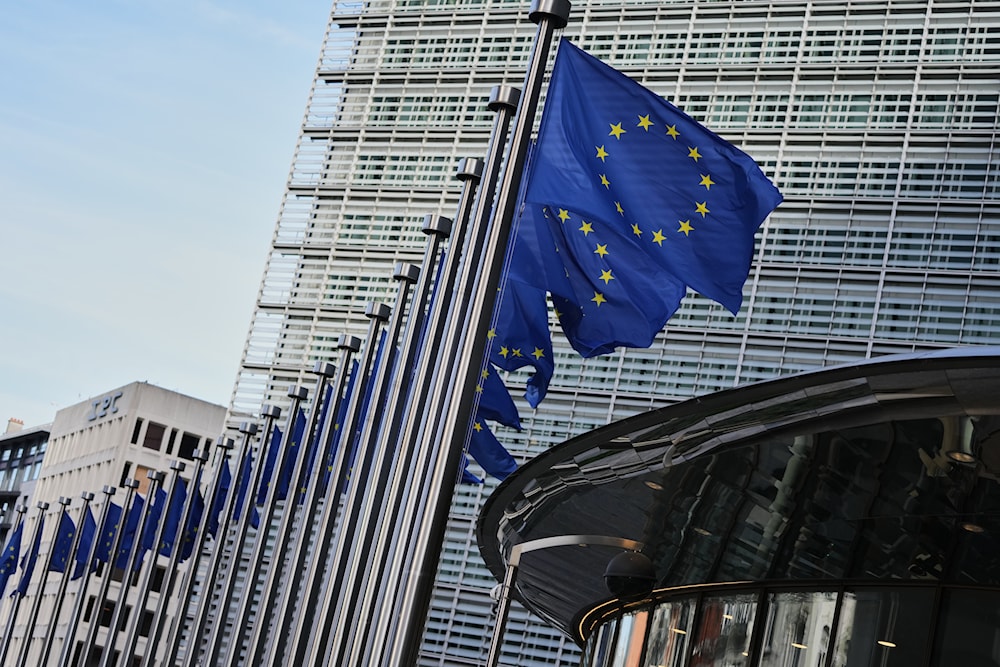
European Union flags flap in the wind outside of EU headquarters in Brussels, Tuesday, Nov. 4, 2025. (AP)
Leaders from seven EU member states on Monday urged the European Union to expedite plans to use frozen Russian assets to provide financial support for Ukraine.
In a joint letter addressed to European Council President Antonio Costa and European Commission President Ursula von der Leyen, the heads of Estonia, Finland, Ireland, Latvia, Lithuania, Poland, and Sweden stressed that backing Kiev remains both a moral duty and a strategic necessity.
"Supporting Ukraine in their fight for freedom and independence is not only a moral obligation, it is also in our own self-interest," the leaders wrote.
They called on the EU to move rapidly to adopt the Commission’s proposals, saying, "We must therefore move ahead quickly on the Commission's proposals to use the cash balances from Russia's immobilized assets for a reparations loan to Ukraine."
Russia warns of global financial turmoil caused by Western asset seizures
The Russian Foreign Ministry has repeatedly cautioned that Western efforts to seize sovereign assets carry broad risks for countries holding reserves in Western financial systems.
In a statement released after a UN General Assembly meeting marking the International Day Against Unilateral Coercive Measures, the ministry said, “Attempts to expropriate the sovereign assets of central banks create risks for all states that have funds in Western jurisdictions.”
Moscow argued that such moves, driven by Western governments, undermine international legal norms and set a “dangerous precedent” that could affect not only Russia but any nation with reserves held in the West.
It added that for states across the Global South and other non-Western economies, the “weaponization” of global financial systems raises new concerns about the neutrality and security of international economic institutions.
The ministry said Russia would continue working with what it called the “global majority” to counter what it views as illegitimate unilateral coercive measures imposed by Western powers.
Russia’s frozen reserves in Europe
Following the start of Russia's military operation in Ukraine in 2022, the European Union and G7 countries froze nearly half of Russia’s foreign currency reserves, totaling approximately 300 billion euros (around $349.3 billion). Of that amount, an estimated 200 billion euros are held in European accounts, primarily at Belgium-based clearinghouse Euroclear, placing Belgium at the center of any potential legal retaliation from Moscow.
The Kremlin has consistently maintained that any move to seize Russian assets would constitute theft and a violation of international law.
Belgium also recently rejected a fresh EU proposal to use frozen Russian central bank assets as collateral for a large-scale loan to Ukraine. The rebuke came just hours before the European Commission was expected to unveil a legislative text authorizing the use of up to €210 billion in immobilized Russian assets to underwrite new loans for Ukraine.
Belgian Foreign Minister Maxime Prevost said on Wednesday that the proposal “does not address our concerns in a satisfactory manner,” stressing that the risks Belgium would assume as the host country for the bulk of the frozen funds were being ignored.
Belgium warns that using the assets to back loans, rather than merely taxing their profits, exposes the country to lawsuits that could force its government or institutions to compensate Russia should future courts rule against the EU.


