
EU struggles to secure critical materials for green transition
 3 Min Read
New audit finds recycling rates as low as 1-5% for key minerals, while strategic partnerships have yielded few results.
-
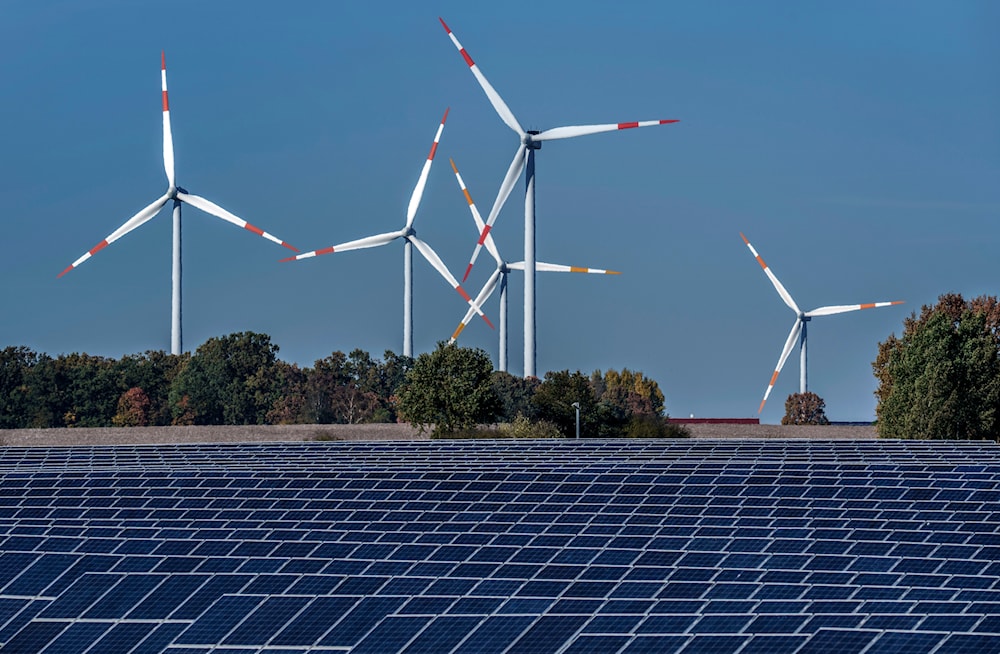
Wind turbines turn behind a solar farm in Rapshagen, Germany, Oct. 28, 2021. (AP Photo/Michael Sohn)
The European Union faces significant challenges in reducing its dependency on foreign suppliers for raw materials essential to renewable energy, technology, and defense sectors, according to a new assessment from the bloc's auditing body released Monday.
The European Court of Auditors found that Brussels' efforts to diversify imports of critical metals and minerals have failed to deliver meaningful progress. Keit Pentus-Rosimannus, an ECA member and former Estonian finance minister, warned that the bloc remains reliant on external sources for most of the 26 key materials needed for its green and digital transformation.
The dependency is particularly acute for certain materials. China provides nearly all of the EU's magnesium supplies, a crucial component in hydrogen-generating electrolyzers, while Turkey accounts for virtually all boron imports used in solar panel manufacturing. This concentration of suppliers among just a few nations, primarily China, Turkey, and Chile, creates strategic vulnerabilities.
"This makes us vulnerable and discredits our goal to be a strong, independent geopolitical power," Pentus-Rosimannus stated on Monday, noting the risk that trading partners could leverage these dependencies for political purposes.
Targets remain out of reach
The EU's Critical Raw Materials Act, which took effect in 2024, established ambitious but non-binding goals for 2030: extracting 10% of required minerals domestically, processing 40% of strategic raw materials, and achieving 15% recycling capacity. However, auditors describe the outlook as unpromising.
Current recycling rates reveal the scale of the problem. Seven materials needed for the energy transition have recycling rates between just 1% and 5%, while ten aren't recycled at all. Meanwhile, processing facilities face closures due to prohibitive energy costs that undermine competitiveness.
Despite signing 14 strategic partnerships on raw materials over five years, the initiative has yielded few tangible benefits. Imports from roughly half of these partner countries actually declined between 2020 and 2024, according to the ECA. Seven partnerships were established with nations having weak governance scores.
The bloc's mining sector also faces structural challenges. Exploration activities remain underdeveloped, and new mining projects can require decades to become operational.
New push amid global competition
In response, the European Commission proposed a €3 billion RESourceEU plan in December to accelerate implementation, including export restrictions on rare earth waste and expedited approval for strategic projects. The proposal also envisions establishing a coordination center for joint investments among member states.
EU ministers are scheduled to meet in Cyprus this week to address the bloc's declining competitiveness relative to American and Chinese rivals. The discussions come as Washington prepares its own response: President Donald Trump plans to launch a strategic minerals stockpile with $12 billion in initial funding.


