
Ghana weighs new gold export routes as Dubai flights disrupted
 5 Min Read
Ghana is preparing alternative gold export routes as flight disruptions to Dubai caused by regional instability linked to the war involving Iran threaten shipments from Ghana, exposing the heavy reliance of African gold trade on Gulf refining hubs.
-
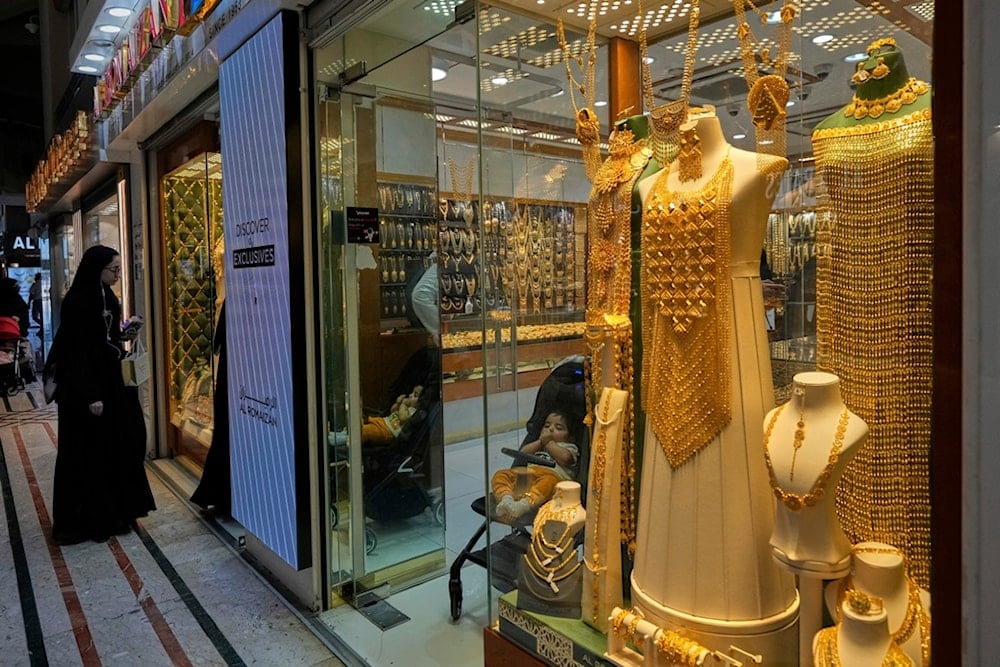
A woman walks into a jewellery shop at a gold market in Dubai, United Arab Emirates, Wednesday, April 9, 2025 (AP Photo/Altaf Qadri)
Ghana is considering alternative destinations for refining its artisanal gold exports after ongoing flight disruptions to the United Arab Emirates interrupted shipments through Dubai, two sources familiar with the matter told Reuters, as regional tensions linked to the war on Iran expose the continent’s reliance on the Gulf trading hub.
Air traffic in Dubai, one of the world’s central gold trading and refining centres, has been severely reduced after the joint US-Israeli war on Iran spread instability across the region and affected neighboring airspace. For the past week, most cargo flights into the city have been grounded.
The disruption is particularly significant for Ghana, Africa’s largest gold producer and the world’s sixth-largest overall. The majority of gold extracted from its artisanal and small-scale mining sector is normally transported to Dubai for processing.
Dubai-based refineries typically handle roughly 80% of Ghana’s artisanal output.
According to a senior official at GoldBod, the state entity created last year as the sole legal buyer and exporter of Ghana’s artisanal gold, contingency export routes have already been drafted in case the disruption persists, although shipments have not yet been directly affected.
Potential destinations include Shanghai and refining centres in India, traders and precious-metals analysts said, though sending gold to these locations would likely increase costs.
GoldBod’s creation and the surge in global bullion prices have significantly boosted Ghana’s formal artisanal gold production. Official output from the sector rose 63% last year to 96 metric tons, valued at roughly $15.8 billion at current prices, accounting for about 52% of the country’s overall gold production.
Despite the logistical uncertainty, the GoldBod official said global demand for gold ensures that alternative buyers remain available.
"There is always a market for gold. We have people lined up who have been knocking for years, some even ready to pay a premium."
Gold shipments are typically transported by air due to the metal’s high value relative to its weight. However, flight capacity remains limited as Dubai’s airport, normally the busiest in the world, is currently operating at only around a quarter of its normal level.
Authorities are prioritizing passengers and essential cargo such as pharmaceuticals, leaving less space available for commodities.
"When flights do start up, the early ones are likely to be carrying perishable goods rather than high value," said StoneX analyst Rhona O'Connell.
Industry participants warn that a prolonged escalation in the Middle East could have serious economic consequences for Ghana and other African producers reliant on the trade route.
"A no-fly zone declaration would affect us big time — with no trade and no foreign exchange. The local currency may be affected with its economic consequences," said a source at a Ghanaian ASM gold miner, who did not wish to be named.
Airlines have so far extended flight suspensions in the region only for several days at a time, while Dubai-based Emirates Airline has already resumed some operations and aims to restore its full schedule in the coming days.
Efforts to curb illicit gold flows
The disruption is also drawing attention to the issue of illicit gold trade. Artisanal and small-scale mining accounts for roughly 20% of global gold production and provides livelihoods for millions of people, but the sector often faces scrutiny over traceability and regulatory compliance.
In previous years, a significant share of Africa’s artisanal gold was believed to have been smuggled to the United Arab Emirates, prompting authorities in both Ghana and the UAE to tighten oversight.
GoldBod was created in part to formalize exports and direct more production through regulated channels, though rising gold prices continue to fuel informal mining operations that are damaging rivers and threatening cocoa plantations.
Some industry observers say the current disruption could also create an opportunity to curb illicit supply chains.
"While the situation in the Middle East is undeniably tragic, it also creates a moment to disrupt the unwanted illicit flows that have long fuelled instability throughout Africa, particularly those driven by criminal and non-state actors," Ruth Crowell, chief executive of the London Bullion Market Association, told Reuters.
Ghana’s authorities are aiming to channel as much as 127 tons of artisanal gold through formal export systems as reforms in the sector continue.
As part of that effort, Rand Refinery, Africa’s largest gold refinery, partnered with a Ghanaian refinery earlier this year to support responsible domestic processing of artisanal gold.
The London Bullion Market Association said the Middle East disruption may prompt more companies to reassess their supply chains.
Responsible market participants will "reassess their supply chains and make informed decisions about where to source and send their material," Crowell said.
Read more: Gold reaches new heights as safe-haven demand surges


