
Highest ever in 'Israel': Cost of wars in region reaches $228bln
 3 Min Read
A report based on Bank of Israel data estimates the cost of "Israel's" wars in Gaza, Lebanon, Syria, and Iran at $228 billion since October 2023.
-
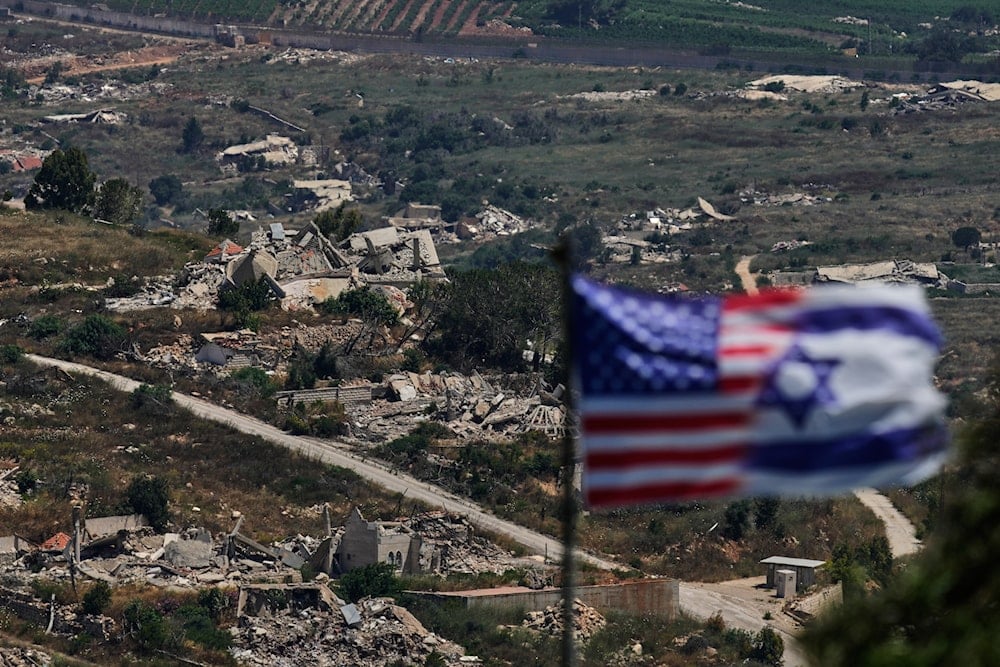
Israeli and US flags stand against a backdrop of destroyed buildings in southern Lebanon, as seen from occupied Palestine, June 21, 2026 (AP)
The wave of wars "Israel" has waged since October 7, 2023, across the Gaza Strip, Lebanon, Syria, and Iran has become the most costly in the occupation's history, according to a report published by the Israeli news site Zman Yisrael.
Citing an analysis based on Bank of Israel data, the report places the total war cost at approximately 683 billion shekels ($228 billion), encompassing direct government expenditures, economic losses, and US military aid.
Direct war costs through the end of 2025 reached about 352 billion shekels ($117 billion), the report said. With military operations during 2026, including the war on Iran factored in, that figure rose to an estimated 405 billion shekels ($135 billion).
Of that total:
- 243 billion shekels ($82 billion) were allocated to the military and security establishment
- 33 billion shekels ($11 billion) went to compensation funds and property tax restitution
- 57 billion shekels ($20 billion) covered various civilian expenditures
- 19 billion shekels ($6.4 billion) were paid in interest on rising public debt.
The report noted that these figures do not include extensive US military assistance received during the war, valued at roughly $26 billion (about 78 billion shekels). That aid took the form of weapons, ammunition, military equipment, and logistical support.
Record reserve mobilization, civilian compensation add to economic woes
The government’s massive spending also financed what the site described as “the largest call-up of reserve forces in Israel’s history.” In 2024 alone, about 37 billion shekels ($12.3 billion) were spent on compensation, salaries, and allowances for reservists who were summoned for extended service.
Billions more were earmarked for:
- Compensating businesses and individuals harmed by the war
- Funding evacuations of settlers from border zones in the north and south
- Rebuilding affected settlements
- Providing health and mental health care for the wounded and traumatized.
According to the report’s estimates, the war’s financial load equals roughly 40,000 shekels ($13,300) per Israeli settler, or approximately 150,000 shekels ($50,600) per average family. For high-income earners, who bear the largest share of the tax burden, the estimated additional contribution stands at about 160,000 shekels ($53,000) per individual.
Economic impact set to have long-term detriments
On the wider economic front, the Bank of Israel estimated cumulative GDP losses between October 2023 and the end of 2025 at 177 billion shekels ($60 billion), driven by slowed economic activity and reduced output compared to pre-war projections.
When including economic damage from clashes in 2026, including the war with Iran, GDP losses are estimated at more than 200 billion shekels ($67 billion), with expectations that losses will continue to rise as security and military repercussions persist.
Combining the direct government outlay of 405 billion shekels ($135 billion), US aid equivalent to roughly 78 billion shekels ($26 billion), and projected GDP losses exceeding 200 billion shekels ($67 billion), the total estimated cost of the war reaches approximately 683 billion shekels ($228 billion).
The report concluded that the war’s aftermath will be felt for years to come, through rising public debt, higher taxes, and reduced spending on public services and infrastructure. It described the “War of Iron Swords” as the most draining military event for the Israeli economy ever.


