
Oil demand set to fall as war on Iran, US blockade disrupt markets
 3 Min Read
The war on Iran and the US blockade of its ports are driving a rare drop in global oil demand while simultaneously threatening supply, raising fears of a broader energy shock.
-
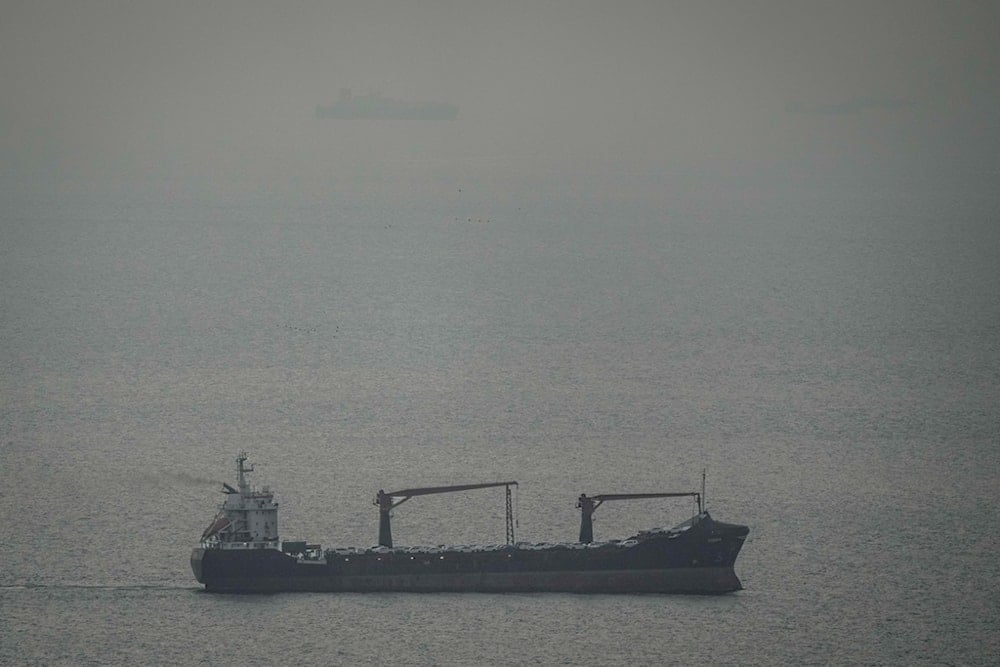
A cargo ship carrying vehicles sails through the Arabian Gulf toward the Strait of Hormuz in the United Arab Emirates, Sunday, March 22, 2026 (AP)
The US-led war on Iran is expected to trigger a rare annual decline in global oil demand for the first time since the COVID-19 pandemic, as disruptions driven by the war and rising prices weigh on consumption, the Associated Press reported on Tuesday.
Citing the International Energy Agency (IEA), the report said oil demand is now projected to fall by an average of 80,000 barrels per day this year, marking a sharp reversal from earlier forecasts of an 850,000-barrel-per-day increase prior to the escalation.
The decline has been particularly pronounced in recent weeks, as the war and resulting instability, including damage to energy infrastructure and constraints affecting the Strait of Hormuz, have weighed heavily on global consumption. The IEA estimates that demand could fall by as much as 1.5 million barrels per day in the current quarter.
While initial reductions have been concentrated in the Middle East and Asia-Pacific, the agency warned that the impact is likely to spread globally as prices rise and supply constraints intensify.
The downturn comes as mounting pressure on global energy markets is compounded by Washington’s decision to impose a blockade on Iranian ports, a move that threatens to further disrupt already strained supply chains and deepen volatility across international markets.
Oil markets shaken
Meanwhile, Agence France-Presse reported that the US blockade is sending shockwaves through global oil markets, raising fears of a new supply crisis, particularly for Asian economies that rely heavily on crude passing through the Strait of Hormuz.
Roughly one-fifth of the world’s oil flows through the strategic waterway, where maritime traffic has already slowed significantly amid escalating tensions.
Analysts warn that the blockade could deepen supply shortages following damage to Gulf energy infrastructure and the disruption of export routes. Iranian crude, which had continued to reach Asian markets despite the war, has played a stabilizing role in global supply, but that balance is now increasingly under threat due to US measures.
Amir Handjani of the Quincy Institute for Responsible Statecraft questioned the feasibility of enforcing the blockade, warning of the risks of escalation.
“What is the US Navy going to do? They’re not going to confront Chinese, Indian and Pakistani merchant ships loading in Iranian ports,” he said. “That’s an act of war.”
China, the largest importer of Iranian oil, has condemned the move, describing the blockade as “dangerous and irresponsible,” while analysts expect oil prices to continue rising amid growing uncertainty.
Read more: US-sanctioned tanker crosses Hormuz despite blockade pressure


