
Oil prices could hit $150 if Hormuz remains blocked: Goldman Sachs
 3 Min Read
Goldman Sachs warns oil prices could exceed $100 per barrel and reach $150 if crude flows through the Strait of Hormuz remain severely disrupted.
-
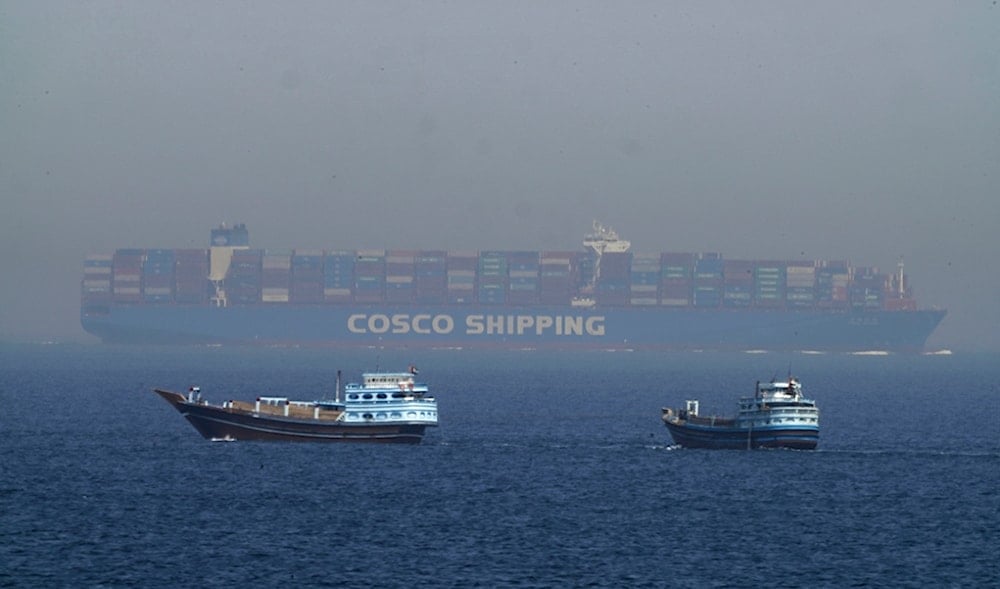
Two traditional dhows sail by a large container ship in the Strait of Hormuz, Friday, May 19, 2023 (AP)
Global oil prices could surpass $100 per barrel within days and potentially reach $150 by the end of the month if the severe disruption to crude flows through the Strait of Hormuz continues, according to a warning from Goldman Sachs.
The investment bank said the disruption to oil shipments through the critical trade route linking major oil producers to global markets has been greater than initially expected following the US-Israeli attack on Iran slightly over a week ago.
Economic impact gravely underestimated
Goldman Sachs had previously estimated that oil flows through the Strait of Hormuz could fall to 15% of normal levels. However, new data suggest that the impact is even more severe.
According to the bank, only 10% of the oil cargoes that typically transit the strait are currently able to pass, due to Iran’s effective blockade of tankers moving through the narrow waterway as a response to the aggression on its people and territory.
“Based on these new data, developments and the size of the shock, we now think that oil prices would likely exceed $100 next week if no signs of solutions emerge by then,” the bank said in a note released Friday.
Supply shock exceeds previous disruptions
Goldman Sachs noted that the scale of the disruption is significantly larger than previous supply shocks. Its analysis suggests that the impact is 17 times greater than the peak disruption to Russian production in April 2022, following the launch of Moscow’s operation in Ukraine, which pushed oil prices to about $110 per barrel.
The bank also warned that oil prices, particularly refined products, could exceed the peaks recorded in 2008 and 2022 if disruptions in the Strait of Hormuz continue throughout March.
Oil prices previously climbed above $120 per barrel in 2022 and reached $145 per barrel in 2008, both of which had severe consequences for the global economy.
Last week, prices climbed above $90 per barrel, marking the largest weekly increase since the COVID-19 pandemic. The rally included a $10 jump in prices on Friday alone.
Over the weekend, brokerage IG reported that US crude traded above $94 per barrel on Sunday, suggesting that prices could rise further once financial markets reopen.
Analysts warn of global economic impact
Meanwhile, analysts warn that the disruption to global oil supplies could have significant economic consequences.
Clayton Seigle, a senior fellow at the Center for Strategic and International Studies, said the oil market is currently facing a deficit of roughly 20 million barrels per day, with little indication of relief.
“The grace period given by the market to the Trump administration expired at the end of last week,” he said.
“While observers may have initially thought his disregard for painful oil prices was a bluff, it’s now clear that it isn’t.”
Oil prices surge more than 50% in 2026
Overall, oil prices have surged by more than 50% since the start of 2026, when crude traded at roughly $60 per barrel.
Prices had already begun rising in January and February, before accelerating sharply following the US-Israeli attack on Iran just over a week ago.
Read more: White House scrambles to curb gas prices after war on Iran surge


