
White House scrambles to curb gas prices after war on Iran surge
 3 Min Read
The Trump administration is seeking ways to curb rising gasoline prices after the war with Iran pushed global oil prices higher, according to Politico.
-
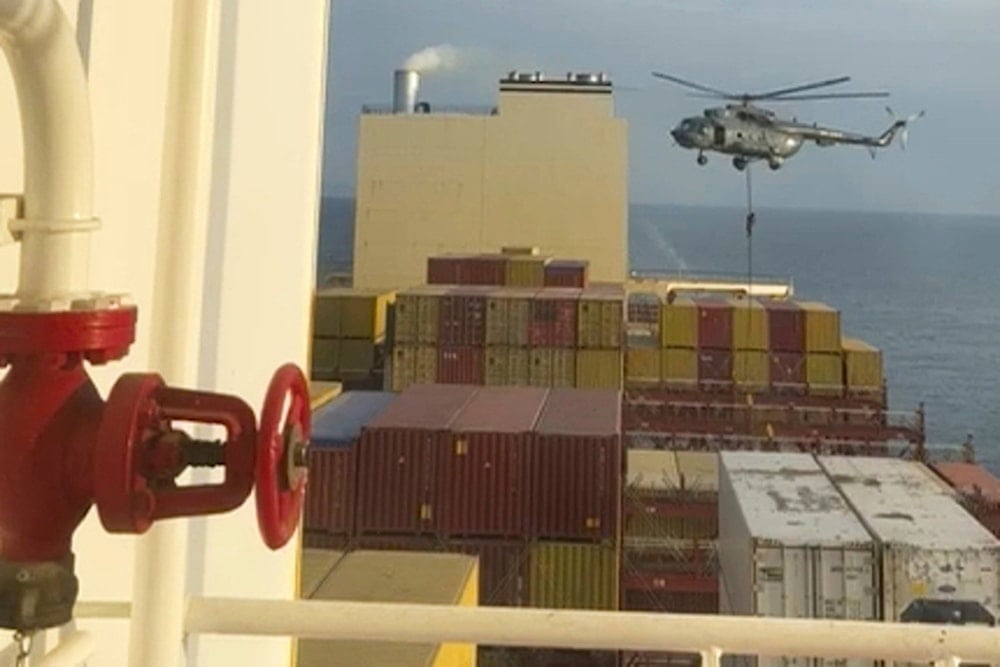
This image made from a video provided to The Associated Press by a Middle East defense official shows a helicopter raid targeting a vessel near the Strait of Hormuz on Saturday, April 13, 2024 (AP)
Senior officials in the administration of US President Donald Trump are searching for ways to lower gasoline prices following the surge in energy costs triggered by the war with Iran, according to a report by Politico citing industry sources.
The report said White House Chief of Staff Susie Wiles has urged advisers to present proposals aimed at reducing fuel costs after oil prices rose sharply following the US attack on Iran and Tehran’s retaliatory actions in the Persian Gulf.
Oil prices rise as conflict disrupts energy markets
According to Politico, crude oil prices have risen by more than $10 per barrel since the start of the conflict, pushing gasoline prices to their highest levels since Trump returned to office.
The increase follows attacks on energy infrastructure and shipping routes in the Persian Gulf, a region that handles a significant share of global oil shipments.
Industry sources told the outlet that energy officials, including Energy Secretary Chris Wright and advisers linked to the National Energy Dominance Council led by Interior Secretary Doug Burgum, are under pressure to propose measures that could stabilize fuel prices.
Administration explores policy options
Among the ideas reportedly being discussed is a temporary suspension of the federal gasoline tax. However, such a measure would require approval from Congress and may not immediately reduce fuel costs for consumers.
Another proposal under consideration involves loosening US sanctions on Russian oil shipments in order to increase global supply and reduce market pressure.
The report noted that the administration may ultimately decide not to pursue the idea, but its consideration highlights the urgency inside the White House to contain rising fuel costs.
White House denies panic over energy prices
The White House rejected claims that officials are scrambling to respond to the spike in energy prices.
Press Secretary Karoline Leavitt criticized the report as “sensationalist” and said the administration remains confident in its energy strategy.
She said the United States remains the world’s largest producer of crude oil and natural gas and that officials are working to maintain stable energy markets during what the administration calls Operation Epic Fury.
Leavitt also pointed to steps taken by Washington to support energy shipments, including political risk insurance for vessels operating in the Persian Gulf and potential US naval escorts for oil tankers traveling through the Strait of Hormuz.
Energy disruptions raise economic concerns
Energy markets have been volatile since the start of the war. Oil futures briefly reached around $82 per barrel amid reports of attacks on tankers in the Strait of Hormuz.
The conflict has also affected global gas markets. European natural gas prices have surged after Qatar halted some liquefied natural gas production due to the conflict.
The Strait of Hormuz is one of the most critical global energy corridors, carrying more than one fifth of the world’s crude oil shipments. Disruptions to traffic through the waterway could have significant consequences for global energy markets.
Read More: Oil prices surge as Hormuz shipping halted after strikes


