
War on Iran sends shockwaves through Europe's energy supply
 4 Min Read
As the war on Iran reshapes global energy markets, Europe may emerge with a new rationale for renewables, one driven by energy security rather than climate concerns.
-
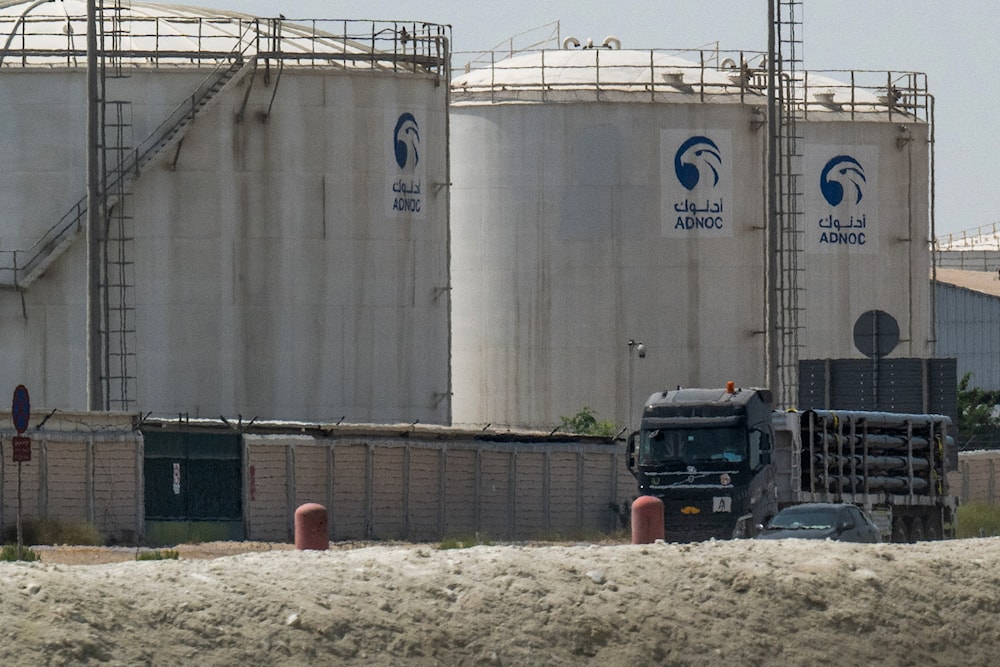
A truck drives past an ADNOC Gas, a subsidiary of the Abu Dhabi National Oil Company, facility in Abu Dhabi on March 3, 2026. (Ryan Lim/ AFP)
The US and Israeli aggression against Iran has thrown global energy markets into disarray, sending shockwaves across Europe as shipping through the Strait of Hormuz, the gateway for roughly a fifth of the world's oil and gas, grinds to a near-standstill.
European natural gas prices have nearly doubled since the war erupted, reaching €56 per megawatt-hour as of Tuesday, with oil prices rising around 10 percent over the same period.
While Europe imports less than 10 percent of its gas through the Strait of Hormuz, the closure of the route has removed a significant volume of supply from global markets, pushing prices up worldwide and squeezing households and industry already burdened by some of the world's highest energy costs.
The price spike comes at a particularly vulnerable moment. European gas reserves fell to a four-year low of around 30 percent of capacity in March, according to ENTSOG data, after a colder-than-normal winter drained stockpiles, particularly in Germany.
Emergency reserves have not yet been deployed, with officials from multiple capitals telling POLITICO they remain cautious about the conflict's trajectory.
Diversification hits a wall
Europe has spent three years weaning itself off Russian energy following the onset of the Russia-Ukraine war in 2022, marking a shift that saw the US capture around 60 percent of Europe's liquefied natural gas (LNG) supply.
Now that pivot looks precarious too, as the Gulf conflict has knocked out two of Europe's most-cited alternative suppliers.
Qatar, the source of 20 percent of the world's LNG, halted production on Monday, while the UAE shut down a major gas complex in northern Iraq last week. Meanwhile, Hungary has already used the crisis to push back on EU efforts to end Russian energy imports.
Tanker traffic effectively halted
Shipping through the Strait of Hormuz has collapsed. Fewer than 10 vessels per day are now attempting passage, compared to normal flows of 15-18 million barrels of crude daily. European shipping giants Maersk, Hapag-Lloyd, MSC, and CMA CGM have all suspended transits, rerouting vessels around Africa's Cape of Good Hope.
War risk insurance has compounded the disruption, with hull and cargo premiums rising 200-300 percent in some cases. "In the 15 years I've covered oil and shipping markets, this is probably the biggest event [I've seen]," Matthew Wright, principal freight analyst at Kpler, told POLITICO.
On Tuesday, President Trump offered US naval escorts and political risk insurance for tankers navigating the strait, a move that briefly cooled a market rally that had added more than $10 per barrel since strikes began Saturday.
A renewed push for energy independence?
The crisis has reinvigorated debate over Europe's renewable energy transition. UN climate chief Simon Stiell argued Monday that the chaos demonstrates "yet again that fossil fuel dependence leaves economies, businesses, markets and people at the mercy of each new conflict."
Adrian Hiel of the Electrification Alliance called for a "massive push" for electric vehicles, heat pumps, and batteries.
While renewables now generate nearly half of EU electricity, they account for only 20 percent of the bloc's total energy mix. A full transition remains decades away, offering no quick fix for the current crunch.
What the conflict may accelerate, however, is a broader reframing in which energy security, not climate, becomes Europe's central argument for expanding its renewable capacity.


