
Oil prices rise above $100 as US war on Iran disrupts shipping again
 3 Min Read
Oil prices rise above $100 a barrel for the first time since July as the US war on Iran threatens global supplies, raising inflation concerns.
-
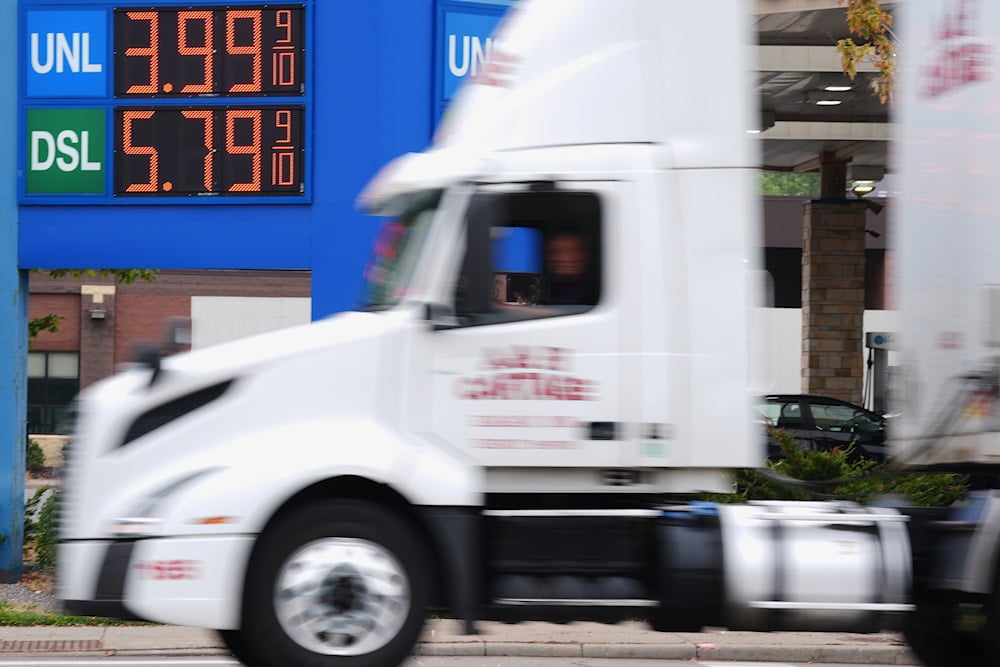
Diesel prices are displayed at a gas station as prices hit a record high in the US, Friday, Sept. 4, 2026, in Minneapolis (AP)
The price of oil has risen above $100 a barrel for the first time since July as the US war on Iran threatens further disruption to global supplies, Reuters reported.
Brent crude, the international benchmark for oil prices, rose 2.1% past the milestone after tensions stepped up in the Gulf amid the latest US attacks and Iran's retaliatory operations. The price has jumped by a quarter since early August as hopes for a permanent resolution to the six-month-old war faded and as fighting flared again.
Oil prices have fluctuated in the six months since the start of the war on Iran, which triggered what many feared would be the greatest energy supply disruption in history. In the first weeks after the first US-Israeli attacks on Iran in late February, oil prices surged past $100 a barrel, and analysts predicted that prices could rise to as high as $150 as flows through Hormuz came to a halt.
Prices dropped, then rose again following renewed US aggression
The oil price peaked at $126 in April during the war, but later fell back amid hopes of a ceasefire in the region. The price then began to climb again after a memorandum of understanding between the US and Iran fell apart when the US launched attacks on Tehran.
Gas prices have also risen on the back of the war, with UK natural gas prices hitting the highest level in three and a half years this month.
The rise in energy prices has stoked fears around inflation and the prospect of higher interest rates this year, while in the US, economists are expecting at least one interest rate rise from the Federal Reserve by the end of the year.
Iran-Oman talks on Strait of Hormuz making progress
Meanwhile, Iranian Foreign Ministry spokesperson Esmaeil Baghaei said negotiations with Oman over the Strait of Hormuz are making significant progress, while warning countries against becoming involved in the ongoing US war against Iran.
Speaking about the negotiations, Baghaei said the talks with Oman “have reached their final stages” and may result in securing a maritime route.
Baghaei stressed that Tehran’s position remains focused on diplomacy while maintaining that Washington bears responsibility for the current crisis, adding, “The problem is not Iran’s practices, but US naval aggression.”
He added that Iran had repeatedly made clear that the central problem was Washington’s conduct and its violation of agreements. “We said since the Ramadan War and before that, that the problem is the United States and its violation of agreements,” Baghaei said, adding that “the ball is now in America’s court.”
The Iranian official said US actions constitute “blatant aggression", arguing that political statements cannot erase American defeat or the consequences of the military confrontation. “Words and statements do not erase the American defeat, nor can they erase this disgrace and this blatant aggression against the Iranian people,” he said.


