
US weighs military pullback from West Asia after war on Iran: CNN
 5 Min Read
Washington considers reducing troops and bases across West Asia after Iran exposed vulnerabilities in US military infrastructure during the conflict.
-
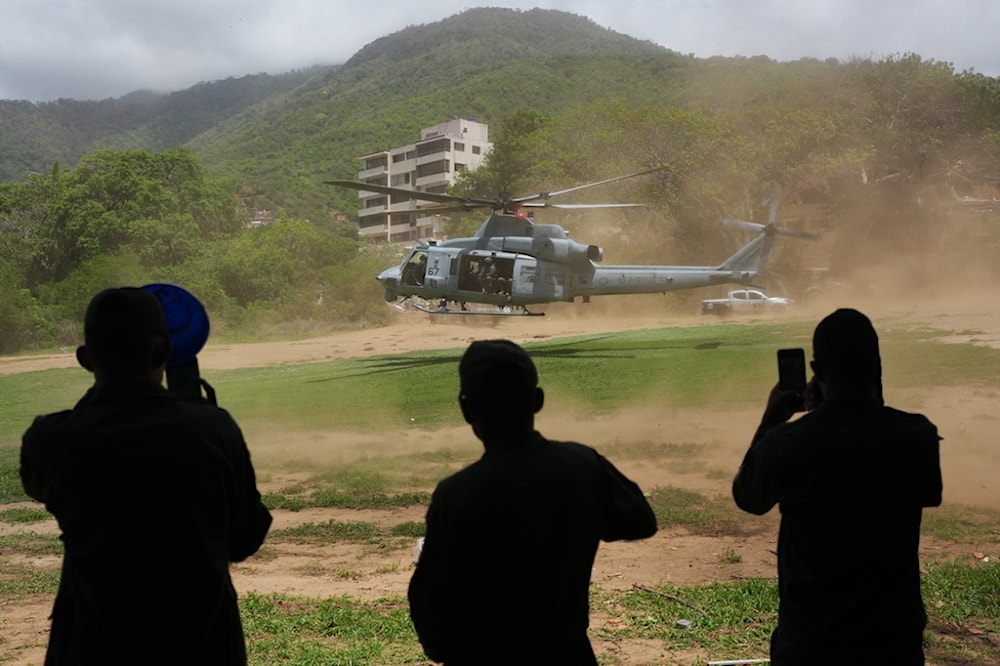
A US military helicopter takes off after landing in La Guaira, Venezuela, three days after earthquakes struck, Saturday, June 27, 2026. (AP Photo/Matias Delacroix)
The United States is considering reducing its military presence across West Asia following its war on Iran, as Iranian strikes exposed the vulnerability of US forces and military infrastructure throughout the region, CNN reported.
The discussions reflect growing pressure on Washington to reassess a military footprint that has expanded over decades and subjected US forces to increasing risks. The war on Iran demonstrated that the extensive network of American bases across West Asia can be directly targeted despite the Pentagon's efforts to maintain them as pillars of US regional power.
The United States currently has roughly 50,000 troops stationed across the region, alongside major naval and air assets, per CNN.
According to the CNN report, US officials are discussing options that could involve reducing the number of troops and military installations, although no final decision has been made and there is no established timetable for such a move.
Read more: Marandi: Iran’s capabilities have shifted power balance | Excl.
Iranian strikes expose vulnerability of US bases
Iran's retaliation to the US hostilities demonstrated the reach of its missile capabilities and the vulnerability of American military infrastructure, with Iranian missiles targeting positions in Bahrain, Qatar, Saudi Arabia, and Kuwait, putting American forces and strategic installations across the region under direct pressure.
The strikes caused significant damage to US military infrastructure. A CIA outpost in Riyadh was also reportedly destroyed, further highlighting the vulnerability of American intelligence and military networks.
The attacks challenged the assumption that Washington can maintain a sprawling military presence in West Asia without exposing its forces to substantial retaliation.
US officials are also examining the possibility of underground facilities and other hardened infrastructure, while some installations damaged during the war may not be rebuilt.
The consequences could extend to Washington's relations with Gulf governments, which host major American military facilities and could increasingly be expected to shoulder more responsibility for their own defense.
Washington's military footprint across West Asia
The US military presence in West Asia is the product of decades of intervention, wars, occupations, and strategic expansion.
Before the September 11 attacks, the United States had around 27,000 troops in the region. That figure surged during the US invasion and occupation of Iraq, reaching approximately 250,000 troops at the height of the war.
Between 2007 and 2011, around 100,000 US troops remained in Iraq, while tens of thousands continued to be stationed across the region after the withdrawal of most American forces.
Today, Washington maintains a network of bases and military facilities designed to project US power across West Asia and protect American strategic interests.
The US Navy's Fifth Fleet, headquartered in Bahrain, remains a central component of that military architecture, while American aircraft carriers, destroyers, air-defense systems, and troops provide Washington with a permanent military presence.
Read more: US SLAM-ER missile identified at site of Sirik wedding strike
US weighs a new regional force posture
The Pentagon is now examining whether this military structure remains sustainable after the war on Iran demonstrated the risks facing American forces.
The US had deployed two aircraft carriers and more than a dozen destroyers in the region, while maintaining thousands of troops at bases vulnerable to Iranian retaliation.
Washington admitted to the killing of 18 US service members during the war, according to the report.
The scale of the Iranian response has therefore forced Washington to confront a strategic problem that extends beyond individual bases: maintaining a large military footprint makes US forces potential targets whenever Washington launches or participates in another war in the region.
The assassination of Iranian General Qasem Soleimani in a US drone strike in Baghdad in 2020 had already demonstrated Washington's willingness to directly target senior Iranian officials. The subsequent Iranian response, and later the war on Iran, underscored the potential consequences of such escalation.
No timeline for reducing US presence
Despite discussions inside Washington, US officials have not established a clear timeline for withdrawing troops or significantly reducing the American military presence in West Asia.
Bahrain, which hosts the US Fifth Fleet, is reportedly not expected to see the American naval force leave anytime soon.
Any substantial reduction would nevertheless mark a significant shift for Washington, whose regional strategy has long depended on maintaining military forces close to Iran and securing an extensive network of bases and strategic positions.
The war on Iran has now exposed the costs of that strategy, as Iranian missile strikes demonstrated that American bases across West Asia are not beyond the reach of Iran's retaliatory capabilities.
Read more: Iran warns US over new missiles, broader Gulf maritime response


