
Panama Canal fees hit record highs following El Niño, war on Iran
 3 Min Read
Panama Canal transit fees have surged to record levels as the US war on Iran shuts the Strait of Hormuz and a worsening El Niño drought squeezes water levels and cargo capacity.
-
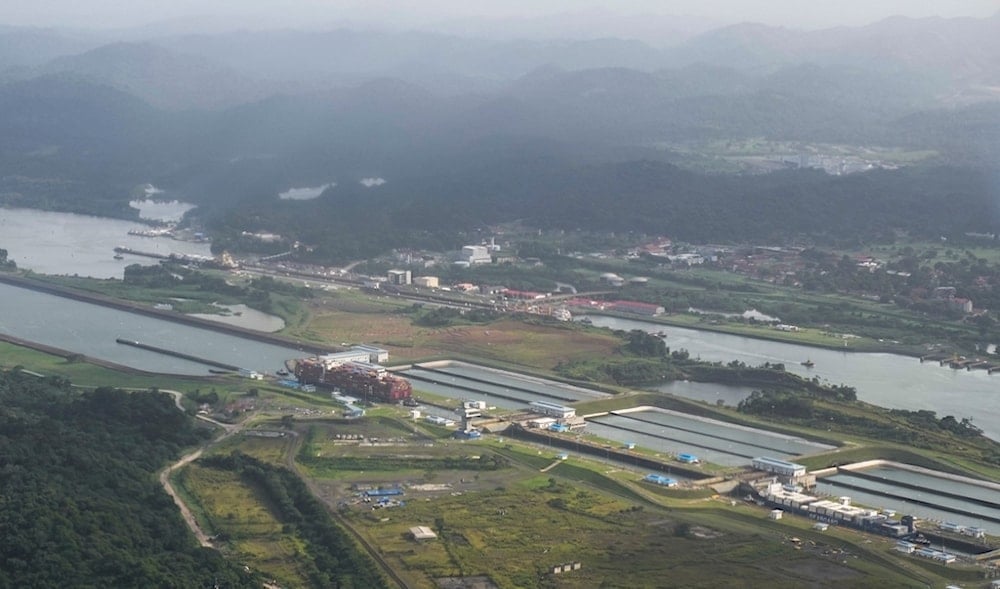
A cargo ship traverses the Cocoli Locks of the Panama Canal, Sunday, Aug. 9, 2026, in Panama City. (AP Photo/Matias Delacroix)
Transit fees for cargo ships crossing the Panama Canal have climbed to unprecedented levels this month, as a worsening drought collides with shipping disruptions tied to the US war on Iran.
Daily auctions for transit slots through the canal's most heavily used locks have averaged roughly $1.1 million so far in August, over sixteen times higher than the same period last year, data compiled by Argus and cited by the Financial Times show.
Individual auctions have climbed even higher, with Panamax lock slots fetching as much as $2.63 million and Neopanamax slots reaching $3.78 million since late July. Average prices for the larger Neopanamax locks recently touched $2.5 million, a record for either category of auction.
Not all traffic is exposed to these swings. Large container and liquefied petroleum gas carriers typically secure pre-booked slots at fixed rates well below auction prices, while roughly 30 percent of overall canal traffic competes in the daily auctions, absorbing the bulk of the volatility.
The closure of the Strait of Hormuz, a passage that normally carries a fifth of the world's oil, has been a central driver of the price spike. With Hormuz unavailable, buyers across Asia have shifted toward purchasing crude and petroleum products from the US Gulf Coast instead, a rerouting that has pushed up demand for Panama Canal transits as an alternative route.
Drought conditions add further strain
Compounding the disruption is a strengthening El Niño pattern, which began developing in June and is forecast to intensify further this year, per the National Oceanic and Atmospheric Administration.
The phenomenon has driven water levels in Gatun Lake, which feeds the canal, below the 1965-2022 average, with further declines expected heading into the dry season that begins in December. Ross Griffith, head of Americas freight pricing at Argus, warned conditions could turn out worse than in 2023, a year already marked by severe drought.
In response, the Panama Canal Authority introduced a series of draft restrictions last month limiting how much cargo vessels can carry. Draft limits for Panamax locks are set to fall from the usual 50 feet to 47.5 feet by September 3, forcing ships to carry lighter loads and sit higher in the water.
The restrictions have contributed to lengthening queues, with 113 vessels awaiting transit on August 3, up sharply from 40 vessels in early January.
A canal authority spokesperson told the Financial Times that some recent transits had exceeded $1 million at auction to meet specific shipper needs, describing the spikes as "temporary market fluctuations" rather than an official tariff increase. The authority added that current draft adjustments would not reduce the number of daily vessel transits, though further restrictions remain possible depending on how conditions evolve.
The El Niño pattern has also disrupted river shipping in Europe, triggering cruise cancellations and freight rerouting along the Rhine and Danube, the report noted.


