
Saudi deficit to exceed budget despite oil price gains: Fitch
 5 Min Read
Fitch forecasts Saudi Arabia's 2026 fiscal deficit at 6.2% of GDP as increased spending strains public finances despite higher oil prices cushioning war-related production and export losses.
-
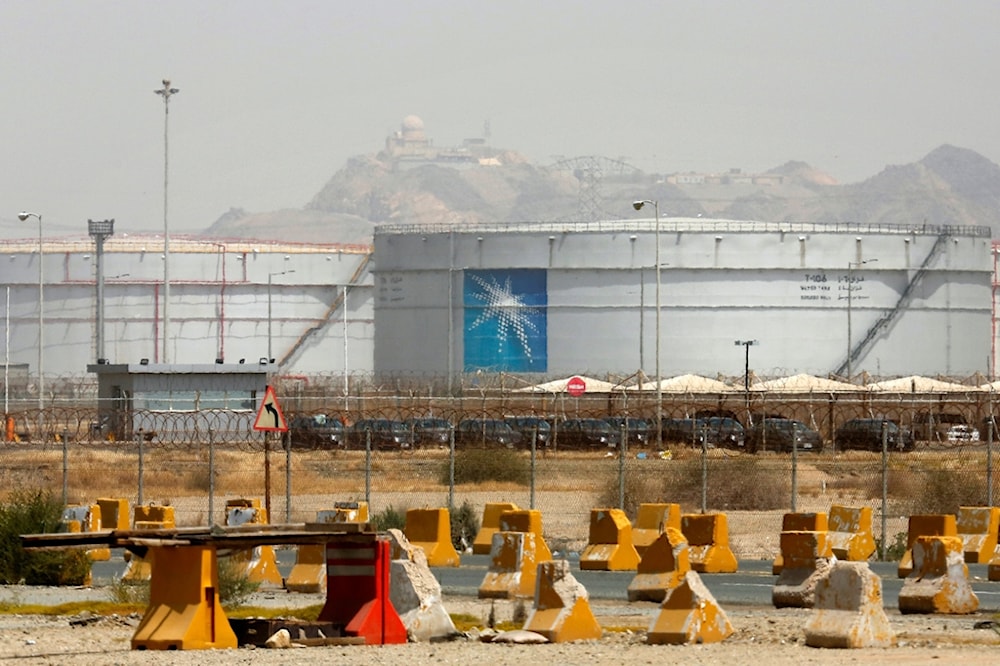
Storage tanks are seen at the North Jiddah bulk plant, an Aramco oil facility, in Jeddah, Saudi Arabia, on March 21, 2021 (AP)
Saudi Arabia faces a larger-than-budgeted fiscal deficit in 2026 despite higher oil prices supporting government revenues, as increased spending and disruptions to oil production and exports place additional pressure on the kingdom’s finances, according to Fitch Ratings.
Assessing Saudi Arabia’s preliminary budget statement for 2027, released last week, the agency highlighted fiscal pressures associated with the US war on Iran, with Riyadh anticipating higher expenditure and wider budget shortfalls.
The Saudi government now estimates its 2026 deficit at 4.9% of gross domestic product (GDP), exceeding the target in the approved budget but remaining below the 5.8% recorded in 2025.
Fitch’s own forecast, issued on September 29, puts the shortfall at 6.2% of GDP. The difference reflects the agency’s expectations that spending will be higher and revenues lower than the Ministry of Finance anticipates.
Spending pressures push deficit beyond target
Expenditure in 2026 is expected to exceed the approved budget by 9.3%, despite efforts to contain spending following a sharp increase in the first quarter, when the government introduced proactive, precautionary measures.
The preliminary statement implies lower spending in the second half of the year than in the first. Fitch cautioned, however, that expenditure generally reaches its quarterly peak in the final three months of the year and frequently surpasses estimates published in preliminary budget statements.
The agency also pointed to a recurring gap between initial budget targets and subsequent projections. Over the past three years, deficit estimates in preliminary statements have exceeded the original budget forecasts by an average of 1.9 percentage points of GDP.
Fitch assumes that additional expenditure includes funding for logistics corridors, military needs, and measures intended to support economic activity during a downturn.
Higher oil prices cushion production losses
On the revenue side, Fitch said the gains from higher oil prices had outweighed the impact of production disruptions and reduced exports caused by geopolitical tensions.
As a result, the updated revenue estimate presented in the preliminary 2027 budget statement stands above the original budget projection. The agency expects revenues in the second half of 2026 to remain broadly comparable with those collected during the first half.
Oil sector contraction and recovery prospects
The government’s outlook nevertheless incorporates a steeper contraction in the oil sector than Fitch anticipates. The preliminary statement projects a 21.8% decline in real oil GDP, compared with the agency’s forecast of a 16.7% contraction, reflecting lower oil production assumptions.
For 2027, Fitch calculates that the growth projections are consistent with average oil production of approximately 10.6 million barrels per day.
External sources reported that Saudi output had already surpassed that level by the end of September, following the full restoration of flows through the East-West pipeline.
Fitch said the rapid restoration demonstrated the energy sector’s technical capabilities, while the availability of different oil export routes strengthened its ability to withstand disruptions.
Lower crude prices could widen future shortfalls
Riyadh has raised its deficit forecasts for both 2027 and 2028, primarily because of higher projected expenditure.
The government now expects a deficit of 3.6% of GDP in 2027, compared with its earlier forecast of 2.3%. For 2028, the projected shortfall has increased to 3.1%, from 2.2%.
Persistent deficits cloud medium-term outlook
Although the revised official outlook places deficits below the 2026 estimate over the medium term, it does not show an uninterrupted decline. The shortfall is projected to rise again to 3.3% of GDP in 2029.
Fitch noted that this is the largest deficit projected for the final year of a three-year forecast period in any previous annual Saudi budget statement. The increase reflects additional spending, which the agency considers likely to be linked to the kingdom’s Vision 2030 objectives.
Fitch’s forecast of a 3.7% deficit in 2027 is close to the government’s target. Its outlook diverges more sharply in 2028, when it expects the deficit to widen to 4.4%, based on an assumed decline in average Brent crude prices from $70 per barrel in 2027 to $60 in 2028.
Debt rises as Riyadh seeks greater spending efficiency
The preliminary statement places greater emphasis on spending efficiency, according to Fitch, which expects growth in current expenditure to slow compared with recent years.
Revenue projections, meanwhile, have changed little. The forecast for total revenue in 2028 is only 0.6% higher than the previous budget estimate, and the statement provides no details of new taxes or changes to existing tax rates.
Public debt projected to reach 39% of GDP
Fitch said the deficit outlook is consistent with public debt reaching approximately 39% of GDP by the end of 2028, up from around 32% at the end of 2025.
That would remain below the 58% median for sovereigns in the agency’s “A” rating category.
The projected debt ratio is also lower than Fitch’s previous estimate of 42.5%, reflecting updated GDP estimates rather than the earlier economic figures used in its calculations.
Read more: Gulf states weigh pipeline expansion plans, hoping to bypass Hormuz


