
South Korea considers emergency steps to prevent Samsung strike
 2 Min Read
South Korea says it may use emergency arbitration to prevent a strike at Samsung Electronics, warning of major economic losses if production is disrupted, as a halt to its semiconductor plants could cost billions.
-
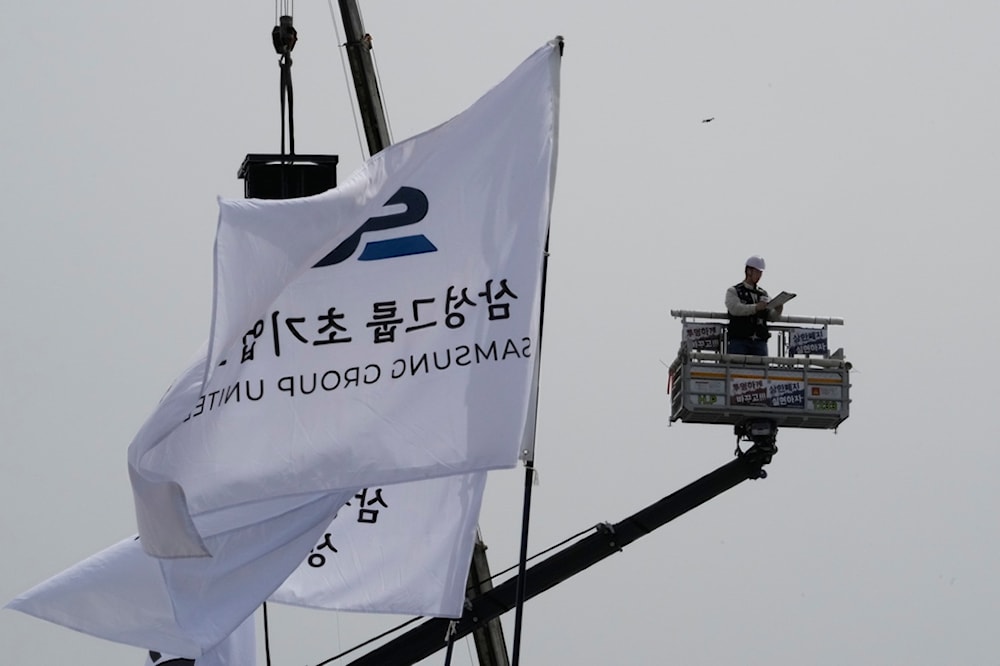
Choi Seung-ho, a leader of the Samsung Electronics labor union, speaks during a rally demanding higher bonuses at its computer chip complex in Pyeongtaek, South Korea, Thursday, April 23, 2026. (AP Photo/Ahn Young-joon)
South Korea’s government said it will deploy all available measures, including emergency arbitration, to prevent a potential strike at Samsung Electronics, warning that any disruption at the tech giant could carry major economic consequences.
Prime Minister Kim Min-seok said on Sunday that authorities are prepared to step in to avoid industrial action at the country’s largest private employer and to reduce potential losses if talks fail.
The announcement came as Samsung Electronics and its labor union are set to resume wage negotiations on Monday, with government mediation aimed at narrowing differences and avoiding escalation.
Government warns of severe economic impact
Officials stressed that even a brief halt in semiconductor production could inflict significant financial damage. Kim said a single day of stoppage at Samsung’s chip facilities could result in losses of around 1 trillion won (approximately $668 million).
He added that the impact could deepen sharply if production lines remain idle for longer periods, potentially disrupting manufacturing processes for months and leading to losses that could reach up to 100 trillion won (almost $67 billion) in extreme scenarios, including wasted materials.
To prevent such outcomes, the government is considering invoking an emergency arbitration mechanism. The tool allows the labor ministry to suspend strike action for up to 30 days while compulsory mediation is carried out through the National Labor Relations Commission. However, it has been used only rarely and would mark a significant intervention by the administration.
Samsung Electronics plays a central role in South Korea’s economy, accounting for roughly 22.8% of national exports and about 26% of the country’s stock market value. The company also employs more than 120,000 people and maintains an extensive supply chain involving around 1,700 partner firms.
The labor union said it would continue discussions in good faith as negotiations proceed under government mediation.


