
SpaceX eyes $1.5 tln IPO timed to planetary alignment, Musk's birthday
 4 Min Read
SpaceX plans historic $50bn fundraise in June 2026, , timed with planetary alignment and his birthday, marking Musk's strategic pivot from Tesla as Starlink profits fuel IPO ambitions.
-
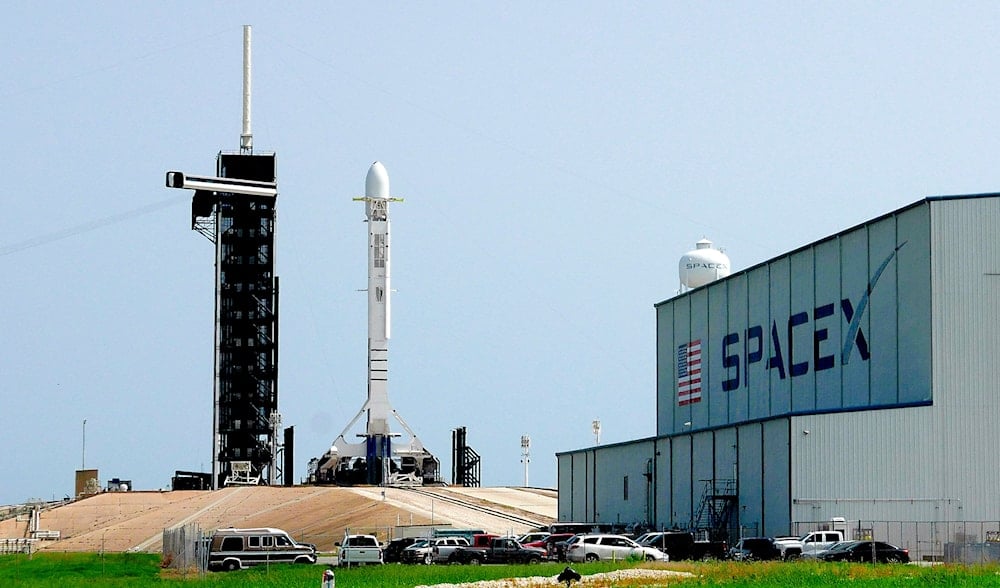
A Falcon 9 SpaceX rocket stands ready for launch at pad 39A at the Kennedy Space Center in Cape Canaveral, Fla., Friday, June 26, 2020. (AP Photo/John Raoux)
Elon Musk's aerospace venture is preparing for what could become the largest initial public offering (IPO) in history, targeting a $1.5 trillion valuation through a share sale planned for mid-June 2026, a date selected to coincide with a rare planetary alignment and Musk's 55th birthday on June 28. The rocket manufacturer aims to raise $50 billion in the flotation, nearly double earlier estimates suggesting a $25 billion raise at an $800 billion valuation, according to the Financial Times (FT).
The timing would align with Jupiter and Venus appearing in proximity, adding symbolic weight to a transaction that would dwarf the previous IPO fundraising record set by Saudi Aramco's $29 billion offering in 2019.
Four major investment banks: Bank of America, JP Morgan, Goldman Sachs, and Morgan Stanley are being lined up for leading roles in the share sale. SpaceX Chief Financial Officer Bret Johnsen has conducted investor meetings and video conferences with existing private shareholders since December, gauging appetite for the public market debut.
If executed at the projected valuation, the listing would significantly boost Musk's personal fortune, currently estimated at $680 billion. The entrepreneur holds approximately 42% of SpaceX alongside substantial stakes in electric vehicle manufacturer Tesla and social media platform X.
From private resistance to public embrace
The planned flotation marks a dramatic reversal for Musk, who has long resisted taking SpaceX public. In 2013, he told followers the company would only consider an IPO after Mars missions became routine, expressing concern that public market pressures would compromise long-term technological goals in favor of quarterly earnings.
What changed the calculus could be a combination of capital requirements and business maturation. SpaceX faces simultaneous funding needs for expanding its Starlink satellite network, scaling Starship rocket development, and pursuing ambitious Mars exploration plans; demands that have outstripped what private markets can efficiently provide in single transactions.
The company's Starlink division has emerged as a pivotal factor in the IPO decision. After years of cash-intensive buildout, the satellite internet service achieved profitability in 2024 with $72.7 million in profit. Revenue from Starlink reached $7.7 billion last year and is projected to climb to $12.3 billion in 2025, representing approximately 70% of SpaceX's total revenue. The service now serves 8.5 million subscribers globally, establishing the recurring revenue streams that public investors demand.
SpaceX ascends as Tesla stumbles
SpaceX reported $14.2 billion in total revenue for 2024, up 63% from the previous year, with projections targeting $15.5 billion in 2025. Launch services contributed $5.5 billion in 2024, supported by the company's dominant position in commercial space operations with 134 launches completed during the year.
The timing also reflects shifting dynamics within Musk's business empire. Tesla, previously the centerpiece of its public market presence, has faced mounting challenges with two consecutive years of declining vehicle deliveries and the loss of its global electric vehicle leadership position to China's BYD. Tesla's brand value declined by $15.4 billion in 2025, suggesting SpaceX may be positioned to assume the flagship role among Musk's ventures.
The company's reusable rocket technology has fundamentally altered space access economics, with Falcon 9 boosters now capable of more than 15 missions each. This reusability reduces launch costs by up to 70% compared to traditional expendable rockets, enabling SpaceX to capture the majority of the international commercial launch market.
Government support, execution questions
SpaceX's growth has been substantially enabled by federal contracts exceeding $18 billion over the past decade, with NASA providing critical early funding even as the company repeatedly missed milestone deadlines. While Falcon 9 represents proven technology, the next-generation Starship rocket, central to Mars ambitions and IPO valuation, remains unproven after multiple test failures.
The transition to public markets introduces new pressures for long-cycle development projects. Quarterly earnings expectations could conflict with the patient capital approach that characterized SpaceX's private phase, potentially forcing trade-offs between ambitious space exploration goals and consistent shareholder returns.
The planned IPO would enter a rebounding market for public offerings following three years of limited activity caused by market volatility and geopolitical uncertainty. Space technology remains a tightly controlled sector, but analysts note strong investor appetite for exposure to an industry experiencing rapid development and growth prospects.


