
Strait of Hormuz traffic falls as tanker operations disrupt shipping
 3 Min Read
Shipping through the Strait of Hormuz has fallen sharply as tanker attacks rise, while oil exporters turn to alternative routes to offset declining flows.
-
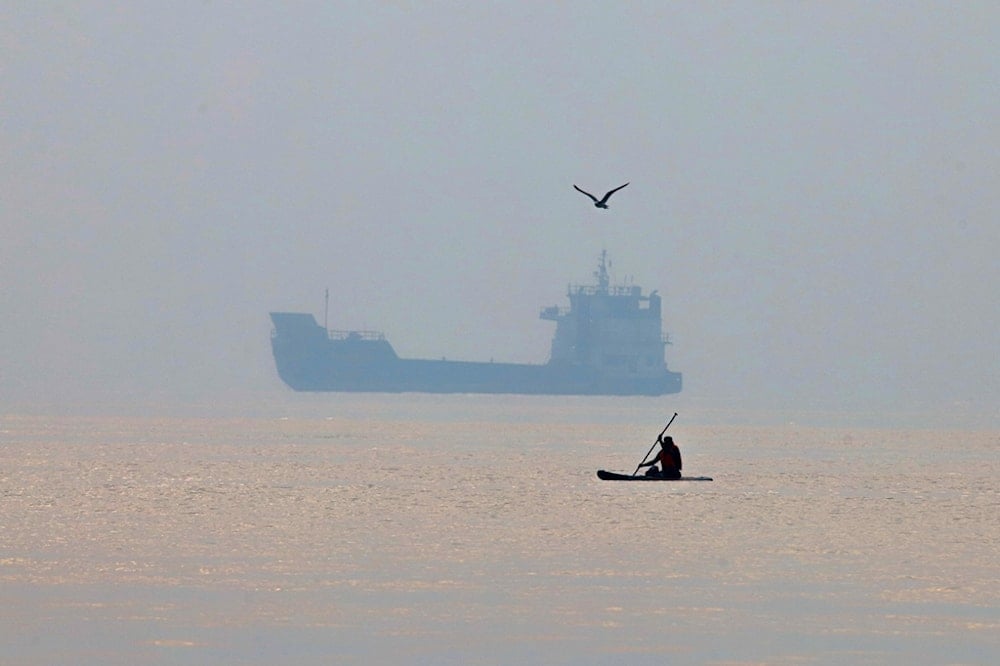
A man paddles a surfboard as a commercial vessel appears anchored in the Strait of Hormuz off Bandar Abbas, Iran, Monday, Tuesday, Oct, 6, 2026. (Amirhosein Khorgooi/ISNA via AP)
Shipping traffic through the Strait of Hormuz has dropped to its lowest level in more than two months, as rising operations against tankers violating Iran's maritime rules and heightened security risks disrupt one of the world’s most important energy corridors.
Data from analytics firm Kpler showed that only seven cargo vessels crossed the strait on Tuesday, the lowest daily figure since July 23. Traffic increased to 10 vessels on Wednesday but remained well below the more than 20 vessels recorded daily on Sunday and Monday.
The figures exclude ships that switch off their Automatic Identification Systems (AIS), making the actual level of maritime traffic difficult to determine.
Read more: As US aggression fails, Iran prioritizing economy, security: Ghalibaf
Oil flows through Hormuz fall sharply
The decline in shipping has also affected crude oil movements through the waterway. Kpler analysts Emmanuel Belostrito and Yui Torikata said crude oil volumes crossing the Strait of Hormuz fell by 27% from their wartime peak the previous week, reaching at least 10.1 million barrels per day.
The current level is comparable to September but represents only 74% of the volume recorded before the war.
According to the analysts, much of the decline came from ship-to-ship transfers of oil cargoes in the Gulf of Oman, highlighting how traders and exporters are adjusting their operations as risks increase around the strait.
Alternative routes offset losses
The disruption has not translated into an equivalent decline in overall crude exports from the region.
Analysts said crude shipments from the Gulf of Oman and Red Sea coasts climbed to 6.7 million barrels per day, more than twice their pre-war levels.
The increase has helped compensate for lower flows through Hormuz and kept total crude exports from West Asia close to their pre-war levels.
The shift points to an effort by energy exporters to reduce their reliance on the strategic chokepoint where possible, although alternative routes cannot fully replicate the scale and efficiency of Hormuz.
Tanker attacks raise maritime risks
Separate data from the London Stock Exchange Group showed eight vessels crossing the strait on Tuesday, evenly divided between inbound and outbound traffic, compared with 14 the previous day.
The vessels included five oil tankers and the LNG carrier Al Mafyar, which loaded its cargo at Qatar’s Ras Laffan and was bound for Port Qasim in Pakistan.
Maritime security sources monitoring incidents said tanker attacks reached their highest level since the war began last week, as Gulf oil producers simultaneously increased export activity.
The UK Maritime Trade Operations authority reported Wednesday that projectiles struck a tanker 51 nautical miles north of Qatar’s Al Shamal, injuring several people.
Read more: US has lost or damaged 81 aircraft in Iran war, CRS says


