
Syria plans to double natural gas output by end of 2026
 3 Min Read
Syria aims to boost daily natural gas production to 15 million cubic meters by 2026, Energy Minister Mohammed al-Bashir said at an OAPEC meeting.
-
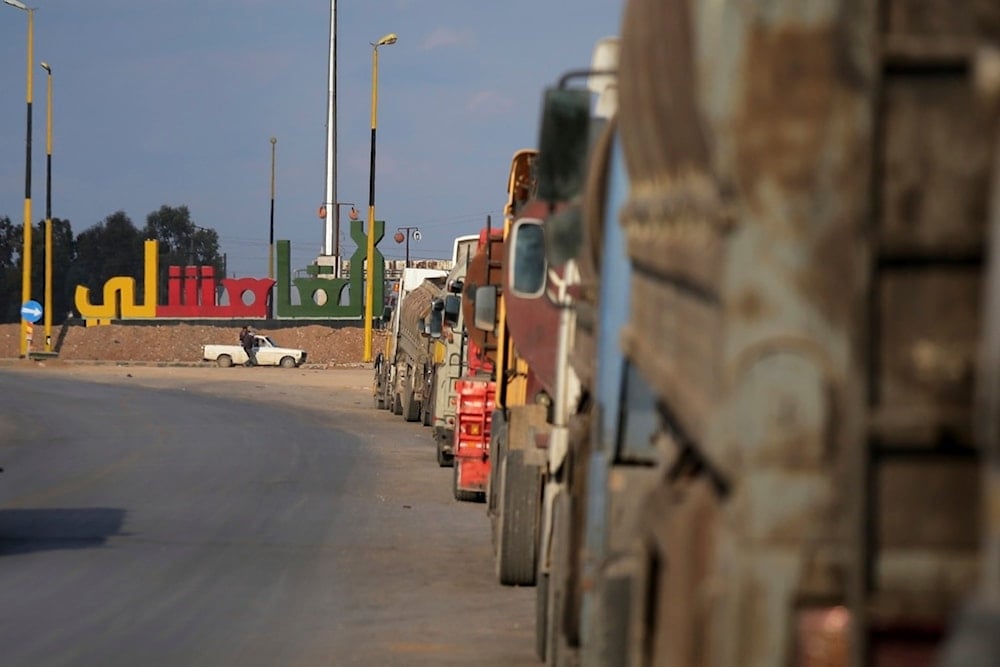
Tankers line up as they prepare to head to the rural areas where oil and gas fields are located on the outskirts of Qamishli, northeast Syria, Saturday, March 22, 2025. (AP)
Syria plans to increase its daily natural gas production to around 15 million cubic meters by the end of 2026, Energy Minister Mohammed al-Bashir said on Sunday during a ministerial meeting of the Organization of Arab Petroleum Exporting Countries in Kuwait.
Speaking at the OAPEC meeting, al-Bashir said Syria expects gas output to more than double from current levels of approximately 7 million cubic meters per day, describing the target as part of broader efforts to stabilize and revive the country’s energy sector.
The minister said Syria currently produces about 100,000 barrels of oil per day, adding that the government aims to raise production levels once unresolved security issues east of the Euphrates River are addressed. Large parts of Syria’s oil and gas infrastructure in that region remain outside the government’s control.
Syria developing natural gas sector
In November, the state-owned Syrian Petroleum Company signed a memorandum of understanding with US-based ConocoPhillips and Novaterra to strengthen cooperation in Syria’s natural gas sector, according to the Energy Ministry. The agreement includes plans to develop several existing gas fields and to launch exploration programs targeting new reserves.
The Syrian Petroleum Company (SPC) chief, Youssef Qabalawi, said the pact carries near-term production goals.
“Under the new MoU, the gas output is expected to rise by 4–5 million cubic metres per day within a year,” he said. The ministry presented the move as complementary to the transitional government's pledges to ramp up power supply nationwide.
Syria has faced chronic energy shortages following 14 years of war, with electricity cuts and fuel scarcity affecting households and industry alike. The crisis has been exacerbated by Damascus losing control over most oil and gas fields to the US-backed, Kurdish-led Syrian Democratic Forces, which dominate the country’s resource-rich northeast.
War, sanctions, energy
Syria’s energy system was severely damaged during the 14-year war, and domestic production remains far below pre-war levels. The ministry noted that although Syria now produces only a fraction of the electricity it needs, supply has improved in recent months in part because of imports of gas from Azerbaijan and Qatar.
Domestic natural gas production is estimated to have fallen to about 3 billion cubic metres in 2023 from roughly 8.7 billion cubic metres in 2011 as a result of the war. Many of the major gas fields currently lie in areas outside the transitional government's control and under the control of the Syrian Democratic Forces (SDF).
Over more than a decade of fighting, pipelines, processing facilities, power plants, and extraction infrastructure have suffered damage or fallen out of service, reducing capacity and complicating maintenance. The decline in domestic production reflects loss of access to fields, prolonged underinvestment, and the operational challenges of repairing complex energy systems in a fragmented security environment.
Sanctions and international restrictions have further constrained the sector by limiting the ability of the former Syrian authorities to attract large-scale foreign investment, access modern equipment and technology, and secure international financing and insurance needed for major projects.


