
Tanker shipping costs hit record highs amid Ukraine, Iran wars
 3 Min Read
Tanker shipping costs have surged to record levels as conflict-related threats disrupt key maritime routes in the Black Sea, Red Sea, and Gulf.
-
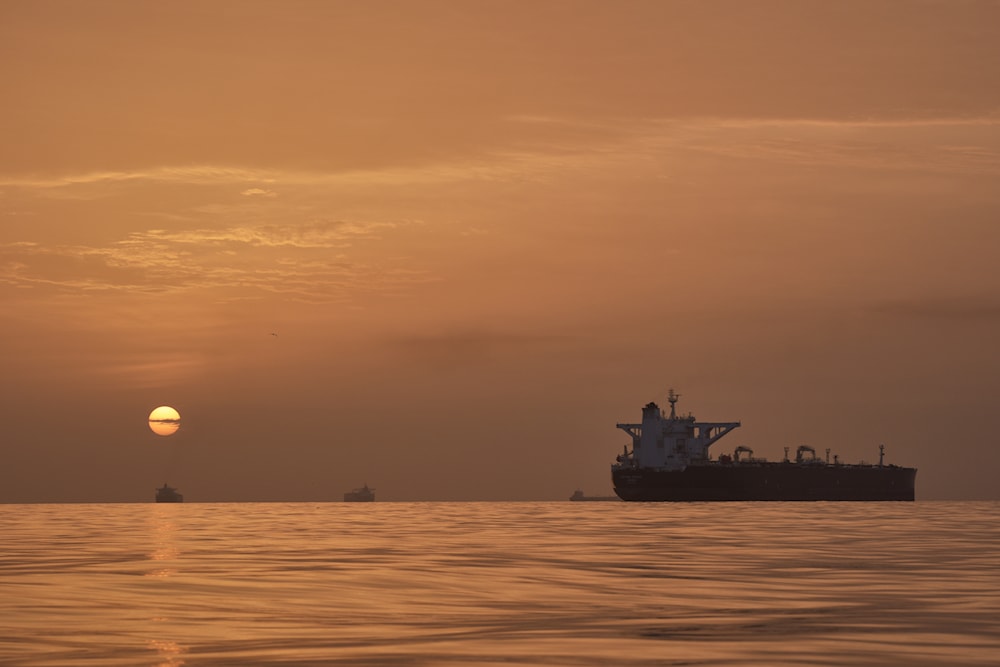
The sun rises behind tankers anchored in the Strait of Hormuz off the coast of Qeshm Island, Iran, Saturday, April 18, 2026 (AP)
The cost of shipping tankers has skyrocketed to record levels due to heightened threats across three major maritime routes linked to ongoing conflicts involving Iran and Ukraine, CBS News reported, citing a new analysis from Lloyd’s List.
The intelligence group reported Tuesday that costs for tankers loading in the Black Sea have reached peak levels as Ukraine continues to attack alleged Russian-linked vessels in the area. Simultaneously, prices for tankers loading at the western Saudi Arabian port of Yanbu on the Red Sea have surged, while shipping via the Gulf’s Strait of Hormuz remains at the low levels seen in the early days of the US war on Iran.
According to Lloyd’s, the convergence of these factors has created a “perfect storm” for energy shipping markets.
“All of this is happening at once, and the various tanker markets are interacting with each other,” wrote Lloyd’s analyst Greg Miller in the analysis. “Everything is connected in ocean shipping.”
Rising insurance premiums affect prices
Spot rates, which are the prices charged on a shipment-by-shipment basis at current market rates, alongside rising insurance premiums, are driving up the cost of very large crude carrier (VLCC) and Suezmax shipments, the largest vessels that can navigate the Suez Canal.
The volume of product transported through the Red Sea, the Strait of Hormuz, and the Black Sea has declined due to the current wars taking place in Ukraine and Iran, as well as the blockade imposed by Ansar Allah on Saudi shipments.
Lloyd’s also noted that the networks carrying oil and cargo in the region are becoming increasingly interconnected as ship owners seek alternate routes, which may cause bottlenecks and further drive up costs.
Oil prices jump amid escalation in Middle East
Oil prices jumped nearly 4% on Wednesday as joint US-Saudi strikes in Iraq and Iran’s retaliatory missile operation against American military positions raised fears of a wider confrontation threatening Gulf energy supplies.
According to data cited by Reuters, Brent crude futures rose $3.30, or 3.9%, to $87.39 per barrel by 0300 GMT, while US West Texas Intermediate crude gained $3.05, or 3.8%, to $82.31 per barrel. The market reaction reflected concern that Washington’s war on Iran is expanding into neighboring countries, placing oil facilities, military bases, and strategic shipping routes at greater risk.
“Renewed strength comes after the US said it intercepted a surprise attack on US troops,” ING analysts said in a note.
The US military claimed it intercepted ballistic missiles launched by Iran toward American forces in the region, describing the operation as “an attempted surprise attack.” Iran’s Islamic Revolution Guard Corps later confirmed that it had fired several ballistic missiles at a US air base and a US Central Command facility in Jordan.


