
Oil surges as US-Saudi aggression on Iraq widens regional war
 3 Min Read
Oil prices surge nearly 4% as US-Saudi strikes in Iraq and Iran’s retaliatory missile operation deepened regional tensions and heightened fears of disruptions to Gulf energy supplies.
-
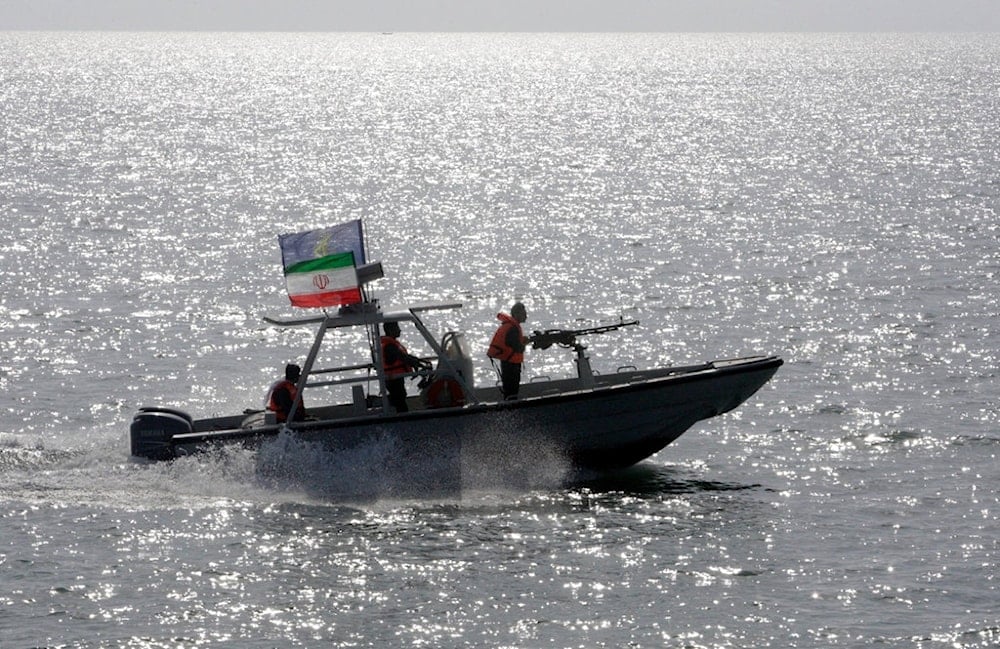
In this Monday, July 2, 2012, file photo, an Iranian Revolution Guard Corps speedboat escorts a passenger ship, unseen, near the spot where an Iranian airliner was shot down by a US warship 24 years ago, killing 290 passengers (AP)
Oil prices jumped nearly 4% on Wednesday as joint US-Saudi strikes in Iraq and Iran’s retaliatory missile operation against American military positions raised fears of a wider confrontation threatening Gulf energy supplies.
According to data cited by Reuters, Brent crude futures rose $3.30, or 3.9%, to $87.39 per barrel by 0300 GMT, while US West Texas Intermediate crude gained $3.05, or 3.8%, to $82.31 per barrel.
The market reaction reflected concern that Washington’s war on Iran is expanding into neighboring countries, placing oil facilities, military bases, and strategic shipping routes at greater risk.
“Renewed strength comes after the U.S. said it intercepted a surprise attack on U.S. troops,” ING analysts said in a note.
The US military claimed it intercepted ballistic missiles launched by Iran toward American forces in the region, describing the operation as “an attempted surprise attack.”
Iran’s Islamic Revolution Guard Corps later confirmed that it had fired several ballistic missiles at a US air base and a US Central Command facility in Jordan.
US, Saudi Arabia strike Iraq
The confrontation widened after US and Saudi forces carried out attacks against alleged weapons sites and armed groups in eastern Iraq.
Saudi Arabia claimed the strikes targeted Iraqi groups responsible for drone operations against the kingdom’s oil infrastructure, which the Iraqi Resistance denied.
“Saudi Arabia intercepted drones from Iranian-backed groups in Iraq, which were targeting Saudi energy infrastructure,” ING analysts said.
Riyadh later announced that its armed forces, working alongside US Central Command, had conducted “targeted strikes” against groups in Iraq that it blamed for the attacks.
Oil markets reflect cost of escalation
The rise in crude prices highlighted the economic consequences of Washington’s expanding military operations across the region.
ING analysts said the latest developments had dampened expectations for a swift de-escalation in the Gulf.
Continued military exchanges could place further pressure on Saudi oil installations and disrupt shipping through strategic waterways, including the Strait of Hormuz.
US crude stockpiles decline
Oil prices were also supported by falling US inventories.
Market sources citing American Petroleum Institute figures said US crude stockpiles declined by approximately 3.3 million barrels in the week ending July 24.
Official inventory data from the US Energy Information Administration was due later on Wednesday.
Meanwhile, OPEC+ is reportedly preparing to halt production increases for three months beginning in October after completing the planned restoration of output previously withheld under voluntary cuts.
The prospect of slower supply growth, combined with the widening regional confrontation, added further upward pressure on crude prices.
Read more: US, Saudi Arabia launch strikes on several Iraqi regions


