
Trump’s war on Iran leaves Washington trapped as costs mount
 3 Min Read
Nesrine Malik argues that Trump’s war on Iran has created mounting military, economic and geopolitical costs, leaving Washington struggling for an exit.
-
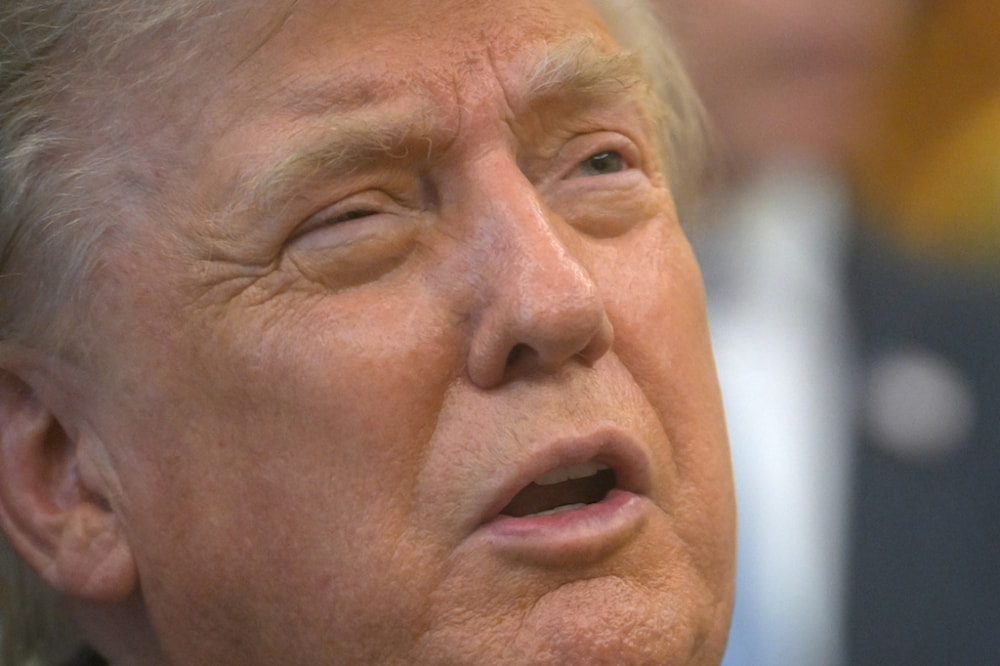
US President Donald Trump speaks in the Oval Office of the White House on July 24, 2026, in Washington. (AP Photo/Rod Lamkey, Jr.)
US President Donald Trump is facing growing challenges in the war on Iran, with military escalation producing wider regional consequences and no clear path toward an end to hostilities, according to an analysis by Nesrine Malik published by The Guardian.
Malik argues that the war has entered a cycle of escalation and uncertainty, with repeated claims of breakthroughs, threats of further attacks, and shifting positions surrounding ceasefire efforts and negotiations.
The analysis notes that despite Washington’s war on Iran, the objectives announced by the US administration remain unresolved, while the war has spilled out into a regional battle.
Read more: Nearly 8 in 10 Americans say Iran war harder than expected: YouGov
A war with no clear exit strategy
The war on Iran has placed Washington in a difficult position, as further escalation carries significant military and political risks while withdrawal could expose the limits of US objectives.
According to Malik’s analysis, Iran gained leverage through its geographic position and the importance of regional shipping routes, particularly the Strait of Hormuz. The conflict’s effects have also extended toward the Red Sea, where Ansar Allah has announced measures affecting maritime movement due to the continued Saudi Arabian siege.
The article argues that the US faces a dilemma: a deeper military campaign could result in prolonged fighting and greater casualties, while reducing its involvement could further undermine the goals declared when the war began.
The analysis also highlights concerns inside Washington over the costs of continued military operations, including financial pressures and reports of strains on US military resources.
Economic consequences spread beyond the battlefield
The war on Iran has generated significant disruption in global energy markets, with oil prices rising as concerns grow over shipping security and supply routes.
Malik writes that the war on Iran has contributed to higher energy costs affecting households and governments worldwide, adding pressure to economies already facing inflation and financial challenges.
The disruption extends beyond energy markets, with shipping routes and regional economies affected by the wider confrontation. Gulf states have faced increasing security concerns, while consumers internationally have experienced the impact of rising fuel and energy prices.
Trump’s foreign policy approach under scrutiny
The analysis presents the war on Iran as part of a broader pattern of Trump administration decisions characterized by rapid policy shifts and confrontational approaches.
Malik points to military escalation, tariff policies, and disputes with international partners as examples of an approach she describes as unpredictable and costly.
The article argues that the consequences of Washington’s decisions are being absorbed not only by governments directly involved in the conflict but also by populations facing economic uncertainty and higher living costs.
Read more: Pentagon removes four US troop deaths from Iran war toll: AP


