
White House rhetoric masks economic, nuclear policy contradictions
 5 Min Read
Holly Baxter argues that the Trump administration uses alarmist claims about communism, election fraud, and the economy to distract from rising living costs and contradictions in its nuclear policies.
-
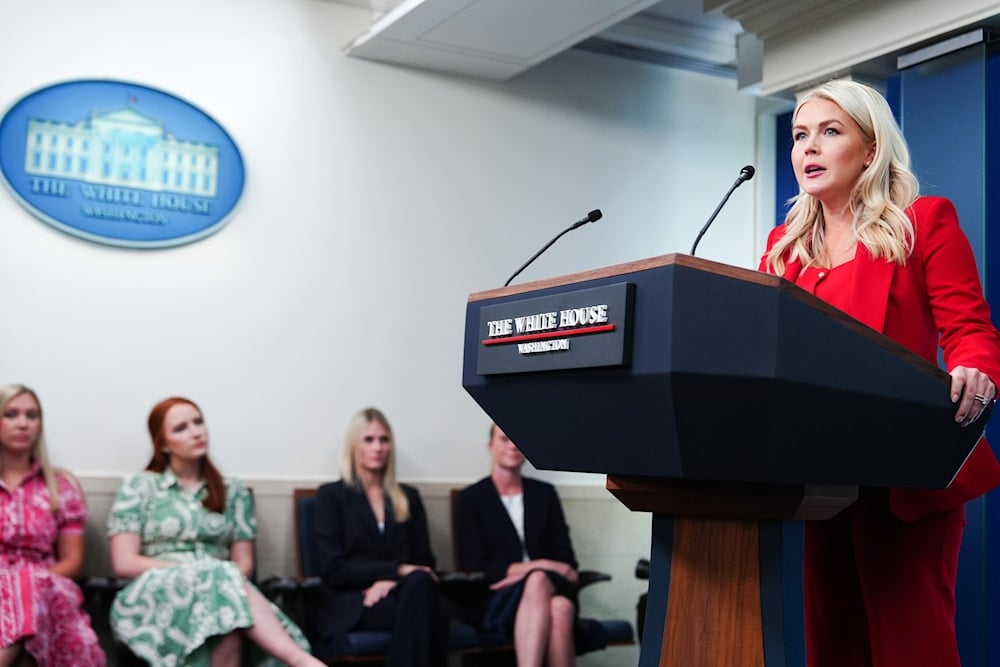
White House Press Secretary Karoline Leavitt speaks with reporters in the James Brady Press Briefing Room at the White House, Thursday, July 23, 2026, in Washington (AP)
The Trump administration is relying on warnings about communism, election fraud, and political enemies to divert attention from growing public concern over living costs and its increasingly contradictory policies in West Asia, according to The Independent columnist Holly Baxter.
Writing after Thursday’s White House press briefing, Baxter argued that Press Secretary Karoline Leavitt presented an alarmist picture of the Democratic Party while dismissing the economic pressures affecting US households.
Leavitt claimed that “literal self-proclaimed communists” were “winning elections” and “claiming to be the new leadership” of the Democratic Party, warning that the United States could eventually resemble the “failed state” of Cuba.
Baxter noted that Republicans have frequently branded their Democratic opponents as communists, but said Leavitt’s description bore little relation to the politicians who had recently secured electoral victories.
Among them was New York politician Zohran Mamdani, who campaigned heavily on affordability and the rising cost of living.
Administration dismisses affordability concerns
The columnist contrasted those campaigns with President Donald Trump’s repeated attempts to minimize affordability as a political issue.
Trump has previously described “affordability” as a “Democrat scam” and a “hoax", while Leavitt criticized what she called the “Democrat solution to, quote, affordability."
Baxter argued that such rhetoric would do little to reassure Americans facing higher food, fuel, and household expenses.
She linked rising fertilizer and food costs, as well as increased oil and gasoline prices, to the economic consequences of Trump’s war on Iran.
According to the commentary, administration claims that the economy is performing strongly and that Trump is “setting up workers to thrive like never before” are unlikely to outweigh the financial strain reflected in household bills and credit card balances.
Saudi nuclear agreement raises questions
The briefing also addressed Washington’s proposed civilian nuclear agreement with Saudi Arabia.
When questioned about the deal, Leavitt initially referred reporters to a Truth Social post published by Trump the previous night.
She later suggested that Riyadh was being treated differently from Tehran because the Saudi agreement gives “priority access to American companies” and “puts America first.”
Baxter said the explanation appeared to place commercial interests at the center of Washington’s nuclear policy, despite the administration repeatedly insisting that its military campaign against Iran was necessary because “Iran must never have a nuclear weapon."
The columnist also pointed to Trump’s unsupported claim that the 17 US service members killed in the conflict had personally expressed that belief to him.
At the same time, Baxter wrote, the administration was advancing an agreement that some officials believe could allow Saudi Arabia to expand its nuclear program without sufficient international oversight.
She argued that allowing Riyadh greater nuclear capabilities while attacking Iran over its program exposed a major contradiction in Washington’s regional policy.
Leavitt questions New Jersey voter rolls
Leavitt also used the briefing to raise doubts about election administration in New Jersey, where authorities recently found that 6,600 non-citizens had mistakenly been added to voter rolls before being identified and removed.
Rather than presenting the correction as evidence that existing safeguards had worked, Leavitt suggested it confirmed broader suspicions about the state’s electoral system.
“All of a sudden this governor put out a press release saying President Trump was right… it’s not a coincidence,” she said.
“She says it’s 6600, we suspect it’s a heck of a lot more,” Leavitt continued, adding that “the president is hellbent on getting to the bottom of this.”
Baxter argued that the White House was using the incident to promote claims of a wider conspiracy without presenting evidence that the number of ineligible registrations exceeded the figure reported by state authorities.
Fear and confusion serve MAGA politics
The commentary concluded that Leavitt’s briefing reflected the broader disorder surrounding Trump’s political messaging.
While the administration approves nuclear cooperation with Saudi Arabia, questions election legitimacy, and dismisses affordability concerns, it simultaneously insists that Trump remains widely popular and that media reports showing declining approval are misleading.
Baxter described Leavitt as a more coherent communicator than the president but said her briefings nevertheless reproduce the fear, contradictions and confusion underlying his political approach.
“If you took her words at face value, you’d be a deeply confused, extremely alarmed person,” Baxter wrote, concluding that this was “exactly where MAGA would prefer you to be.”
Read more: US Military death toll cut after Pentagon removes 4 troops


