
'Not even a little bit': Trump brushes off Americans’ economic pain
 4 Min Read
Trump said Americans’ economic suffering is irrelevant to his decisions on the US-Israeli war on Iran, even as inflation and fuel prices continue to surge across the United States.
-
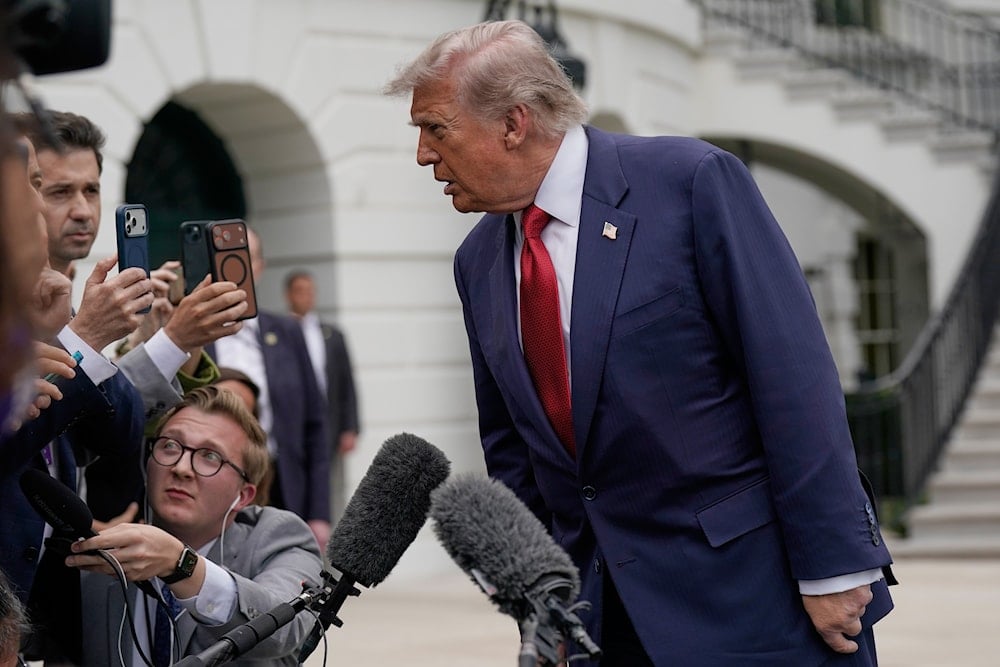
US President Donald Trump speaks to reporters as he walks to board Marine One on the South Lawn of the White House on May 8, 2026, in Washington (AP)
US President Donald Trump openly dismissed the economic hardships facing Americans as a result of the ongoing US-Israeli war on Iran, saying financial pressures on ordinary people are "not even a little bit" relevant to his calculations regarding the war, The New York Times reported.
Speaking to reporters before departing for China, Trump declared that the only issue guiding Washington's position is preventing Iran from acquiring a nuclear weapon, despite mounting inflation, soaring fuel prices, and growing public frustration across the United States.
"I don’t think about Americans’ financial situation," Trump said. "I think about one thing: We cannot let Iran have a nuclear weapon. That’s all."
Rising costs deepen pressure on American households
Trump's remarks come as the economic fallout from the US-backed aggression against Iran continues to intensify inside the United States. Recent data showed inflation accelerated to its highest level in nearly three years, driven largely by surging energy prices linked to instability in West Asia and disruptions in the Strait of Hormuz.
Fuel prices across the United States have climbed sharply since the war began in February, placing additional pressure on working-class and low-income Americans already struggling with a prolonged cost-of-living crisis.
Economic analysts have warned that rising fuel, shipping, and food costs linked to the war could inflict hundreds of billions of dollars in long-term damage on the US economy, while public anger over affordability continues to grow ahead of congressional midterm elections.
Trump doubles down on war narrative
Despite worsening economic indicators, Trump continued to defend the war and dismissed concerns over its domestic consequences. He insisted that US economic policies were functioning "incredibly" and claimed oil prices would eventually fall once the confrontation with Iran ends.
The US president also attempted to frame opposition to the war as support for Iran's nuclear program, repeating long-standing accusations against Tehran while refusing to acknowledge the growing domestic backlash over the economic burden imposed by Washington's military escalation.
Trump's comments are likely to deepen criticism from both political opponents and segments of the American public increasingly questioning the cost of continued US involvement in the war on Iran.
Read next: US consumers paid additional $35bln in fuel costs since war began: FT
Americans dip into savings to survive rising costs
Economists speaking to CNN said households across developed economies are increasingly being forced to cut into their savings to maintain living standards as war-related costs are transferred directly onto consumers.
The experts warned that higher fuel and utility prices are leaving families with less capacity for ordinary spending, increasing pressure on household finances and slowing broader economic activity.
The growing financial strain has also contributed to declining consumer sentiment in the United States, as fears mount over prolonged military escalation and worsening economic conditions.
Analysts cautioned that once households can no longer offset rising costs through savings, consumption levels may sharply decline.
Global fears grow over humanitarian fallout
The worsening crisis in the Strait of Hormuz has also triggered international concern over potential humanitarian consequences.
Iran initially utilized its geographic leverage over the Strait in response to the US-Israeli aggression on the Islamic Republic. As the weeks of war passed, Iran made it clear that the US has no right to demand that Tehran give up its control over the key waterway, which the US currently has under a blockade.
Agence France-Presse quoted a security official warning that the world faces only “weeks” to avoid a humanitarian crisis resulting from the closure of the strategic waterway.
The official added that “tens of millions” could face hunger due to fertilizer shipments stranded in the Strait of Hormuz, highlighting the wider global impact of disruptions in the Gulf.
The warnings underscore fears that the US-led escalation against Iran could produce consequences extending far beyond the battlefield, affecting energy markets, food security, and economic stability across multiple regions.
Read more: US economy reels as war on Iran drives costs higher


