
Trump approval drops to 36% as war on Iran drives fuel prices higher
 3 Min Read
A new Reuters/Ipsos poll shows Trump’s approval falling to 36% amid rising fuel prices and widespread disapproval of the US war on Iran.
-
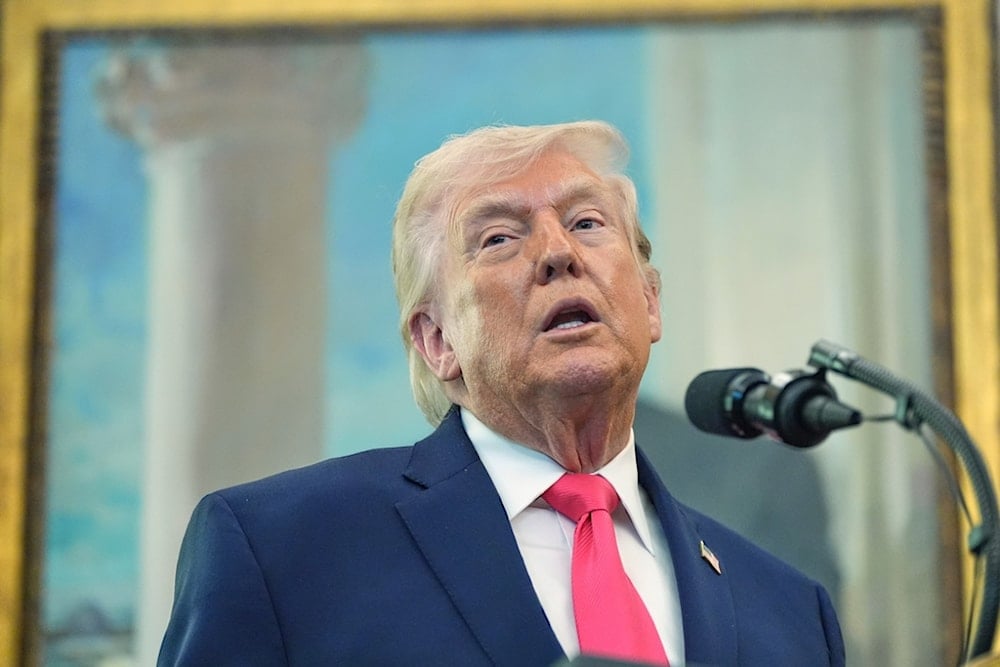
President Donald Trump speaks during the swearing in for Homeland Security Secretary Markwayne Mullin in the Oval Office of the White House on March 24, 2026, in Washington. (AP)
A new Reuters/Ipsos poll shows US President Donald Trump’s approval rating has fallen to 36%, its lowest level since returning to the White House, amid rising fuel prices and growing opposition to the war on Iran.
The four-day survey indicates a sharp decline from 40% just last week, reflecting mounting public concern over both the economy and the ongoing military escalation.
Public approval has declined most sharply on economic issues, as gasoline prices have surged following the US and “Israel” aggression on Iran.
- Only 25% approve of Trump’s handling of the cost of living
- Just 29% approve of his economic stewardship, a record low
- 63% of Americans now describe the economy as “weak”
The sharp rise in fuel prices has become a central factor in the declining approval ratings, underscoring growing economic anxiety among voters.
War on Iran drives disapproval
The survey also highlights widespread opposition to Trump’s war on Iran:
- 61% disapprove of US strikes on Iran
- Only 35% approve, down from 37% in the previous poll
- 46% say the war will make the US less safe
- Only 26% believe it will improve national security
The war has disrupted global oil flows, driving fuel prices higher and intensifying concerns about broader economic consequences.
Despite the decline in overall approval, Trump continues to retain strong backing within his party. Around 80% of Republicans still approve of his performance, and disapproval among Republicans on the cost of living has risen to 34%, up from 27%.
Market and geopolitical impact
The war has contributed to volatility in global energy markets, with oil prices surging as tensions escalate in West Asia.
Global oil prices climbed more than 2% in early trading on Tuesday as markets reacted to growing concerns over supply disruptions linked to the US–Israeli war on Iran and the near shutdown of the Strait of Hormuz, one of the world’s most critical energy chokepoints.
Brent crude rose $2.48, or 2.5%, to $102.69 per barrel, while West Texas Intermediate (WTI) increased $2.42, or 2.6%, to $95.92.
The rebound followed losses in the previous session, when Brent fell 2.8%, and WTI dropped 5.3% after a limited number of vessels managed to pass through the strategic waterway.
The war has also prompted concerns over further US military aggression, including a potential ground invasion in Iran.


