
Trump backs down on 20% fee, touts trade, investment deals with Gulf
 3 Min Read
Trump has reversed the 20% Hormuz cargo fee hours before it took effect, replacing it with unspecified Gulf investment deals.
-
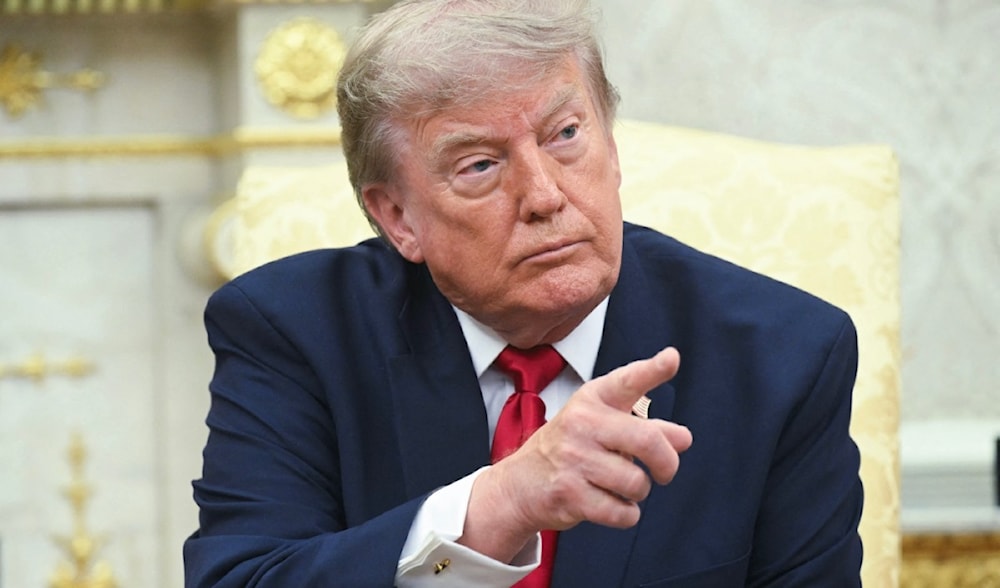
US President Donald Trump takes questions from reporters during a meeting with Prime Minister of Iraq Ali al-Zaidi in the Oval Office of the White House in Washington, DC, on July 14, 2026 (AFP)
US President Donald Trump backed down on his plan to impose a 20 percent fee on cargo transiting the Strait of Hormuz on Tuesday, just under five hours before the toll was due to take effect, replacing it instead with trade and investment commitments from Gulf states.
"Based on highly productive conversations with Middle East leadership, I have decided to replace the 20% United States Reimbursement Fee with Trade and Investment Deals that the various Gulf States will be making into the United States," Trump wrote on Truth Social.
He gave no dollar figure and named no participating countries, describing the anticipated investments only as "MASSIVE" and pledging they would bring "Factories, Plants, and Equipment" and "millions of High Paying AMERICAN Jobs" into the US.
Trump: US 'guardian' of Hormuz
The reversal effectively substitutes one reimbursement scheme for another. Trump had first floated the fee on Monday alongside reinstating a naval blockade, claiming that Washington, being "THE GUARDIAN OF THE HORMUZ STRAIT," is owed compensation for the role.
He had already previewed the reimbursement logic on Monday, telling reporters Saudi Arabia, the UAE, Qatar, Bahrain, and Kuwait should pay Washington for "protecting" shipping and regional allies, including "Israel".
Trump maintained that the naval blockade targeting Iranian shipping specifically remains in force, writing the US "will therefore have a FULL Blockade, but only on Ships coming to and from Iranian ports, or carrying anything have to do with Iranian cargo," while insisting the strait itself stays open to all other traffic.
Iran defies US pressure
The reversal comes as Iranian officials have repeatedly rejected Washington's claim to control the waterway.
Iranian army spokesperson Brigadier General Mohammad Akrami Nia said Tuesday that Iranian forces "will not retreat one step" over the Strait of Hormuz, stressing that passage can only be secured by respecting the Iranian people's rights.
A military source cited by Nour News separately warned that any blockade of Iranian ports would produce "unforeseeable conditions" for the region and global economy, with consequences "beyond the imagination of its planners."
The IRGC has meanwhile continued strikes on vessels violating Iranian navigation protocols, disabling two supertankers in the strait, alongside retaliatory strikes on the US-operated Juffair base in Bahrain, hitting weapons depots, a satellite communications hub, and air defense systems, as Washington carried out a third consecutive night of attacks on Iranian territory.


