
Trump faces political trade-off over rising beef prices
 3 Min Read
The Trump administration is weighing an executive order to ease beef import tariffs as rising prices strain consumers, while ranchers and GOP allies push back.
-
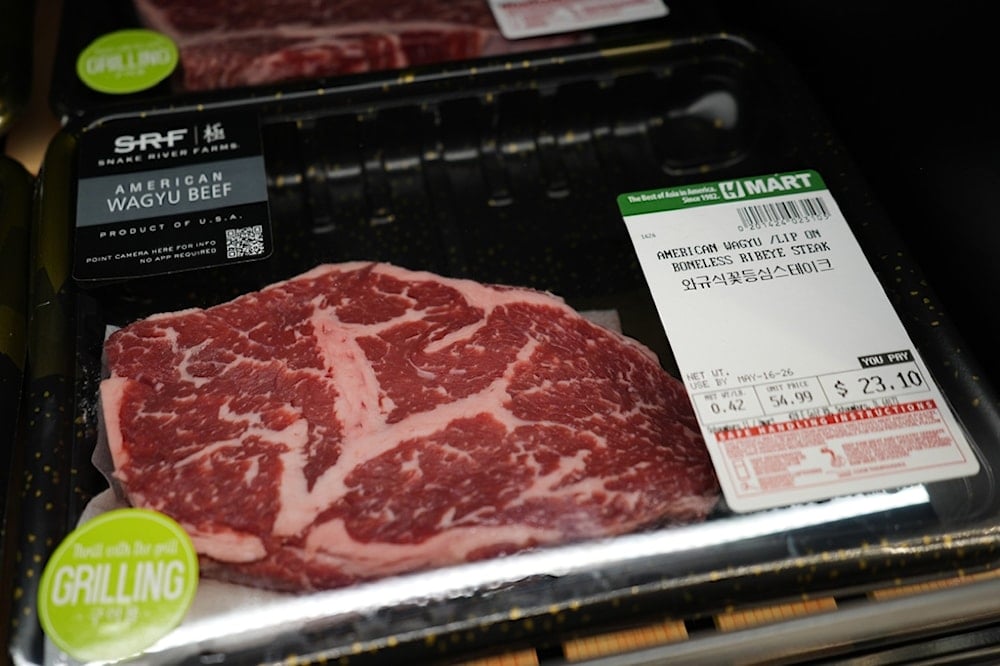
A price for beef is displayed at a grocery store in Schaumburg, Illinois, Thursday, May 14, 2026. (AP Photo/Nam Y. Huh)
Rising beef prices in the United States have created a growing policy dilemma for the Trump administration, as consumers face higher food costs heading into a politically sensitive period.
According to a Politico report, the US President Donald Trump returned from China to renewed debate inside the White House over how to address elevated beef prices, which have continued to climb in recent months.
Ground beef prices are approaching $7 per pound, with overall beef costs rising further as inflationary pressures persist across the food sector.
White House officials have been exploring measures to reduce prices for consumers, including adjustments to tariffs on imported beef.
White House weighs tariff relief on imports
An executive order under discussion would temporarily ease restrictions on imported beef in an effort to increase supply and stabilize prices.
However, officials have delayed finalizing the measure following internal debate and pushback from industry stakeholders and lawmakers.
The White House has indicated that the proposal is still under review, with possible revisions aimed at limiting disruption to US cattle producers while attempting to address consumer price pressures.
Read more: US consumers paid additional $35bln in fuel costs since war began: FT
Ranchers and GOP lawmakers push back
The proposal has faced strong resistance from Republican lawmakers and agricultural groups, particularly in farm-dependent states.
Cynthia Lummis, a Republican Senator from Wyoming, described the situation as a “challenging tightrope” for the administration, reflecting concerns about balancing consumer relief with rancher interests.
Jerry Moran, a Republican Senator from Kansas, warned that increased imports could harm cattle producers, arguing that ranching remains a critical part of agricultural income in states like Kansas.
“From a Kansas point of view, it’s the only profitable part of agriculture’s business, and so many of our farmers also raise cattle,” he said. “So this is a way they can survive. The efforts to import more beef would be very damaging to agriculture generally in our state.”
Industry representatives also raised concerns that expanded imports could discourage domestic production at a time when supply constraints are already tightening.
Supply constraints and production pressures
Beef prices have been driven in part by limited domestic supply, with US cattle inventories under pressure from drought conditions and animal disease risks, including concerns over the New World screwworm.
These structural constraints have contributed to reduced production forecasts and rising costs for both producers and consumers.
While some officials see imports as a short-term relief mechanism, industry analysts argue that underlying cost pressures, including fuel and production inputs, limit the effectiveness of tariff-based interventions.
Trade-offs between consumers and producers
White House advisors are weighing the political implications of any decision, as higher food prices remain a central voter concern.
A source close to the administration told Politico that the president is increasingly focused on consumer costs, while still attempting to manage backlash from agricultural constituencies.
The debate reflects a broader policy tension between lowering retail prices and protecting domestic producers from increased foreign competition.
Economists warned that any price relief may be limited if structural supply issues remain unresolved.
Read more: Trump draws fury for trampling on US middle-class pain


