
UAE fast-tracks new pipeline to double Fujairah export capacity
 4 Min Read
Abu Dhabi has directed ADNOC to fast-track a new pipeline that will double crude exports through Fujairah by 2027, as the Strait of Hormuz remains disrupted.
-
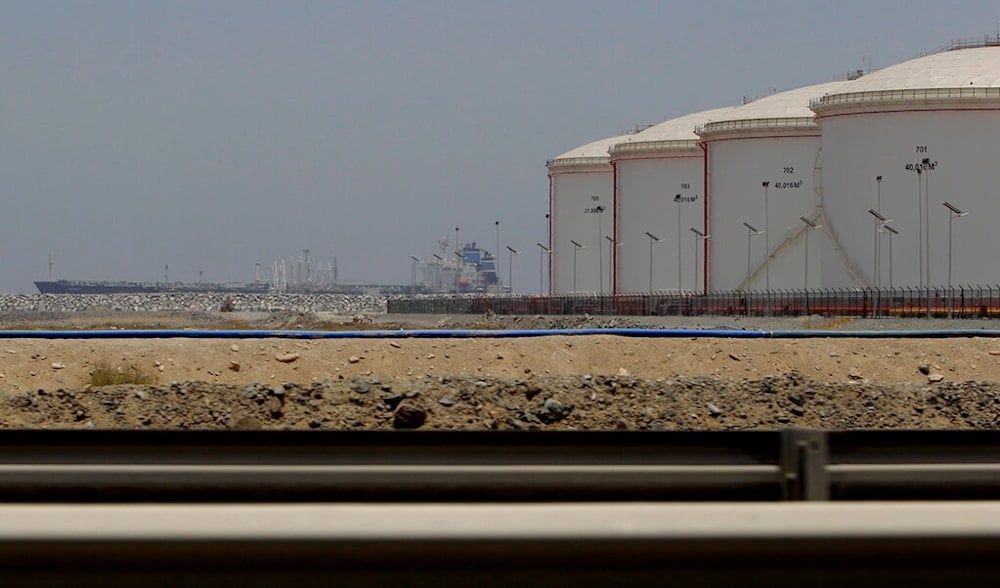
A ship docks at the refueling station in Fujairah, United Arab Emirates, Wednesday, May 30, 2012. (AP Photo/Kamran Jebreili)
The United Arab Emirates announced on Friday it would accelerate the construction of a new pipeline that will double the crude export capacity of state-owned Abu Dhabi National Oil Company (ADNOC) through the port of Fujairah, bypassing the Strait of Hormuz.
Abu Dhabi Crown Prince Sheikh Khaled bin Mohamed bin Zayed directed ADNOC to fast-track the West-East Pipeline project during an executive committee meeting, according to the Abu Dhabi Media Office.
The pipeline is already under construction and is expected to become operational by 2027, helping meet growing global energy demand.
A strategic bypass route
The port of Fujairah sits on the Gulf of Oman, outside the Strait of Hormuz, and serves as the endpoint of the UAE's existing Habshan-Fujairah pipeline, which carries up to 1.5 million barrels of crude per day. Before the war, the UAE was producing around 3.4 million barrels of crude per day.
The new West-East Pipeline will double Fujairah's export capacity, meaning Abu Dhabi could theoretically sustain near-full crude exports even if the Strait remains closed indefinitely. Fujairah is also a major hub for oil storage and ship refueling.
The UAE and Saudi Arabia are the only Gulf producers with pipelines capable of exporting crude outside the Strait, leaving other regional producers, Iraq, Kuwait, and Qatar, fully exposed to the ongoing disruption.
According to The National, the project also supports ADNOC's production capacity target of five million barrels per day by 2027, and follows the UAE's recent exit from OPEC, signalling Abu Dhabi's intent to chart an increasingly independent energy course.
Earlier this month, Reuters reported that a drone strike sparked a fire at the Fujairah Petroleum Industries Zone, while other reports said storage and loading operations were disrupted. The UAE blamed Iran for the strike, but Iranian state broadcaster IRIB, quoting a military source, affirmed that the US military was responsible for a fire at the oil facility in the UAE.
Read more: Iranian MP: UAE is no longer a neighbor, will be treated as Kurdistan
Gulf states eye pipeline alternatives
The UAE's acceleration of the West-East Pipeline is part of a broader regional reckoning. Gulf Arab states are increasingly revisiting long-discussed pipeline projects aimed at bypassing the Strait, as the war on Iran has demonstrated Tehran's capability to exert control over the waterway.
The war has revived the strategic value of Saudi Arabia's East-West pipeline, a 1,200-kilometer network built in the 1980s following the Iran-Iraq tanker war, which carries up to 7 million barrels per day to the Red Sea port of Yanbu. Saudi Aramco CEO Amin Nasser recently described it as the "main route" currently being utilised.
Riyadh is now assessing options to expand its capacity or develop additional routes to move a larger share of its daily production, estimated at over 10 million barrels, away from the Gulf.
Analysts note that Gulf policymakers are shifting from theoretical discussions to concrete planning, with experts suggesting a network of interconnected pipelines as a long-term solution.
However, such an approach carries steep costs; replicating infrastructure similar to the East-West pipeline alone could cost at least $5 billion, while multi-country routes could reach $15–20 billion, and would require unprecedented coordination among states whose energy strategies have often conflicted.


