
Uganda's gold sector achieves record growth amid price surge
 3 Min Read
Uganda's gold sector generates record $5.8 billion in 2025, accounting for 46% of exports.
-
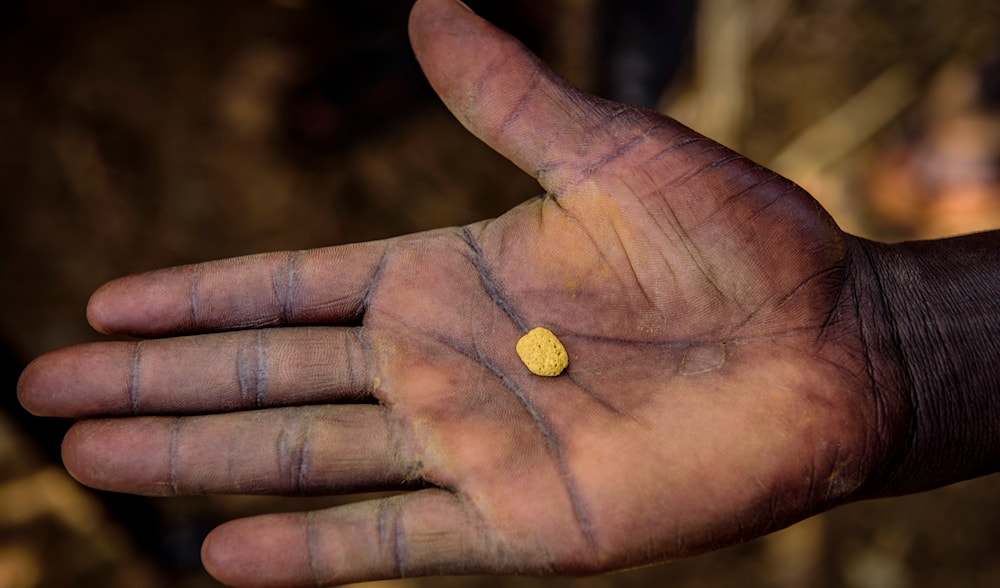
A man displays a nugget containing gold dust at a gold mining site in the village of Mawero, on the outskirts of Busia town, in eastern Uganda, on Monday, Oct. 18, 2021 (AP)
Uganda's precious metals industry has experienced transformative growth, with the East African nation's bullion shipments climbing dramatically over the past year as international market dynamics and domestic capacity expansion converge to reshape the country's export landscape.
The central bank reported that gold shipments generated $5.8 billion in revenue during 2025, marking a substantial 75.8% increase from the $3.3 billion recorded the previous year. This exceptional performance has elevated gold above coffee as the nation's primary foreign exchange earner, accounting for approximately 46% of total merchandise exports valued at $12.7 billion.
Adam Mugume, the Bank of Uganda's executive director for research and economic analysis, attributed the surge primarily to favorable international market conditions. Global gold prices soared beyond 64% throughout 2025, driven by heightened geopolitical uncertainties that intensified investor appetite for safe-haven assets.
The attractive pricing environment has catalyzed significant market participation, Mugume told Reuters, who noted that new commercial entities have entered the sector, substantially boosting export volumes. This expansion coincides with Uganda's elimination of export levies on gold, a policy shift designed to formalize artisanal production and enhance the country's competitiveness as a regional processing center.
Regional hub status strengthens
Uganda's emergence as a bullion hub extends beyond domestic production. The country functions as a critical refining and transit gateway for gold originating from neighboring territories, particularly the eastern Democratic Republic of the Congo and South Sudan.
With nine operational refineries capable of processing materials to 99.9% purity, including the African Gold Refinery in Entebbe, Africa's second-largest facility, Uganda provides essential value-addition services for artisanal miners across the region.
Infrastructure investment supports expansion
The infrastructure development supporting this trade includes the inauguration of Uganda's first industrial-scale mining operation, a $250 million Chinese-backed project in the country's eastern region. The Wagagai facility processes 5,000 tonnes of ore daily, producing approximately 1.2 metric tonnes of refined gold annually and representing a significant shift toward large-scale commercial extraction.
Geographic positioning and trade facilitation reforms have strengthened Uganda's role as a regional commercial corridor. Strategic investments in transport networks, implementation of One-Stop Border Posts that have reduced customs processing times by up to 98%, and participation in regional integration frameworks have enhanced the country's attractiveness for cross-border commerce.
Concentrated exports
While the gold sector's expansion has delivered substantial foreign exchange benefits, contributing to a 70% reduction in Uganda's merchandise trade deficit, it also intensifies the country's export concentration risk. With gold and coffee together representing nearly two-thirds of export revenues, policymakers face ongoing challenges balancing immediate economic gains against long-term diversification imperatives.


