
US doubles Hormuz tanker insurance to $40 bln
 3 Min Read
The US doubles insurance guarantees for tankers in the Strait of Hormuz, using American and private insurers to pressure ships into traversing the strategic Gulf waterway.
-
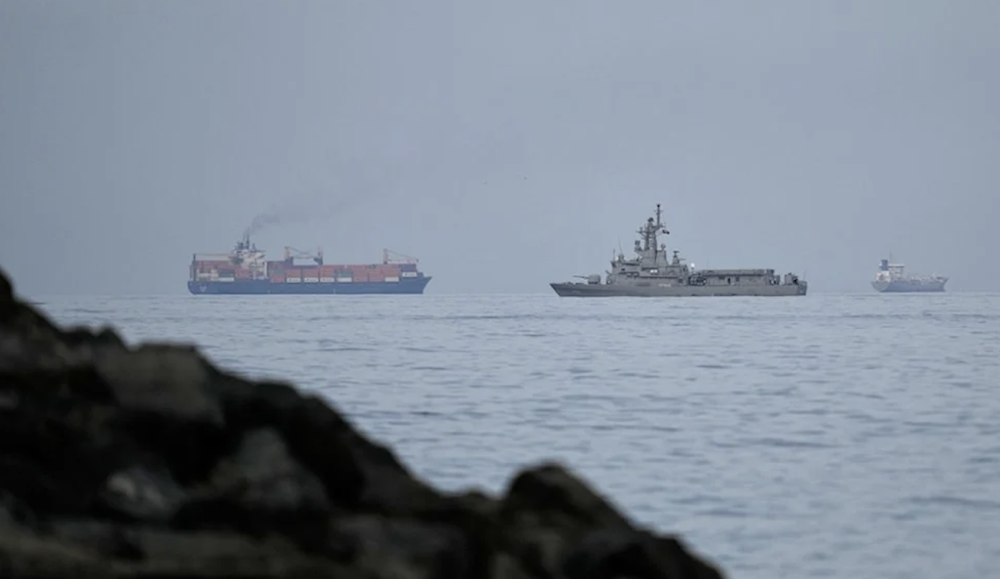
A UAE navy ship sails next to a cargo ship in the Strait of Hormuz as seen from Khor Fakkan, United Arab Emirates, on March 11, 2026 (AP)
The US government has increased its insurance backing for tankers navigating the Strait of Hormuz to $40 billion, doubling the original guarantee, in a bid to maintain control over one of the world’s most strategic waterways.
Six insurers, including Berkshire Hathaway and Liberty Mutual, are now participating in the federal maritime reinsurance program, managed by the US International Development Finance Corporation (DFC).
Ben Black, CEO of the DFC, emphasized that the partnership is for "strengthening our efforts to help restore confidence in maritime trade,” as the administration seeks to open the waterway amid Iran's closure of the strait.
Despite the announcement, no public application portal for the insurance program has yet been opened, leaving tanker operators waiting for operational guidance.
US President Donald Trump announced plans to reopen the strait in early March, framing it as a step to safeguard global trade. The DFC, which initially partnered with Swiss-American insurer Chubb, promised further instructions for ships seeking coverage in the coming days.
Limited traffic under Iranian oversight
Shipping activity through the Strait of Hormuz has dropped sharply since the escalation of the US-Israeli war on Iran in late February. Several vessels have been able to cross, primarily those linked to countries not aggressing against Iran.
A controlled system has emerged in which Iran pre-approves maritime transit along routes that run close to its shores. Pakistan has reportedly secured passage for 20 vessels under its flag, while several Asian countries have reached similar arrangements.
In contrast, European efforts to facilitate navigation through the strait remain at an early stage. French President Emmanuel Macron stated during a visit to South Korea that Paris would work toward stabilizing conditions in Hormuz "once the bombardments have ceased".
Iranian officials have made clear that those who have no link ot the US-Israeli aggression against the Islamic Republic are able to pass through the Strait.
Earlier this week, Ebrahim Azizi, head of the National Security and Foreign Policy Committee in Iran’s Parliament, said in a post on X that passage through the Strait of Hormuz would be limited to those complying with Iran’s rules.
Addressing US President Donald Trump, he wrote, “The Strait of Hormuz will certainly reopen, but not for you,” adding that access would be limited to those complying with Iran’s rules.
Mocking Trump, Azizi added, "Finally, Trump realized his long-touted 'regime change', but in the region’s maritime regime."


