
Trump admits Strait of Hormuz won’t reopen on his timeline
 4 Min Read
President Donald Trump and senior officials admit reopening the Strait of Hormuz may take months. US pressures European allies as oil prices surge amid the Iran conflict.
-
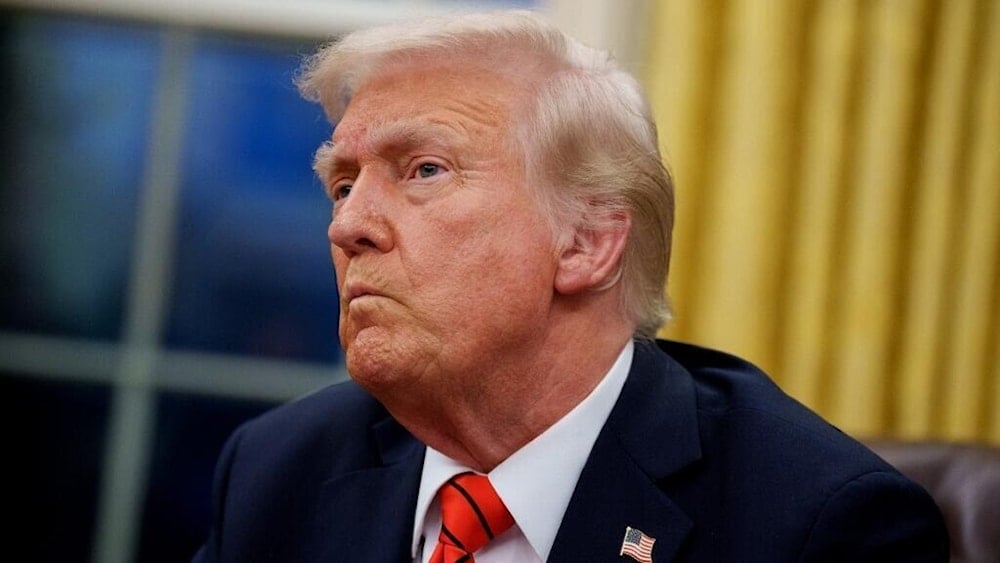
US President Donald Trump at the White House, February 10, 2025 (AFP)
President Donald Trump and senior White House officials are privately acknowledging that reopening the Strait of Hormuz may not be possible within the president’s self-imposed timeline for ending the war on Iran, sources familiar with internal discussions tell CNN.
The strait, a critical oil chokepoint through which roughly 20% of the world’s oil supply flows, is a central objective for the administration, not only to conclude the war but also to ease soaring gas prices, which have emerged as a political liability for Republicans ahead of November’s midterm elections.
Top officials and intelligence sources have estimated that restoring full operations at the strait could take weeks, if not months, making it unlikely to meet Trump’s four- to six-week deadline for declaring “mission accomplished.”
Trump launches war, tries to pin the consequences on other nations
Instead, Trump has publicly signaled that other nations, particularly in Europe, should bear the responsibility for reopening the waterway. “What happens to the strait, we’re not going to have anything to do with it,” Trump said in the Oval Office, following his statement that he expects the war to end in two or three weeks.
On social media, he called on other countries to act immediately. “Build up some delayed courage, go to the Strait, and just TAKE IT. You’ll have to start learning how to fight for yourself, the U.S.A. won’t be there to help you anymore, just like you weren’t there for us,” he wrote on Truth Social, singling out the United Kingdom.
For weeks, Trump has urged US allies to send naval assets to escort tankers, but none have committed while the war is ongoing. European leaders, who were not consulted before US strikes on Iran, have expressed reluctance to intervene mid-war, though some have pledged eventual cooperation in patrolling the strait.
The White House maintains that reopening the strait will be easier once the war ends, dismissing concerns over the impact on gas prices, which hit a nationwide average of $4.02 per gallon on Tuesday. the highest since 2022.
Trump concedes Strait of Hormuz to Iran
US President Donald Trump has made it clear that he is willing to end the US aggression on Iran even if the Strait of Hormuz remains firmly closed, effectively waving the white flag on one of his most touted objectives, according to US administration officials cite by the Wall Street Journal
Officials said Trump and his aides concluded that any serious attempt to reopen the strait would almost certainly drag the war past his preferred four- to six-week deadline. Faced with Iran’s iron grip on the vital chokepoint, the president appears to have decided it is easier to punt than to fight, leaving the strategic waterway in Tehran’s hands and signaling an extraordinary retreat.
Instead of tackling the Strait head-on, the administration is now focused on inflicting limited damage to Iran’s navy and missile capabilities while applying diplomatic pressure, a strategy insiders describe as “all hat, no cattle,” given Iran’s steadfast resistance.
Trump has also turned to the international community to pick up the slack, publicly urging European and Gulf allies to step in and reopen the strait themselves. “There are military options available,” one official admitted, “but they are not the president’s immediate priority,” a polite way of saying the United States is essentially washing its hands of the matter for now.
The move marks a rare and conspicuous acknowledgment that a marquee goal of the US-Israeli war on Iran may remain out of reach. It underscores the limits of American power, the gap between Trump’s grand rhetoric and operational reality, and a president willing to walk away rather than risk a protracted struggle over a strategic chokepoint he cannot control.


