
US stocks dip as inflation data exceeds expectations amid war on Iran
 2 Min Read
US stocks dipped as higher-than-expected inflation data weighed on markets, while oil price pressures linked to the US-Israeli war on Iran continued to impact sentiment.
-
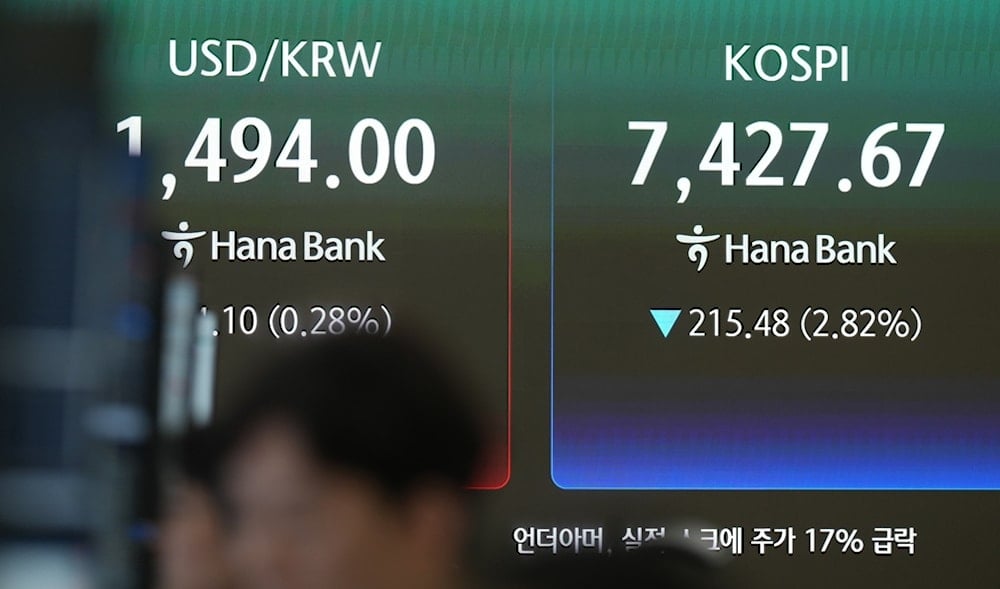
Dealers watch computer monitors near the screens showing the Korea Composite Stock Price Index (KOSPI), and the foreign exchange rate between US dollar and South Korean won at a dealing room of Hana Bank in Seoul, South Korea, May 13, 2026. (AP)
Wall Street stocks dipped early Wednesday as investors reacted to higher-than-expected inflation data and ongoing geopolitical uncertainty.
Wholesale prices in the US rose 6% for the 12 months ending in April, according to the Department of Labor. Month-on-month increases also came in above expectations, marking the highest level since March 2022.
The data added to concerns about inflation pressures, with energy costs rising following the surge in oil prices after the US-Israeli war on Iran.
About 15 minutes into trading, the Dow Jones Industrial Average was down 0.5% at 49,525.78. The S&P 500 slipped 0.2 percent to 7,386.93, while the Nasdaq Composite edged down less than 0.1 percent to 26,078.63.
Analysts said the relatively limited selling suggested markets were absorbing inflation pressures while also watching broader geopolitical developments.
Oil prices climbed by more than 3% on Tuesday, according to Reuters.
— Al Mayadeen English (@MayadeenEnglish) May 12, 2026
Brent crude futures rose by $3.34, or 3.21%, reaching $107.55 per barrel by 1314 GMT, while US West Texas Intermediate crude increased by $3.18, or 3.24%, to $101.25.
Reuters also noted that both benchmarks… pic.twitter.com/giKAz5CyZl
War costs on the rise
While prices continue to rise in the US, putting pressure on households, public debate has also intensified over federal spending priorities, including billions directed toward military aggressions abroad, amid ongoing inflation concerns at home.
The Department of War acknowledged Tuesday that the direct military cost of the US-Israeli war on Iran has climbed to nearly $29 billion, while economists and analysts warn that the broader economic consequences for the United States could ultimately reach hundreds of billions of dollars, Forbes reported.
Speaking before Congress, Department of War Comptroller Jay Hurst said operational expenses and the replacement of military equipment had sharply increased the overall cost of the war, raising the Pentagon’s estimate by roughly $4 billion compared to figures released less than two weeks ago.
Department of War officials had previously estimated the war cost at around $25 billion by late April, though other US reports suggested the real figure was already significantly higher due to extensive weapons use and operational deployments.
Read more: 66% of Americans believe Trump failed to explain war on Iran: Reuters


