
US strategic oil reserves hit lowest level since 1982
 3 Min Read
US strategic oil reserves fell to 282.7 million barrels, their lowest level since October 1982, as Washington draws on emergency stockpiles.
-
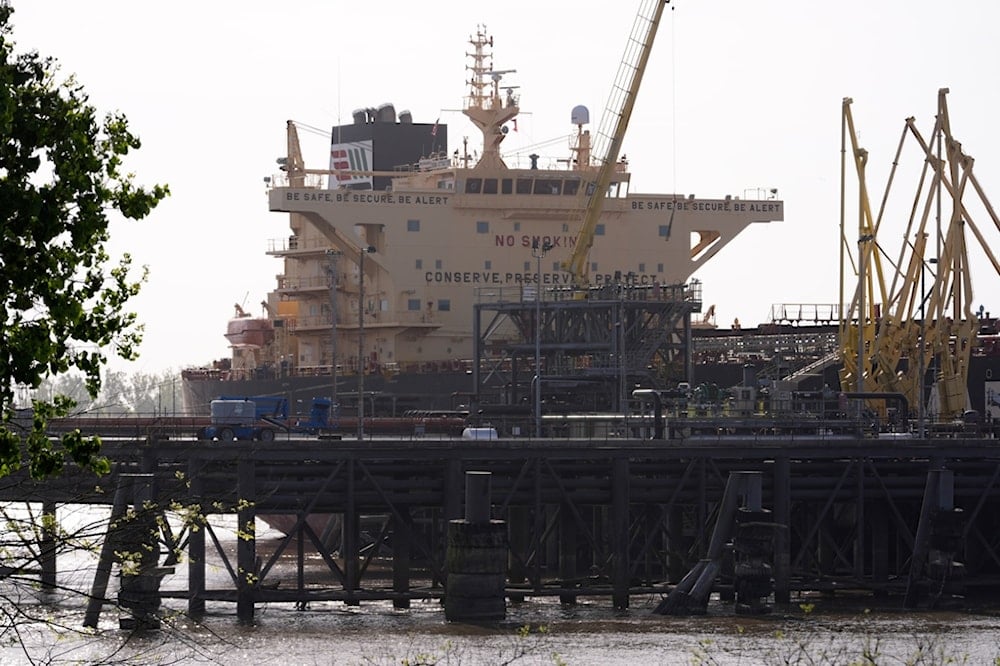
The crude oil tanker Dubai Attraction is moored in the Mississippi River at the IMTT dock in Saint Rose, La., Thursday, April 2, 2026. (AP Photo/Gerald Herbert)
Crude oil stocks in the US Strategic Petroleum Reserve (SPR) fell to 282.7 million barrels last week, marking their lowest level since October 1982, according to US Department of Energy data cited by Reuters on October 19.
The decline comes as Washington draws on its emergency stockpiles amid energy-market disruptions and rising oil prices linked to the US war on Iran.
In March, the administration of US President Donald Trump announced plans to release 172 million barrels of crude oil from the reserve as part of a broader effort to ease pressure on energy markets.
US draws on emergency oil stockpiles
The planned US release formed part of a wider International Energy Agency (IEA) arrangement involving around 30 countries, which committed to releasing a combined 400 million barrels from emergency reserves to address supply disruptions linked to the US war on Iran.
The 172-million-barrel US withdrawal would constitute the second-largest release in the reserve's history, following the withdrawal of 180 million barrels ordered by former US President Joe Biden in 2022, according to CBS News.
Established in 1975 in response to the energy crisis of the 1970s, the SPR is intended to provide the US with an emergency supply of crude oil during major disruptions to global energy markets.
The decline in its holdings has renewed attention to Washington's capacity to respond to further supply shocks while continuing to draw on the reserve to ease pressure on oil prices.
Washington seeks further oil exchanges
Despite the reserve falling to its lowest level in more than four decades, the US Department of Energy announced on October 16 that it was seeking proposals to exchange up to 17 million barrels of crude oil from the SPR.
The arrangement allows companies to receive crude from the reserve and return it at a later date, with additional barrels required as a premium. Unlike a permanent withdrawal, an exchange is designed to replenish the reserve, although the oil remains unavailable for immediate emergency use while it is out of government storage.
In June, the US administration said companies had agreed to borrow only around 500,000 barrels under an earlier offer covering the final tranche of the March arrangement, following concerns over the terms requiring additional crude to be returned.
The latest request for proposals indicates that Washington continues to pursue oil exchanges as it seeks to manage energy supplies while the reserve remains at a historically low level.
With crude stocks now at their lowest level since 1982, the volume of further withdrawals and the pace at which borrowed oil is returned will be key factors in determining the reserve's capacity to respond to future supply disruptions.
Read more: The economy that put Trump in office is now working against his party


