
US weighs easing 'shadow fleet' sanctions as energy costs surge
 5 Min Read
The weighed measure comes amid disruptions linked to the war on Iran and mounting economic pressure ahead of the US midterm elections.
-
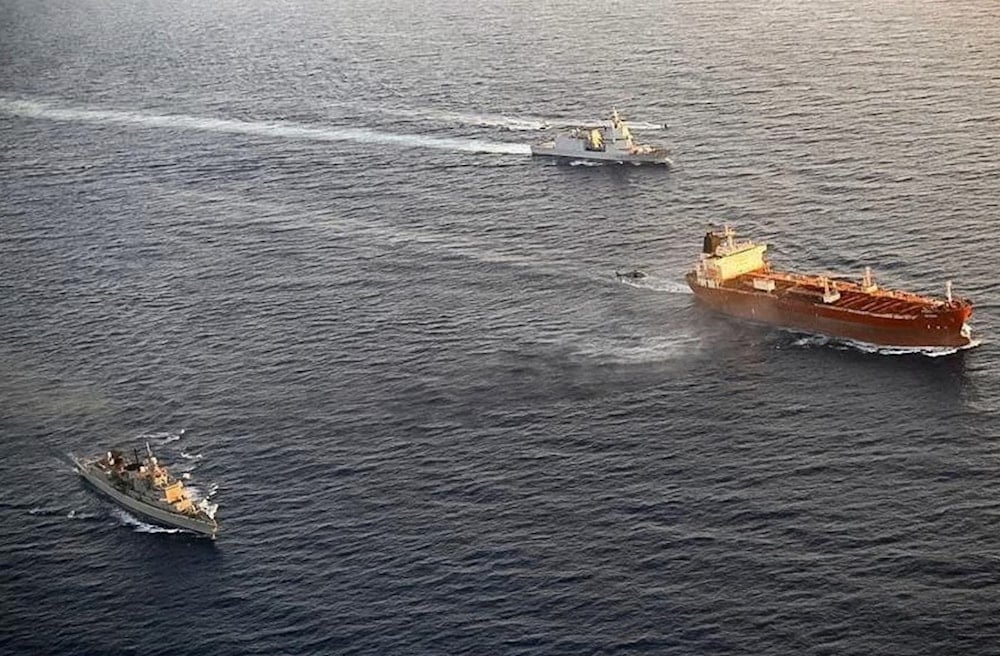
An Italian military helicopter flies near the oil tanker Toa Payoh, foreground, as the Italian Navy ship Thaon di Revel sails nearby during an inspection by the European Union’s EUNAVFOR MED IRINI mission in international waters west of the Italian island of Pantelleria, August 2, 2026 (Italian Defense Ministry)
The Trump administration is considering relaxing restrictions on previously sanctioned oil tankers as record shipping costs and disruptions linked to the US-Israeli war on Iran deepen pressure on global energy markets, Reuters reported, citing a US official.
The proposal would permit certain vessels previously used to transport oil from Iran, Russia, and Venezuela to reenter authorized shipping operations, potentially increasing the availability of tankers carrying crude oil and petroleum products from the Gulf.
The discussions come as Washington seeks to contain rising energy costs, with President Donald Trump facing mounting economic pressure ahead of the November 3 midterm elections.
Washington considers limited sanctions exemptions
According to the official, the administration is examining arrangements that would allow previously blacklisted vessels to transport "legal oil", referring to crude and petroleum products that are not subject to US sanctions.
The proposed exemptions would not constitute a broader removal of restrictions on Iranian or Russian oil exports. Instead, companies seeking to charter sanctioned vessels would be required to obtain authorization from the US Treasury Department.
US Energy Secretary Chris Wright reportedly addressed the initiative during remarks to the World Petroleum Congress in Riyadh this week, discussing the possibility of easing restrictions on the tanker fleet to reduce transportation costs that have weakened demand for US crude.
Research firm Energy Aspects cited Wright's remarks, although Reuters said it could not obtain the complete recording or transcript.
Russian diesel relief draws criticism
The discussions follow Trump's decision to temporarily suspend sanctions on Russian diesel, a measure criticized by Ukrainian President Volodymyr Zelensky, European governments, and several Republican senators.
Critics warned that allowing additional Russian fuel onto international markets could generate revenue for Moscow and contribute to financing its military operations in Ukraine.
The US Department of Energy maintained that any potential exemptions for the "shadow fleet" would not facilitate Russian oil exports. The White House did not immediately respond to requests for comment.
Shipping disruptions expose limits of US measures
Global tanker freight costs have climbed to unprecedented levels amid the continuing wars involving Iran and Ukraine, with instability around the Strait of Hormuz restricting shipping operations and disrupting established energy trade routes.
The rising cost of transporting American crude has also weakened its competitiveness among Asian refiners, encouraging buyers to seek alternative supplies from the Middle East and Latin America.
However, industry analysts have questioned whether relaxing restrictions on sanctioned vessels would meaningfully reduce shipping expenses.
Analysts question impact of sanctions relief
Energy Aspects assessed that the proposed measures would provide only limited additional capacity, noting that many of the older tankers targeted by sanctions have continued operating in recent months.
The research firm said the exemptions "could make a small number of additional tankers available for certain (Strait of) Hormuz shuttle runs."
Maritime industry representatives also pointed to continuing European Union and British regulations governing insurance coverage, which could prevent many operators from using the vessels even if Washington authorized their return to permitted trade.
Consequently, the proposal could facilitate limited oil movements through Gulf shipping routes without addressing the wider disruptions responsible for elevated freight costs.
Rising fuel prices intensify midterm pressures
The administration's consideration of sanctions relief comes amid growing public frustration over energy prices and the cost of living, issues increasingly prominent in the campaign for the November 3 congressional elections.
US inflation accelerated to 3.7% annually in September, compared with 3.4% in August, according to figures released by the Labor Department on Wednesday. Gasoline prices increased 9.1% during the month, accounting for more than half of the overall monthly increase in consumer prices.
Energy costs have also remained elevated despite recent fluctuations. According to the US Energy Information Administration, regular gasoline averaged approximately $4.33 per gallon during the week of October 12, roughly $1.27 higher than a year earlier. Diesel averaged approximately $6.18 per gallon, placing additional pressure on transportation, agriculture, and distribution costs.
Rising prices deepen midterm pressures
The economic consequences have become a growing political concern for Republicans seeking to retain control of both chambers of Congress. A Reuters/Ipsos survey published October 9 found that 78% of Americans believed Trump's policies bore at least some responsibility for rising prices, including 64% of Republican respondents.
The survey also found that 57% of Republicans believed living expenses were increasing faster than their earnings, underscoring the difficulties facing the administration as it seeks to demonstrate progress on affordability.
Washington's latest consideration of shipping sanctions exemptions comes against this backdrop, as the administration searches for ways to increase energy flows and contain prices while the war on Iran continues to disrupt international trade.
Nevertheless, analysts remain skeptical that bringing additional sanctioned vessels into authorized commerce would provide substantial relief without an improvement in shipping conditions around the Strait of Hormuz.
Read more: US war on Iran sends oil tanker rates above $1.2mln a day: FT


