
War on Iran drives US energy squeeze ahead of midterms: WSJ
 5 Min Read
Rising fuel costs driven by the US war on Iran, alongside higher electricity bills, are squeezing American households and businesses.
-
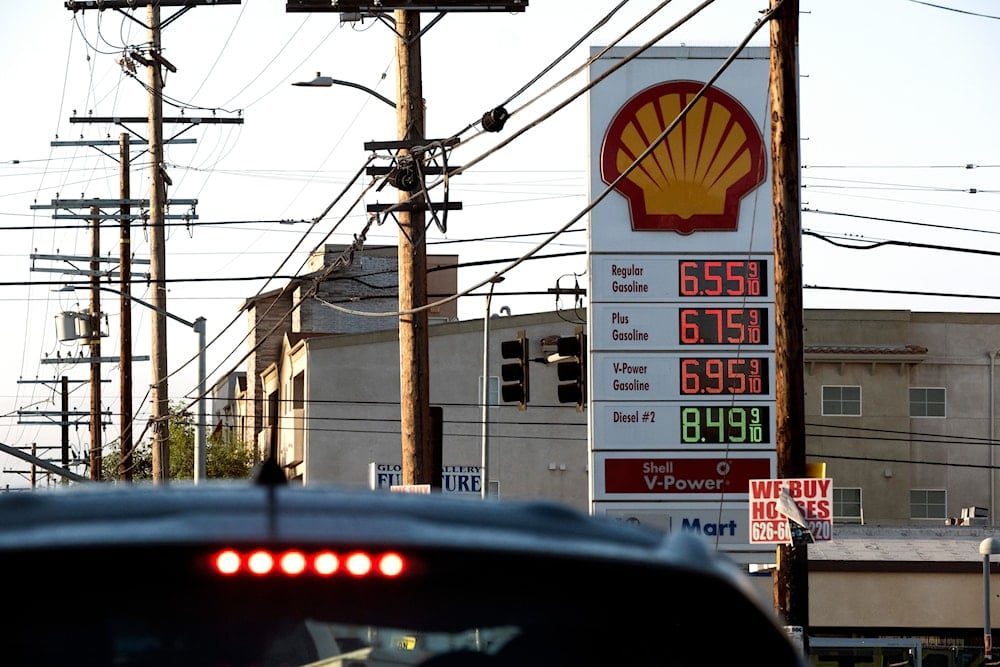
Gas and Diesel prices are posted on a Shell gas station in the San Fernando Valley section of Los Angeles on Thursday, October 1, 2026 (AP)
The US war on Iran is driving up fuel costs and deepening financial pressure on American households and businesses, putting Republican candidates under strain ahead of November’s midterm elections, The Wall Street Journal reported.
From farmers postponing machinery repairs to families cutting spending on their children’s activities, the report documents how rising energy expenses are reshaping daily life and influencing voters’ political choices.
Electricity bills are adding to the pressure, although their increases reflect a broader range of factors, including infrastructure costs and regional supply constraints.
Rising bills unsettle Republican voters
In Iowa, the financial squeeze comes amid closely contested elections. According to the WSJ, recent polling places Democratic Senate candidate and state Representative Josh Turek roughly level with Republican Representative Ashley Hinson, while the gubernatorial race and several congressional contests are also competitive.
For Ed Kirkman, who runs ChaCha’s Hiland Bakery in Des Moines, rising costs and President Donald Trump’s handling of the Iran war have already prompted a political break. The lifelong registered Republican changed his affiliation to independent this year and remains undecided about his choice for governor.
Kirkman said his bakery’s electricity expenses had climbed nearly 30% over the past year. He is considering reducing working hours for his 25 employees or shutting the business one or two days each week.
“We can’t pay people to stand around and lose money. This isn’t sustainable,” he said. “People are ready for some change. Things aren’t getting better.”
Electricity prices outpace broader inflation
Nationally, electricity prices increased 3.8% in August compared with a year earlier, exceeding the 3.4% rise in overall consumer prices, according to Bureau of Labor Statistics figures cited by the newspaper.
The causes differ across regions. Research from Lawrence Berkeley National Laboratory points to factors including renewable-energy policies and the replacement of aging or storm-damaged grid infrastructure. Data centers have had uneven effects, helping spread costs in some areas while increasing pressure where power supplies are constrained.
Record diesel prices squeeze farmers
Diesel has become a particularly sensitive issue for Republicans because of its importance to farming and trucking. Higher fuel expenses also threaten to feed through into the prices consumers pay for food and other goods.
According to AAA figures cited by the WSJ, the national diesel average stood at $6.36 a gallon on Saturday, compared with $3.70 a year earlier, following a global fuel shortage that pushed prices to record levels.
Higher fuel bills force repairs onto hold
Aidan Struve, a 23-year-old farmer in Woodward, Iowa, expects his annual fuel bill to reach $18,000, up from approximately $11,500 in 2025. His family cultivates around 500 acres of corn, soybeans, alfalfa, and oats, using seven tractors, two semitrailer trucks, and a combine harvester.
To absorb the increase, Struve has deferred equipment maintenance, reduced hay deliveries, and taken on additional residential construction work. He is also spending less time socializing.
“You just have to suffer through and work harder,” he said. “That gives you less time with your family and everything else.”
Republican loyalty faces an affordability test
Struve nevertheless plans to vote Republican, supporting gubernatorial candidate Zach Lahn over Democrat Rob Sand. He cited Lahn’s proposal to cut the state gasoline tax and his belief that the Republican better understands farmers’ concerns.
Some of Struve’s friends, however, intend to abstain or vote Democratic, he told the newspaper.
Families sacrifice spending as gasoline climbs
The pressure extends beyond diesel-dependent industries. The national gasoline average reached $4.38 a gallon on Saturday, against $3.15 a year earlier, according to the report.
In Allentown, Pennsylvania, Enid Santiago said filling her minivan now costs $80, compared with $50 earlier this year. The airline customer-service employee and mother of four has reduced spending on dining out, entertainment and extracurricular activities.
“We’re cutting back on everything,” she said. “We’re working right now to survive, to pay our mortgage and car insurance and what we need.”
Affordability frustrations shape voting choices
Santiago, who previously sought state office as a Democrat, said she intends to vote for Democratic challenger Bob Brooks against Republican Representative Ryan Mackenzie, citing her frustration with Republicans over rising costs.
In Bellaire, Ohio, recent college graduate Nick Earls said fuel prices had pushed him toward coupons and cheaper grocery brands. He plans to support Democrats in the Senate and gubernatorial elections.
“Republicans have had control for a while and have been saying they’d make things better and things have not gotten better,” he said.
Read more: US gas prices may stay high ahead of midterms, Trump says


