
US weighs new Russian oil fee waiver amid global supply strain
 3 Min Read
The United States is reportedly preparing a new waiver allowing the sale of Russian oil and petroleum products, amid the war on Iran.
-
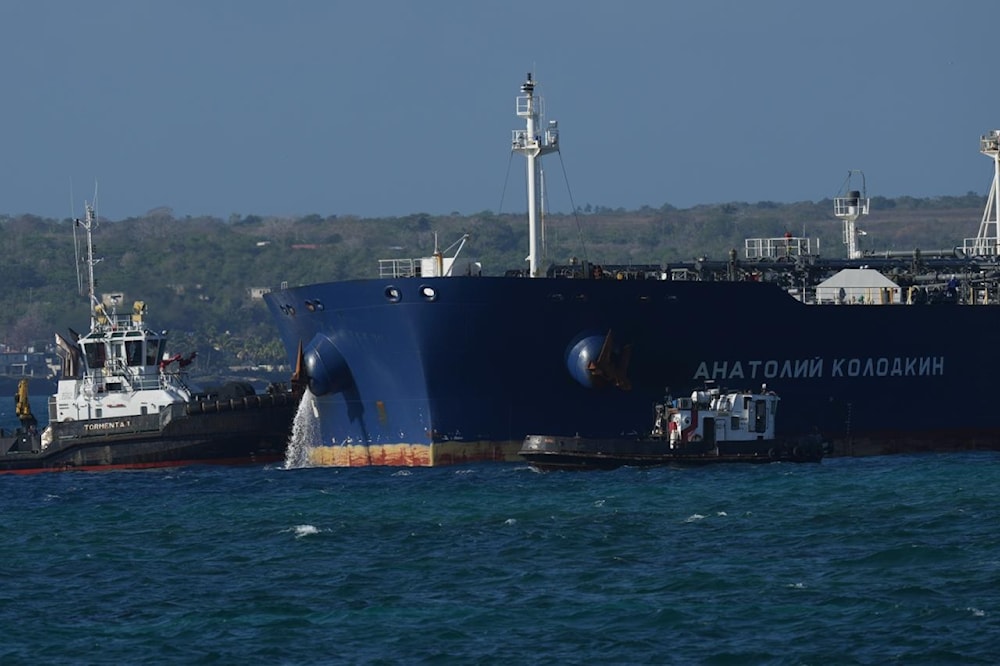
Tugboats maneuver around the Russian-flagged oil tanker Anatoly Kolodkin after it docked at an oil terminal in Matanzas, Cuba, Tuesday, March 31, 2026. (AP)
The United States is preparing to issue a new waiver allowing the sale of Russian crude oil and petroleum products loaded onto tankers, according to Bloomberg, citing individuals familiar with the matter.
The proposed exemption would reportedly be issued by the Office of Foreign Assets Control (OFAC) under the US Treasury Department and could extend beyond 30 days or be subject to further renewals, depending on developments in global energy markets linked to the war on Iran.
The move comes just days after the previous exemption expired, marking a potential continuation of temporary measures that have allowed certain Russian energy transactions to proceed despite existing sanctions frameworks.
Pressure from global energy market
The reported decision reflects growing pressure on the administration of US President Donald Trump to stabilize global fuel prices and address tightening supply conditions. The unprovoked US-Israeli war on Iran led energy prices to skyrocket after transit through the Strait of Hormuz became subject to a new Iranian regime, and energy facilities were impacted by the confrontation.
This has led to volatility in oil markets and heightened concerns among both major importers and lower-income countries dependent on stable energy supplies.
According to the report, earlier US extensions of similar general licenses were partially justified by appeals from developing states facing acute economic strain due to rising energy costs.
Read more: Inside Iran's bid for Strait of Hormuz insurance-based framework: Fars
Previous licenses and policy reversal context
Washington had previously issued two general licenses covering similar transactions. The first, introduced in March, expired after 30 days and was initially not expected to be renewed. However, that position was later reversed by Treasury officials.
The second license expired on May 16, leaving a temporary regulatory gap before the anticipated new waiver.
US Treasury Secretary Scott Bessent had earlier indicated that the March exemption would not be extended before reversing course days later, citing international appeals and market stability considerations.
EU concerns and diverging pressures
The reported move is likely to draw criticism from Europeans, who argue that sanctions on Russia remain essential to reducing Moscow’s revenues and limiting its military capacity in Ukraine.
At the same time, several Asian energy-importing economies have reportedly pushed for broader flexibility in sanctions enforcement, warning that prolonged restrictions could further destabilize already fragile fuel markets.
The emerging divergence highlights mounting tensions between geopolitical pressure campaigns and the economic realities of global energy dependency.
Read more: US-Israeli war on Iran cost global companies $25 billion in losses


