
US-Israeli war on Iran cost global companies $25 billion in losses
 3 Min Read
The US-Israeli war on Iran has cost global companies at least $25 billion as soaring oil prices, supply chain disruptions, and restricted shipping through the Strait of Hormuz drive widespread corporate losses.
-
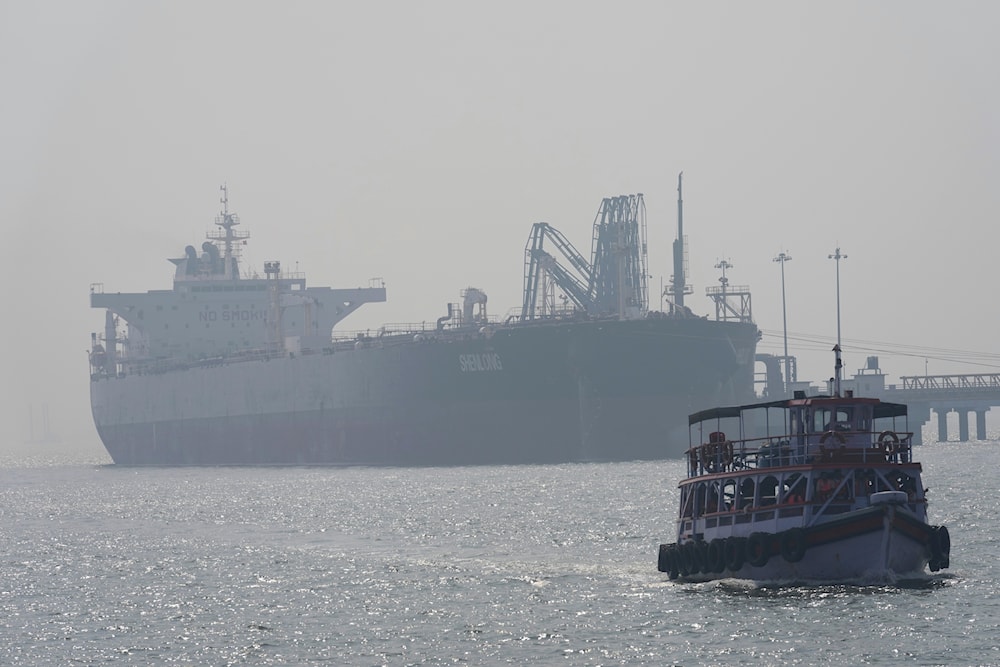
Oil tankers and cargo ships line up in the Strait of Hormuz as seen from Khor Fakkan, United Arab Emirates, Wednesday, March 11, 2026 (AP)
Global companies are facing mounting financial pressure as the US-Israeli war on Iran continues to disrupt energy markets and international trade routes, pushing total corporate losses to at least $25 billion and rising.
According to a Reuters analysis, the war has triggered severe supply chain breakdowns, sharp increases in energy and shipping costs, and major disruptions to maritime traffic through the Strait of Hormuz, one of the world’s most critical oil and gas chokepoints.
A review of corporate statements since the start of the aggression against Iran found that businesses listed in the US, Europe, and Asia are struggling with rising energy prices, fractured supply chains, and disrupted trade routes.
At least 279 companies have cited the war as a trigger for defensive measures, including price increases, production cuts, suspended dividends and buybacks, staff furloughs, fuel surcharges, and requests for emergency government assistance.
Shipping disruptions and energy price shock
The disruption of traffic through the Strait of Hormuz has contributed to oil prices rising above $100 per barrel, more than 50% higher than before the war. The situation has also driven up shipping costs and tightened global supplies of key raw materials, including fertilizers, helium, aluminum, and polyethylene, according to the report.
Tensions around the waterway escalated drastically after the United States and "Israel" launched the war in February, prompting Iran to retaliate by blocking access to hostile and enemy-affiliated ships through the Strait.
After the ceasefire was announced and subsequently broken by "Israel", Iran once more blocked the key channel. The United States then launched "Project Freedom", which entailed militarizing the Strait and raising tensions further before suspending the failed mission less than 48 hours post-launch.
Airlines and industry bear the largest costs
Airlines account for the largest share of quantified war-related costs, representing nearly $15 billion, as jet fuel prices have nearly doubled.
Toyota warned of a $4.3 billion hit, while Procter & Gamble estimated a $1 billion post-tax profit loss linked to the ongoing disruptions.
Corporate responses to rising costs
McDonald's said earlier this month it expects higher long-term cost inflation due to supply chain disruptions, with CEO Chris Kempczinski noting fuel costs are affecting lower-income consumer demand.
“Elevated gas prices are the core issue we’re seeing right now,” he said.
Nearly 40 companies in the industrials, chemicals, and materials sectors have reported plans to raise prices due to exposure to West Asian petrochemical supply pressures.
German tiremaker Continental expects a hit of at least €100 million ($117 million) from the second quarter due to surging oil prices.
Economic outlook
A majority of affected companies are based in the UK and Europe, where energy costs were already elevated, while nearly a third are from Asia, reflecting both regions’ dependence on West Asian oil and fuel imports.
Analysts warn that the full earnings impact has yet to appear in corporate results.
“The true earnings hit has not yet materialized in most companies’ results,” said Rami Sarafa, CEO of Cordoba Advisory Partners.
Read more: US-Israeli war on Iran pushes European gas prices above €50


