
War in Iran adds $3.5B to EU energy costs in 10 days
 3 Min Read
EU chief Ursula von der Leyen says the war in West Asia has already cost Europe more than $3.5 billion in additional fossil fuel imports as oil and gas prices surge.
-
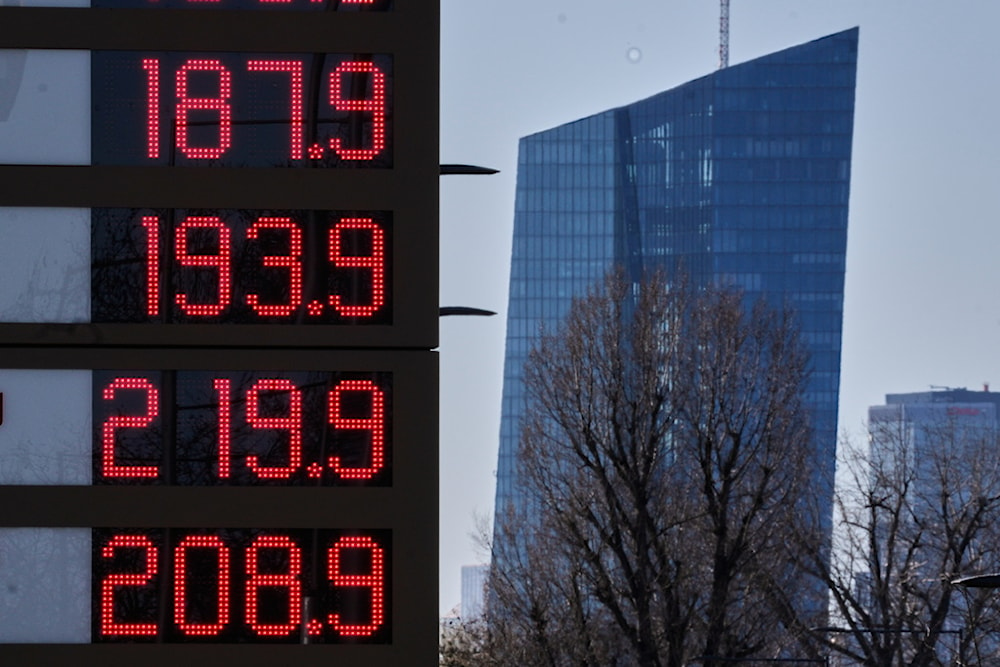
Gas prizes are displayed at a gas station with the European Central Bank in background in Frankfurt, Germany, Monday, March 2, 2026 (AP)
The escalating War on Iran has already imposed billions of dollars in additional energy costs on the European Union, according to European Commission President Ursula von der Leyen.
Speaking during a plenary session of the European Parliament, von der Leyen said that the sharp rise in global energy prices following the outbreak of the war has significantly increased the bloc’s import costs.
“Since the beginning of this conflict, gas prices have risen by 50 percent and oil prices have risen by 27 percent,” she said.
“If you translate this in euros, the 10 days of war have already cost European taxpayers an additional 3 billion euros in fossil fuel imports.”
The increase reflects Europe’s heavy dependence on imported energy, particularly amid volatility in global oil and gas markets following the US-Israeli war of aggression against Iran.
Von der Leyen said the European Union is now considering emergency measures to shield households and industries from rising costs.
These include potential limits on gas prices as well as subsidies and state-backed support mechanisms aimed at preventing a broader energy crisis across the bloc.
War ripples through global energy markets
The surge in energy costs comes as tensions around the Strait of Hormuz, one of the world’s most critical energy corridors, continue to disrupt global supply chains.
Roughly one-fifth of the world’s oil shipments pass through the narrow waterway linking the Persian Gulf to international markets.
Since the start of the US-Israeli war on Iran, shipping activity through the strait has slowed dramatically amid security fears, with many vessels remaining anchored while companies assess the risks of transit.
US naval officials have also acknowledged difficulties in guaranteeing safe passage for commercial shipping, underscoring the scale of the disruption.
Energy analysts warn that prolonged instability in the region could push oil prices even higher, intensifying inflationary pressures across energy-dependent economies in Europe and beyond.
Escalation across West Asia
The economic fallout comes amid a rapidly intensifying military confrontation in West Asia.
Iran has launched multiple waves of retaliatory drone and missile strikes targeting Israeli-occupied territories as well as US military installations across the region. Iranian officials say the operations are a response to the ongoing US-Israeli aggression against the country.
The fighting has already inflicted significant casualties and damage. Reports indicate that up to 150 US troops have been wounded during the first ten days of the war.
The conflict has also begun to create political pressure within Washington. US President Donald Trump is reportedly facing growing calls from some advisors and lawmakers to outline a path toward ending the war, as concerns mount over rising global oil prices and the potential political costs of a prolonged confrontation with Iran.
Analysts warn that if the conflict continues to expand, the disruption to energy markets and international trade could deepen further, amplifying the economic impact already being felt in Europe and across the global economy.


