
Why are US Treasuries losing their 'safe haven' status?
 5 Min Read
For decades, US government bonds were considered the world's safest investment. That certainty is now unravelling, and the ripple effects will be felt globally.
-
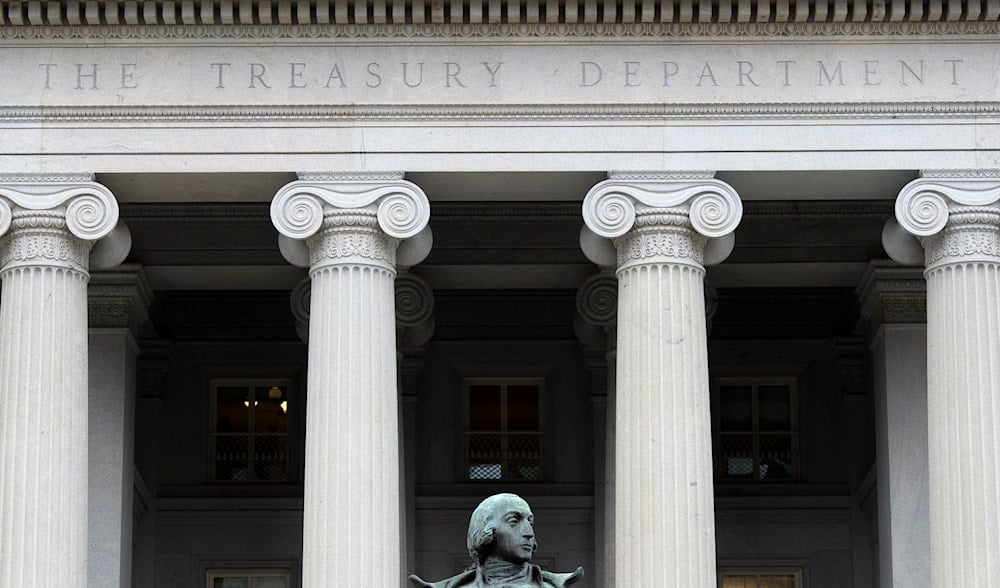
The US Treasury Department building is seen on March 13, 2025, in Washington. (AP Photo/Alex Brandon)
When financial markets panic, whether from a banking collapse, a war, or a pandemic, investors have historically done one thing above all else: buy US Treasury bonds.
These are the IOUs issued by the US government to finance its spending, and they were considered the ultimate safe harbour. They are backed by the full faith of the world's largest economy and traded in the deepest and most liquid market on earth.
This status came with a quiet but powerful perk for Americans. Because global demand for Treasuries was so reliable, the US government could borrow at lower interest rates than it otherwise would.
Economists call this the "convenience yield," essentially a discount that the rest of the world subsidises by treating US debt as the global financial system's bedrock. Lower borrowing costs for Washington eventually translated into lower mortgage rates, cheaper car loans, and reduced costs for businesses across the country.
That subsidy is now eroding, according to a Financial Times analysis by veteran financial commentator John Plender.
What has changed, and why
Several forces have converged to shake investor confidence in US government debt.
First, America's fiscal position has deteriorated sharply. Total publicly held US debt grew from $20.9 trillion in 2020 to $28.1 trillion by the end of 2024, a $7.2 trillion increase in just four years, according to the Congressional Research Service. All three major credit rating agencies have now stripped the US of its top-tier rating, with Moody's being the last to do so in May 2025, citing runaway deficits and political dysfunction.
Second, the return of Donald Trump to the White House has injected a new layer of uncertainty. Erratic tariff policies, designed, paradoxically, to hurt allies more than adversaries, alongside threats to the independence of the Federal Reserve, have rattled professional investors globally, Plender argues.
Third, the old insurance mechanism of bonds has broken down. For most of the post-2000 era, when stocks fell, bonds rose, making Treasuries a reliable portfolio hedge. That relationship snapped in 2022, when surging inflation forced the Fed to raise rates sharply, causing both stocks and bonds to lose value simultaneously. That shift has not fully reversed.
Foreign investors are quietly pulling back
The numbers tell a clear story. While foreigners still hold roughly $8.5 trillion in US Treasuries, their share of total US public debt has fallen from nearly 50% in the early 2010s to around 30% today, according to the Bipartisan Policy Center.
The US has simply been issuing debt faster than the world is willing to absorb it. Total debt quadrupled since 2008, while foreign holdings less than tripled over the same period.
More telling is who is pulling back. Central banks and governments, the most institutionally committed holders of Treasuries, have been quietly reducing their exposure. After Trump's re-election in November 2024, foreign official institutions sold around $78 billion in US Treasuries, bringing their holdings to their lowest level since March 2020, according to research published by the Centre for Economic Policy Research (CEPR).
China's retreat has been particularly striking. Its share of foreign Treasury holdings has dropped to 7.6%, the lowest in 23 years, per data from the Federal Reserve and the US Treasury Department.
Crucially, this official selling appears to be directly pushing US borrowing costs higher. As foreign governments offloaded Treasuries in late 2024, long-term US interest rates rose sharply, the opposite of what usually happens when the Fed cuts short-term rates.
The CEPR estimates that the scale of these reserve sales matches the magnitude of the yield increases observed, suggesting a direct causal link. For ordinary Americans, higher long-term rates mean more expensive mortgages, auto loans, and student debt.
A new hierarchy of safe havens
With Treasuries losing their crown, investors are reshuffling their portfolios. The Swiss franc, the Singapore dollar, gold, and German government bonds have all risen in the safe-haven rankings, according to Davide Oneglia of research firm GlobalDataTS Lombard. Even the Japanese yen, historically the go-to refuge in a crisis, has lost some of its hedging properties amid Japan's own debt concerns.
Meanwhile, something paradoxical is happening with US equities. Even as foreigners reduce their Treasury exposure, they are pouring record sums into American stocks.
The share of foreign investors' US portfolios devoted to equities has risen from 23% in 2009 to 55% in 2024, per US Treasury data, and private foreign investors bought a record $646.8 billion in US equities in the year to September 2025, according to Yardeni Research.
Some analysts suggest that the S&P 500, with its unrivalled depth and liquidity, is slowly becoming a global store of value in its own right. But stocks are inherently volatile and cannot serve the institutional functions that Treasuries do, ie, they cannot anchor currencies or serve as risk-free collateral. That means that the US can retain its financial gravity, but on more fragile terms.
Plender believes that the dollar will likely remain dominant. He expects de-dollarisation to be a slow, messy, multi-decade process. But the era in which US Treasuries were treated as an unconditional safe haven, automatically sought in every storm, at any price, appears to be ending.


