
Maduro urges solidarity as deadly earthquakes hit Venezuela
 3 Min Read
Venezuelan President Nicolas Maduro called for unity and mutual assistance after twin earthquakes struck central Venezuela, causing casualties and damage in Caracas.
-
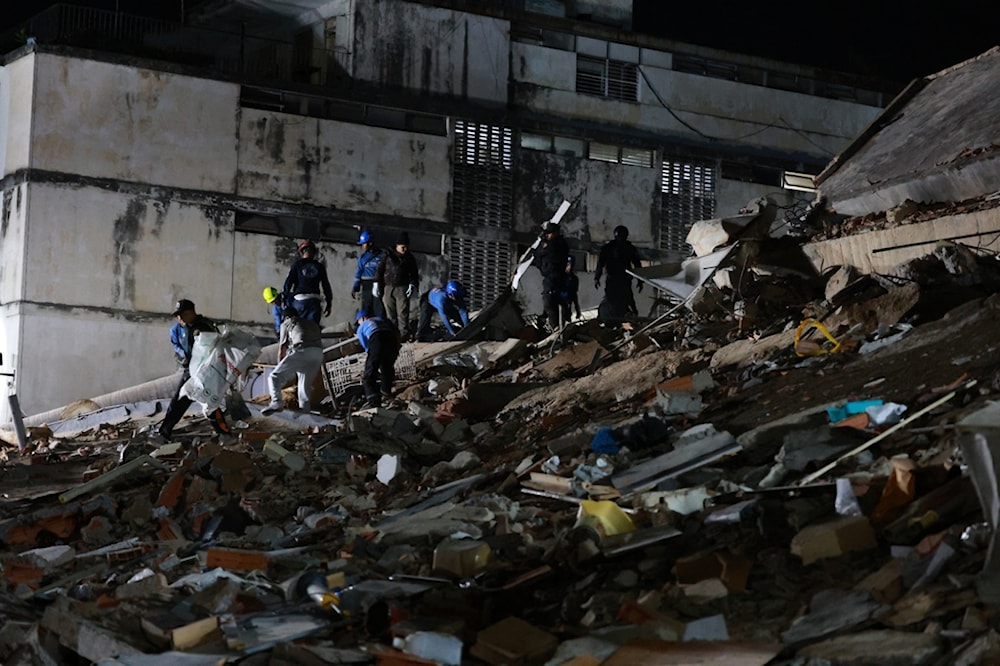
Rescue workers search through the rubble of a collapsed building after an earthquake in Caracas, Venezuela, Wednesday, June 24, 2026. (AP Photo/Javier Campos)
Venezuelan President Nicolas Maduro called on citizens on Thursday to remain united and support one another after two powerful earthquakes struck the country on Wednesday, causing casualties and widespread damage.
In a statement published on X, Maduro urged Venezuelans to respond with solidarity and collective action as emergency services assessed the impact of the disaster.
"In this difficult hour, we call for national unity, calm, and specific assistance: to help, to protect, to share, to uplift, and to restore. Venezuela has endured great trials, and we will emerge from this strong too – with faith, discipline, and solidarity," Maduro said.
Ante el poderoso terremoto que ha golpeado a nuestra Patria, nuestras oraciones por las familias venezolanas afectadas. En esta hora difícil el llamado es a la unión nacional, a la serenidad y al amor. ¡Nuestro corazón con toda Venezuela! pic.twitter.com/oWN8m09HoR
— Nicolás Maduro (@NicolasMaduro) June 25, 2026
The statement came as authorities and residents grappled with the aftermath of the powerful tremors that shook several regions across the country.
Rodríguez declares state of emergency
In turn, Venezuelan interim President Delcy Rodríguez announced a state of emergency in light of the earthquakes that hit the nation.
“We ask the population to remain calm and united,” she stated on national television, adding that Venezuela's main airport was closed due to suffering “severe damage.” Rodríguez further added that the metro and train systems were also suspended.
“We send our immediate condolences to those who have lost relatives,” Rodríguez added.
The interim Venezuelan president added that aid workers from other countries were traveling to Venezuela to help in the aftermath of the twin earthquakes. Separately, Rodríguez thanked US President Donald Trump for offering to help the country in the wake of this environmental crisis.
Read more: Leader of Tren de Aragua killed in joint US-Venezuela operation
Twin earthquakes strike central Venezuela
According to reports, two major earthquakes measuring 7.2 and 7.5 magnitude struck Venezuela on Wednesday.
The first earthquake was recorded approximately 16 kilometers from Moron, while the second occurred around 24 kilometers from San Felipe.
🔴 #URGENTE | El terremoto de Venezuela destruyó la ciudad de La Guaira. pic.twitter.com/IeqBCHmKuo
— Mundo en Conflicto 🌎 (@MundoEConflicto) June 25, 2026
The powerful tremors were felt across multiple parts of the country, prompting emergency assessments and raising concerns over infrastructure damage in affected areas.
Casualties and damage reported in Caracas
A RIA Novosti correspondent reported casualties and material damage in the Venezuelan capital, Caracas, following the earthquakes.
At least 32 people were killed and 700 others injured, according to preliminary reports of the earthquakes' aftermath. Rescue and emergency response efforts continue in impacted areas.
The full scale of the destruction remains unclear as officials evaluate damage to buildings, transportation networks, and public infrastructure.
Gustavo Duque, the mayor of the Chacao municipality in Caracas, stated that multiple buildings collapsed, noting that 18 survivors were recovered from one building alone, per a Reuters report. "We’re going to do everything we can to rescue the most people possible", he said.
🔴 #URGENTE | El terremoto de Venezuela destruyó la ciudad de La Guaira. pic.twitter.com/IeqBCHmKuo
— Mundo en Conflicto 🌎 (@MundoEConflicto) June 25, 2026
According to an AP report, earthquakes of this kind are uncommon in Venezuela despite the country sitting near multiple fault lines.
Its position straddling the South American and Caribbean plates makes earthquakes less common than they would be in other Latin American nations. Earthquakes are frequent along the Pacific coast, including Mexico and Chile, which both sit on the active tectonic belt known as the Ring of Fire, an area that the US Geological Survey states is responsible for 90% of earthquakes.


