
Trump pardons 11 convicted under Clean Air Act emissions cases
 3 Min Read
Trump pardoned 11 people convicted under the Clean Air Act for emissions violations, days after rolling back federal tailpipe pollution standards.
-
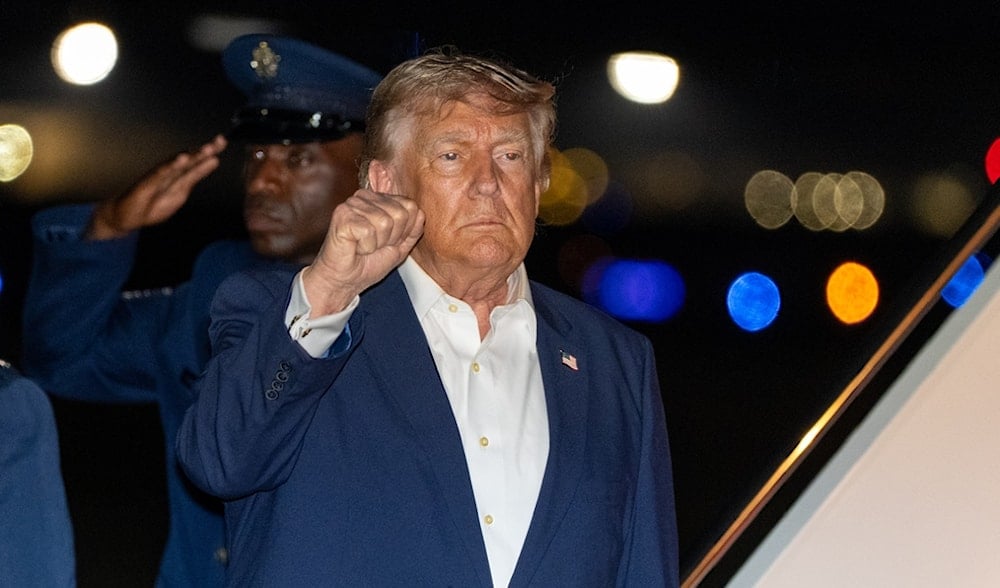
President Donald Trump gestures as he arrives on Air Force One on July 4, 2026, at Joint Base Andrews, Md. (AP)
US President Donald Trump pardoned 11 individuals on Friday, a White House official said, most of whom had been convicted of violating the Clean Air Act by modifying or disabling emissions control systems on trucks.
According to the official, all but two of those pardoned had been prosecuted for tampering with emissions systems designed to limit environmental pollution from heavy vehicles.
Trump also commented publicly on six of the individuals via his Truth Social platform, saying they had been prosecuted under former President Joe Biden’s administration for “fixing their car.”
The pardons come after the Trump administration in February repealed a scientific finding that greenhouse gas emissions endanger human health, and eliminated federal tailpipe emissions standards for cars and trucks.
Among those pardoned was Adam Kinan, vice chairman of the Staffing Advisory Group, who had previously been sentenced to prison in 2006 alongside Washington lobbyist Jack Abramoff on wire fraud charges.
The latest pardons add to a series of clemency decisions issued by Trump since returning to office, several of which have drawn attention for their links to regulatory and political cases.
Selective justice: Case of xAI
A recent case found that Elon Musk’s xAI is violating the Clean Air Act by operating portable methane gas generators in Mississippi without the necessary permits. The lawsuit, filed by the National Association for the Advancement of Colored People, claims the emissions pose serious health risks to nearby Black and minority communities.
The US Department of Justice is seeking to block the case, arguing the company’s operations are vital to the economy.
In 2025, reports revealed that xAI had deployed up to 15 portable generators to help power its large-scale supercomputer facility in Memphis. However, updated aerial imagery obtained by the Southern Environmental Law Center reveals that the number is significantly higher. According to the group, the combined output of the turbines is around 420 megawatts, enough to supply electricity to an entire city.
xAI already has a deal to draw 150MW from Memphis’ utility, enough to power 100,000 homes annually, but Musk says more is needed to manage power fluctuations. The initial appearance of methane gas generators last summer sparked concern, as xAI lacked permits from the Shelby County Health Department and the EPA.
On that note, the company seems to be exploiting a loophole that lets it run gas generators without permits if they don’t stay in one place for over 364 days. In January, xAI applied for a permit for 15 units but failed to disclose the additional 20.
Musk launched his xAI facility in Memphis two years ago, naming its massive supercomputer “Colossus,” which powers the chatbot Grok. The structure spans the size of 13 football fields, with Musk planning to double its footprint.
Read more: US military on track to become major global polluter: RS


