
UK AI data centers turn to gas amid grid connection delays
 5 Min Read
Britain’s AI expansion is driving a growing shift toward gas-powered data centers as developers struggle with long delays connecting to the national electricity grid.
-
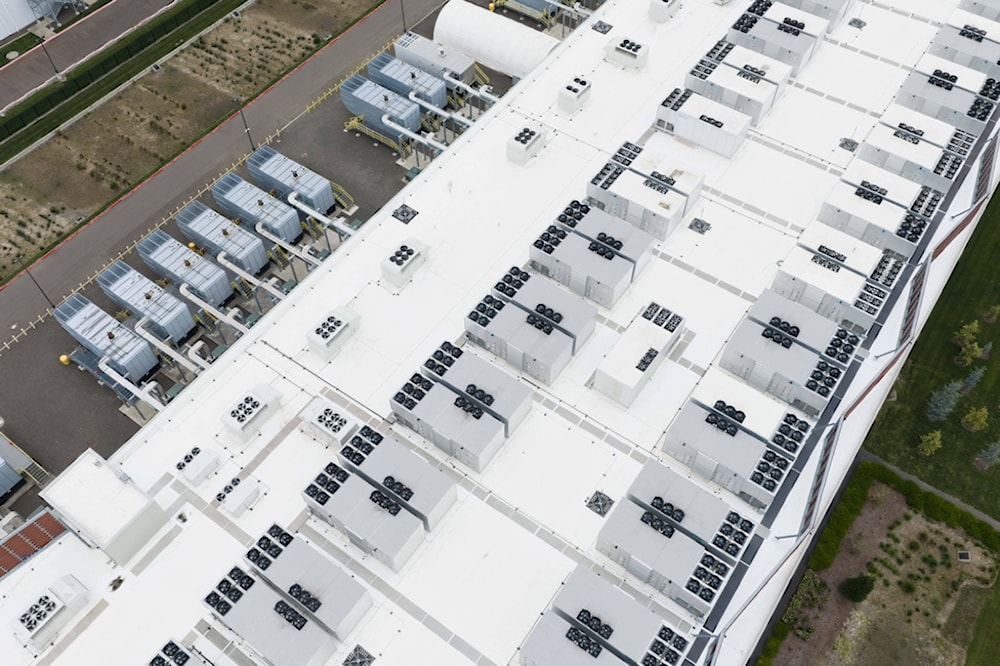
[For illustration purposes] Fans that are part of a cooling system are seen on the roof of a data center, Monday, April 27, 2026, in Hillsboro, Ore. (AP)
Britain’s growing push to expand artificial intelligence infrastructure is driving a wave of plans for gas-powered data centers, The Guardian reported, as officials, energy experts, and climate advocates warn the trend could undermine the country’s clean energy goals and deepen broader concerns over mounting global energy pressures linked to the rapid expansion of AI.
The debate comes amid growing warnings worldwide that aging grid infrastructure, rising electricity demand, geopolitical instability, and the explosive growth of AI are creating new strains on energy systems. Governments and major technology firms are pouring hundreds of billions of dollars into AI development, while countries simultaneously attempt to electrify transport, expand semiconductor manufacturing, and reduce carbon emissions.
Grid bottlenecks fuel gas shift
Industry representatives and regulators speaking at the All-Energy conference in Glasgow warned that mounting strain on the UK electricity grid is pushing developers toward fossil fuel generation as an alternative power source for large AI facilities.
"There’s 100GW of datacentre projects in the queue," said Stuart Okin, director of cyber regulation and AI at Ofgem.
"Clearly that’s not all going to be able to connect [to the grid]. If a project isn’t going to get a connection, it is going to have to come up with an alternative method."
The remarks reflect growing concern within Britain’s energy sector over whether existing infrastructure can support the rapid expansion of energy-hungry AI operations.
Silvia Simon, head of research at Future Energy Networks, said gas suppliers have seen a sharp rise in requests from data center operators seeking direct access to gas networks.
"Gas networks are seeing a lot of interest from datacentre developers looking to secure a gas connection," she said. "Not just for resilience, but for primary supply. So this is already an indication that they’re really struggling to get through to the electricity networks."
According to Simon, more than 100 gas connection requests tied to data center developments have been submitted over the past two years, representing annual energy demand exceeding 15 terawatt hours.
Analysts have increasingly warned that AI infrastructure may become one of the largest new sources of electricity demand globally, with countries facing growing competition over power generation capacity, natural gas supplies, transmission infrastructure, and cooling resources needed to support hyperscale data centers.
Permanent fossil fuel generation
Energy consultants and industry figures attending the conference said developers are increasingly considering permanent gas-powered generation rather than temporary backup systems traditionally used during outages or grid delays.
"Using gas networks was previously avoided due to carbon, permitting, and land-take impacts, and has typically only been considered as a temporary fix," one consultant familiar with the sector said.
But developers are now increasingly turning to fossil fuels, "in some cases requesting over 100MW of gas power on a permanent basis."
Similar trends have emerged in the United States, where major AI-linked data center projects associated with companies including Microsoft, Meta, OpenAI, and xAI have fueled soaring electricity demand and growing reliance on gas-fired generation.
Climate targets under pressure
The expansion of gas-powered AI infrastructure is also beginning to raise questions about Britain’s long-term climate commitments.
Julian Leslie, director of strategic planning at the National Energy System Operator, said the growing reliance on fossil fuels by data centers could complicate the government’s Clean Power 2030 ambitions.
"The target was to get less than 5% of unabated gas supplying electricity in the system," Leslie said.
"But obviously if we’ve got datacentres not connected to electricity but powered by unabated gas then it does raise an interesting question about what that means for the Clean Power 2030 target."
British authorities say reforms are underway to speed up electricity connections for viable projects, while discussions continue over whether strategic sectors such as AI should receive priority access to grid infrastructure.
"The growth of artificial intelligence is affecting many aspects of life including energy – this includes an associated growth in data centres," said Eleanor Warburton, Ofgem’s director for energy system design and development.
"Connections are being delivered, but the system must work better for projects that are viable and ready to proceed."
Climate backlash grows
Climate groups, meanwhile, warned that expanding AI infrastructure through fossil fuel generation risks worsening Britain’s emissions challenges at a time when the country is already confronting the effects of climate change.
"Those promoting the rush for hyperscale AI datacentres seem to be living in a parallel reality where the last 50 years of climate science hasn’t happened, and where we aren’t already experiencing the signs of climate breakdown," said Kat Jones, director of Action to Protect Rural Scotland.
She added, "The conference sessions on AI and hyperscale datacentres seemed to be taking it for granted that onsite gas generation would be needed if these ultra energy intensive developments are to happen, due to the impossibility of connecting them to our congested grid."
Read more: US tech giants lobbied EU to hide datacenter pollution data


