
UK farmers count £800 mln losses after driest, hottest year
 5 Min Read
The UK’s 2025 harvest saw a 20% crop drop and £800 million in losses, as drought and extreme weather raised concerns over food security and farming resilience.
-
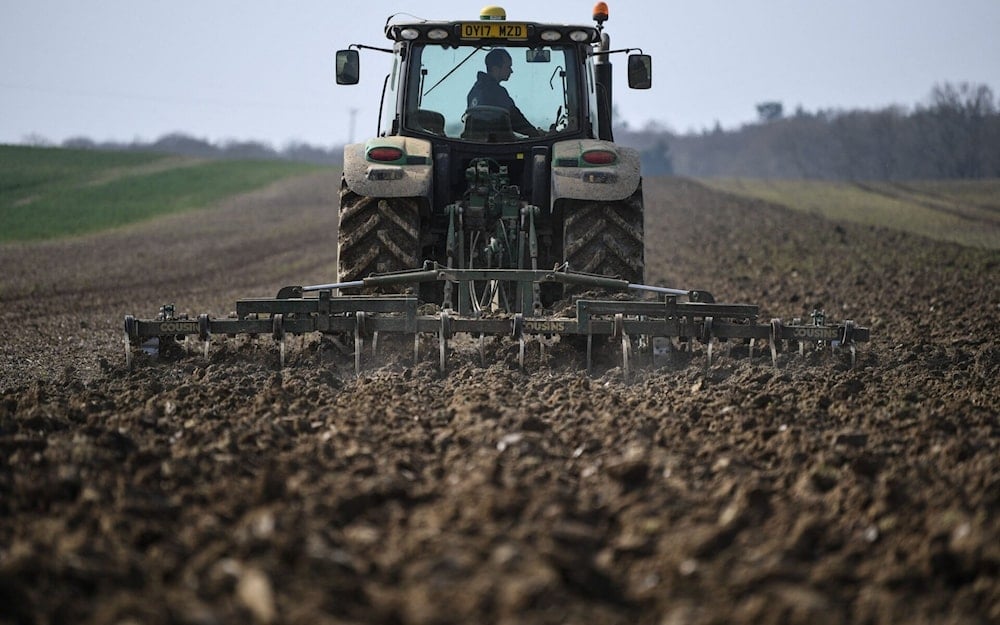
The NFU claims three-quarters of food produced by British farmers will be hit by the move to introduce death duties, undated. (Daniel LEAL / AFP)
Britain’s 2025 harvest has been one of the worst on record, with extreme heat and drought leading to more than £800 million in lost production, according to new analysis. The country experienced its hottest and driest spring, followed by the hottest summer on record, causing a significant decline in staple crop yields.
Production of wheat, oats, spring and winter barley, and oilseed rape fell by 20% compared to the ten-year average. England’s harvest was the second-worst since records began in 1984, according to figures from the Energy and Climate Intelligence Unit (ECIU).
In addition to the 2025 weather extremes, previous flooded winters in 2019–20 and 2023–24 also contributed to disastrous harvests. Waterlogged fields prevented many farmers from sowing crops during crucial planting windows. "This has been another torrid year for many farmers in the UK, with the pendulum swinging from too wet to too hot and dry," said Tom Lancaster of the ECIU. "British farmers have once again been left counting the costs of climate change, with four-fifths now concerned about their ability to make a living due to the fast-changing climate."
The compounded impact of weather extremes, rising input costs, and stagnant market prices has put many British arable farmers under intense financial pressure. Since 2020, the ECIU estimates that losses caused by climate-driven poor harvests have exceeded £2 billion. Despite low domestic yields, global grain prices have not adjusted favourably, due to their dependency on international supply. This has prevented farmers from recovering losses through higher market prices.
Climate crisis raises questions about UK Food Security
The increasing frequency and severity of extreme weather events in Britain are intensifying concerns about the long-term viability of food production. The Met Office confirmed that the summer of 2025 was the hottest in more than a century, made 70 times more likely due to global heating. Similarly, it found that the heavy rainfall during the 2023–24 winter storms was about 20% more intense due to climate change.
"This year’s harvest was extremely challenging," said Jamie Burrows, Chair of the National Farmers’ Union combinable crops board, adding, "Growing crops in the UK isn’t easy due to the unpredictable weather we are seeing more of. Funding is needed for climate adaptation and resilient crop varieties to safeguard our ability to feed the nation."
Read next: Large swathes of southern Europe drying up, new analysis finds
Many farmers see green farming schemes as essential to coping with future shocks, but support has faltered. The Sustainable Farming Incentive was suspended in March, creating uncertainty. “There is an urgent need to ensure farmers are better supported to adapt to these climate shocks and build their resilience as the bedrock of our food security,” said Lancaster. “In this context, the delays [by ministers] to the relaunch of vital green farming schemes are the last thing the industry needs.”
These schemes promote resilience by encouraging practices such as planting winter cover crops, which help improve soil quality, increase moisture retention during droughts, and improve drainage during wet periods.
While some farmers blame environmental regulations for reduced profitability, Lancaster pointed to the climate crisis as the real driver of financial losses: "The evidence suggests that climate impacts are what’s actually driving issues of profitability, certainly in the arable sector, as opposed to policy change. Without reaching net zero emissions, there is no way to limit the impact, making food production in the UK ever more difficult."
Climate-driven price surges for essential foods
According to the ECIU, the price of certain foods affected by extreme weather has risen more than four times faster than the average food basket. Butter, beef, milk, coffee, and chocolate saw a 15.6% price rise in the past year, compared with 2.8% for other food and drink items.
Drought in the UK reduced grass growth, affecting butter and beef production. Simultaneously, extreme weather in Brazil, Vietnam, and West Africa pushed up global prices of coffee and cocoa, directly impacting supermarket costs for British consumers.
A spokesperson from the Department for Environment, Food and Rural Affairs (DEFRA) acknowledged the challenges: "We know there are challenges in the sector and weather extremes have affected harvests. We are backing our farmers in the face of a changing climate with the largest nature-friendly farming budget in history to grow their businesses and get more British food on our plates."