
US data center emissions rival Denmark’s annual total
 4 Min Read
Research highlights the heavy dependence of America’s largest data centers on fossil-fuel electricity.
-
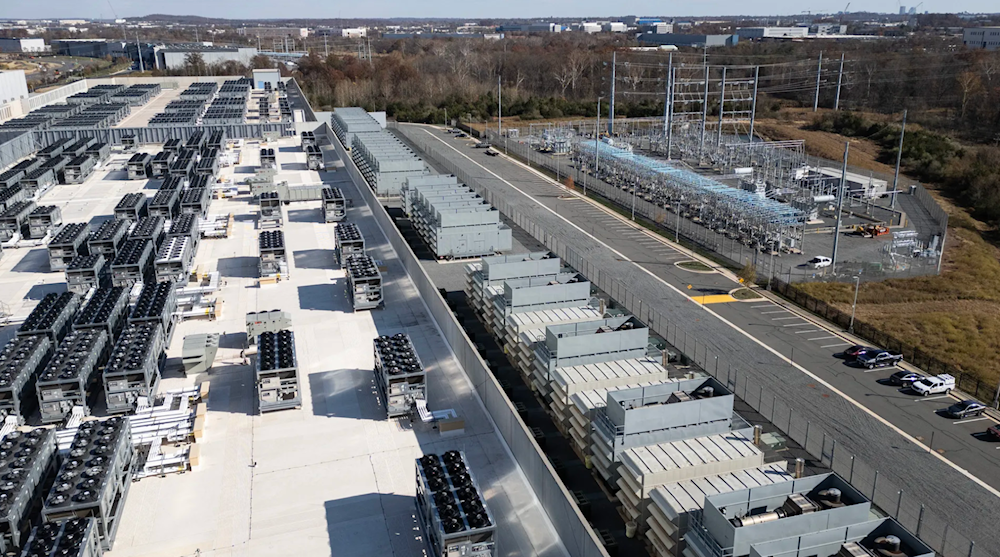
An aerial view of a data center in NoVa (Andrew Caballero/AFP)
Fossil fuels supplied more than half the electricity used by 403 major US data centers, according to research reported by The Guardian, highlighting the climate consequences of the infrastructure expansion supporting artificial intelligence.
The study, published in Nature Sustainability, estimated that the facilities were responsible for 25.7 million metric tons of carbon dioxide during a year ending in April 2025. That places their emissions roughly alongside Denmark's annual carbon output.
The facilities, known as hyperscale data centers, consumed an estimated 68 to 99 terawatt-hours of electricity, accounting for approximately 1.8% of total US electricity use. Their estimated emissions were between two and three times a previous assessment of hyperscale emissions in 2018.
Fossil-fuel power supports AI expansion
Meeting the electricity requirements of AI infrastructure has encouraged investment in gas-fired generation, including power plants located at data center sites, The Guardian reported. This expansion has favored gas even as wind and solar capacity is available.
Gina McCarthy, a former climate advisor to the Biden administration, said the findings underscored the consequences of that dependence.
"Sadly, it doesn't surprise me that the majority of hyperscale data centers rely on fossil fuels for their power generation despite the profound and lasting climate and health impacts that could be, and should be, avoided," she said.
Industry developers have defended their projects by pointing to employment, additional local tax revenue, and resource consumption they describe as limited compared with sectors such as agriculture.
US President Donald Trump has also backed the industry, saying opponents of datacenter expansion would end up "backwards and poor."
Communities challenge pollution, water demands
Those economic arguments have not prevented opposition across political lines, with residents challenging projects over air quality, noise, and pressure on water supplies.
Around Memphis, Tennessee, data centers linked to Elon Musk's AI operations have drawn protests and litigation over noise and air pollution. His AI company has responded by purchasing nearby homes, according to The Guardian.
In Utah, concerns center on Stratos, a proposed development that would rank among the world's largest data centers. Its planned water consumption has prompted resistance in a state affected by drought, while a separate assessment has raised concerns about potential air pollution.
That assessment, commissioned by the Natural Resources Defense Council, estimated annual health-related economic costs of up to $690 million if the project adopts the most polluting fuel option examined.
Under that scenario, the facility could release up to 3,140 tons of particulate matter associated with cardiovascular and respiratory illness. Pollution could spread beyond Utah into Idaho, Wyoming, Colorado, and Illinois.
"Stratos is a modern-day Trojan horse that would unleash deadly air pollution linked to serious, life-threatening health damages upon Utah communities and millions of people living downwind of this massive datacenter," said John Walke, the council's director of federal clean air.
Stratos developers have planned to use combined-cycle natural gas generation, while reportedly considering renewable energy and other alternatives. They have also faced political pressure to reduce the project's size.
A revised water application filed last month reportedly argued that consumption would fall below the property's historical agricultural use, a claim questioned by environmental critics.
Researchers warn estimates lag behind construction
The national emissions study used federal data and examined facilities concentrated in states including Virginia, Oregon, Ohio, and Iowa. However, its measurement period ended before further data center expansion, leading researchers to describe the findings as a conservative indication of the industry's current impact.
"There has been an explosion in these data centers and the CO2 emissions are pretty substantial," said Francesca Dominici, a Harvard University professor of biostatistics and co-author of the study, which was led by Gianluca Guidi.
"Since 2025 there have been many, many more data centers, so we need to think of this level of emissions as a lower bound. This is something that needs study and for policymakers to think about how to do this in a responsible way."
Read more: Behind Europe’s AI boom lie hazards, diseases, and exploitation


